2020

Well, that didn’t take long: as we surmised back when the CDC first issued its order halting residential evictions until the end of the year due to COVID (see “How Can? U.S. DHS: National Eviction Moratorium (Roscoe Filburn Could Not Be Reached For Comment),” the order has resulted in a complaint in the U.S. District Court for the Northern District of Georgia that alleges the order is unconstitutional.

No takings claim (not the right court to raise a just comp claim), but there’s a lot “there,” so to speak: admin law (CDC exceeded its authority), violation of the right of court access, Supremacy Clause, Tenth Amendment, anti-commandeering, this is an invalid exercise of legislative power under Article I.

No takings claim, but read the complaint anyway.  

Complaint, Brown v. Azar, No. 1:20-cv-03702 (N.D. Ga. Sep. 8, 2020)
Continue Reading Complaint (N.D. Ga.): CDC Eviction Moratorium Is Unconstitutional (No Takings Claim, However)

A very quick one today from the North Dakota Supreme Court. In Cass County Joint Water Resource District v. Aaland, No. 20200272 (Sep. 15, 2020), the court rejected a property owner’s request for a stay pending appeal of a trial court’s order allowing the district to enter the owner’s property “to conduct examinations, surveys, and mapping, including geomorphic examinations requiring installation of survey monuments.” The District had tried to negotiate an easement, but the owner didn’t want to play.

The Supreme Court rejected the request, concluding that the owner didn’t show irreparable injury because he could always bring an after-the-fact inverse condemnation claim to remedy whatever injuries the entries caused. The court also concluded that a stay would harm the District, because it would delay the project, even though actual construction of the project has already been enjoined by a federal court. While the district might not be able

Continue Reading No Injunction To Halt Precondemnation Entry, Since Owner Can Sue Later For Inverse

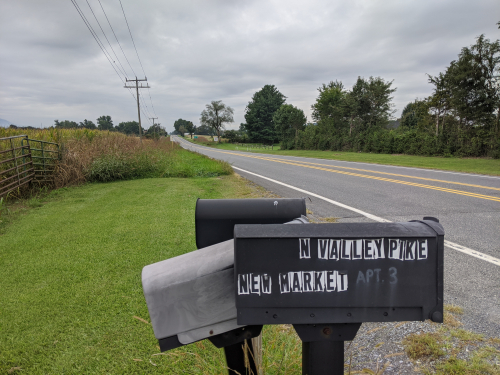
IMG_20200917_110719

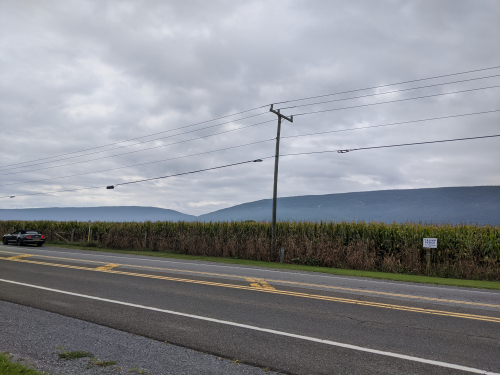
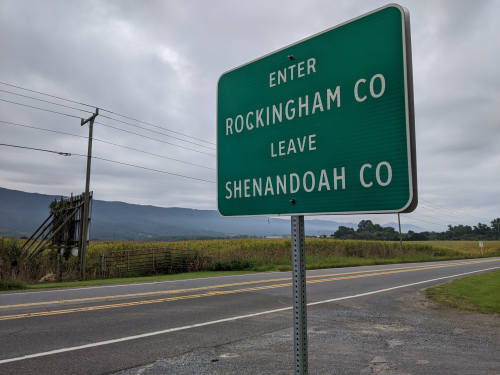
Recently, we visited the site of a very well-known (and now very relevant) U.S. Supreme Court case. Why? Because we do things like that. See here, here, here, here, here, and here for some of our prior pilgrimages.

We’ll have more on the visit later. but we thought we would try and make Friday a bit more interesting by not telling you the location, but seeing whether you can guess what case this is.

The clues are all there.

[Hint: there are still a few apple orchards around, even after all these decades.]

IMG_20200917_110650
IMG_20200917_110727
Continue Reading Takings Places (Preview)

[Barista’s note: is it any coincidence that Constitution Day is just one day — a single day! — before National Cheeseburger Day? Two awesome days in a row a coincidence? We think not.]

On the day we celebrate Constitution Day (or should we say Khaaaaan-stitution Day?) we have to admit that pretty much nothing beats One Named Kirk’s reading of the Preamble

KIRK: This was not written for chiefs.Hear me! Hear this! Among my people, we carry many such words as this from many lands, many worlds. Many are equally good and are as well respected, but wherever we have gone, no words have said this thing of importance in quite this way. Look at these three words written larger than the rest, with a special pride never written before or since. Tall words proudly saying We the People. That which you call “Ee’d Plebnista” was

Continue Reading The Real “Prime Directive” – Happy Constitution Day

We’ve been meaning to write up the U.S. Court of Appeals’ decision in a case we’ve been followingProtect Our Parks, Inc v. Chicago Park District, No. 19-2308 (Aug. 231, 2020), but our Illinois colleague Mike Ryan was quicker on the draw.

Rather than summarize Mike’s write up, we simply suggest you go to his firm’s blog and read “7th Circuit Rules Construction of the Obama Presidential Center Is Not A Taking Under The Fifth Amendment.”

Short story: the citizen’s group plaintiff doesn’t have a property interest in Grant Park, notwithstanding its argument that the public’s status as the beneficiary of the public trust (the real public trust, not, you know, the other things that get labeled “public trust” but really aren’t the thing you think about when you think “public trust”), is enough of a property interest to come under the Fifth Amendment’s protections (or

Continue Reading Friends Without Benefits: CA7 Rejects Takings Claim For Obama Center Because Citizen’s Group Lacks Property Interest In Public Park

As if to respond to a sibling federal court’s recent order upholding a covid-reaction shut down orders, the U.S. District Court for the Western District of Pennsylvania’s opinion in County of Butler v. Wolf, No.2:20-cv-00677 (Sep. 14, 2020) reaches an entirely different conclusion:

The fact is that the lockdowns imposed across the United States in early 2020 in response to the COVID-19 pandemic are unprecedented in the history of our Commonwealth and our Country. They have never been used in response to any other disease in our history. They were< not recommendations made by the CDC. They were unheard of by the people this nation until just this year. It appears as though the imposition of lockdowns in Wuhan and other areas of China-a nation unconstrained by concern for civil liberties and constitutional norms-started a domino effect where one country, and state, after another imposed draconian and hitherto untried

Continue Reading Fed Ct: “[T]he stay-at-home and business closure components of Defendants’ [COVID] orders violate the Due Process Clause” (Applying Rational Basis Review!)

The District Court’s bottom line in Lukes Catering Service, LLC v. Cuomo, No. 20-CV-1086 (Sep. 10, 2020)? The New York governor’s emergency orders aimed at coronavirus “imposing quarantines, mandating workforce reductions, closing schools, requiring face-coverings, and restricting activities of all types,” are not takings of the businesses of event, banquet, and catering services that have been shut down as a result. The specific emergency measure challenged was the order limiting gatherings to no more than 50 people.

The controlling authority? You guessed it, Jacobson v. Massachusetts, 197 U.S. 11 (1905). That’s the case in which the Court defined “real liberty,” and which has been most prominently applied in emergency order cases to reject due process challenges. But if you want the court’s takings analysis, jump to page 24. The court rejected the categorical (Lucas) claim:

Plaintiffs allege a categorical regulatory taking in their complaint. (Complaint, ¶¶

Continue Reading NY Fed Ct: “When faced with a society-threatening epidemic, state officials are empowered to … infringe federal constitutional rights. They may generally do so at their sole discretion and for so long as is necessary.”

If you are available at 9:30 a.m. Eastern Time today (Wednesday, September 9, 2020), tune in to the Michigan Supreme Court’s YouTube channel and watch and listen live as the court hears arguments in a case challenging the governor’s exercise of emergency powers to respond to the covid epidemic.

The case started in U.S. District Court, but that court certified what it thought were dispositive questions of state law to the Michigan Supreme Court, which accepted the certification. Here are the questions to be answered:

1. Whether, under the Emergency Powers of the Governor Act, MCL § 10.31, et seq., or the Emergency Management Act, MCL § 30.401, et seq., Governor Whitmer has the authority after April 30, 2020 to issue or renew any executive orders related to the COVID-19 pandemic.

2. Whether the Emergency Powers of the Governor Act and/or the Emergency Management Act violates the Separation

Continue Reading This Morning: Michigan Supreme Court Hearing Arguments: Governor’s Covid Emergency Powers Expired (And A Long-Term Pandemic Isn’t An “Emergency”)

Here’s the amicus brief we filed last week in a case we’ve been following closely, Cedar Point Nursery v. Hassid, No. 10-104 (cert. petition filed July 29, 2020). 

That’s the case in which a 2-1 Ninth Circuit panel affirmed the dismissal of a complaint for failure to plausibly state a takings claim under Twombly/Iqbal.  At issue was a regulation adopted by California’s Agricultural Labor Relations Board which requires agricultural employees to open their land to labor union organizers. The regulation is framed as protecting the rights of ag employees to “access by union organizers to the premises of an agricultural employer for the purpose of meeting and talking with employees and soliciting their support.”

The panel majority viewed the complaint as alleging a Loretto physical invasion taking, and held the plaintiffs did not plausibly state a claim because they could not allege the invasion

Continue Reading New SCOTUS Amicus: In Physical Invasion Takings, The Duration Of The Occupation Is Less Important Than Interference With The Right to Exclude (John Maynard Keynes Alert!)

Please join us and a panel of expert speakers including our friend and colleague Tony Della Pelle (see the flyer for the complete list), this Thursday, September 10, 2020 at 1pm Eastern Time for the ABA-produced webinar “Governmental Emergency Powers and the Constitutional Implications Arising from Pandemic Orders.”

Free to ABA members, a modest cost for those who are not. Register here.

Here’s the plan:

In the wake of the unprecedented global pandemic, every level of government has taken steps to address the public health crisis. These steps have manifested in orders which impact businesses and individuals alike including quarantine orders, travel restrictions, occupancy limitations, and restrictions on movement. This is the not the first pandemic, nor the first national crisis, faced by the United States. There have been several lawsuits filed challenging the constitutionality of the COVID-19 orders, including challenges based on the right to

Continue Reading This Thursday, Sept 10: “Governmental Emergency Powers and the Constitutional Implications Arising from Pandemic Orders” (Free to ABA Members)