2020

This just in in a case we’ve been following. In In re Certified Questions, No. 161492 (Oct. 2, 2020), the Michigan Supreme Court responded to the federal court’s certified question about whether, under Michigan’s statutes, the governor has the authority to effectively extend a declared state of emergency by terminating an expiring declaration and issuing a new declaration “again declaring a ‘state of emergency’ and
‘state of disaster’ under the EMA for the identical reasons as the declarations that had just been terminated — the public-health crisis created by COVID-19.” Slip op. at 8.

The court held no, the statute does not allow the governor to do that, in the absence of the Legislature’s approval of an extension:

The Governor argues that because MCL 30.403(3) and (4) provide that ‘[t]he governor shall, by executive order or proclamation, declare a state of [disaster/emergency] if he or she finds [a
Continue Reading Michigan SCT: Without Legislature’s Assent, Governor’s Emergency Powers Terminate At 28 Days

This one doesn’t involve a takings claim, but since we’re tracking the cases involving coronavirus-related shut down orders and restrictions, we thought we would post this here too.

In Harvest Rock Church, Inc. v. Newsom, No. 20-55907 (Oct. 1, 2020), a panel of the Ninth Circuit rejected a church’s request for an injunction pending appeal of the District Court’s denial of a preliminary injunction. The church is challenging the California governor’s order that have the effect of restricting religious services even though the orders apparently do not expressly target religious services:

The evidence that was before the district court does not support Harvest Rock’s arguments that the Orders accord comparable secular activity more favorable treatment than religious activity. The Orders apply the same restrictions to worship services as they do to other indoor congregate events, such as lectures and movie theaters. Some congregate activities are completely prohibited in

Continue Reading Ninth Circuit, Over Dissent, Denies Injunction For Church COVID Restrictions

Here’s the latest in a case we’ve been following.

In Berry v. City of Chicago, No. 124999 (Sep. 24, 2020), the Illinois Supreme Court avoided the analysis that split the court of appeals, and upheld the dismissal of a very “torty” inverse condemnation claim. The plaintiffs alleged that the City of Chicago’s program to replace old water meters, water mains, and lead pipes had taken their property because it made the service lines “more dangerous” by using copper and galvanized iron, which leads the lead pipes to corrode (the lede is that copper leads lead pipes to corrode). In addition to tort damages, the plaintiffs sought compensation for the taking. 

No deal, held the court, and its ruling is pretty straightforward. The court didn’t really see the arguments the same way as the court of appeals, which split on the question of how the “public” is defined for

Continue Reading Burying The Lead: No Taking When City’s Water Pipe Replacement Program Alleged To Result In More Danger To Owners’ Properties

We were honored to be a guest on an episode of the Pendulum Land Podcast. Here’s the description from the show notes:

Hawaii inverse condemnation lawyer and William and Mary Law School adjunct professor Rob Thomas joins your hosts to discuss recording his classic single “Smooth” with Carlos Santana, whether the COVID moratoriums on evictions constitute a taking, and his favorite flavor of SPAM! (Don’t act like you don’t love SPAM.) This is the first of two episodes with the publisher of the popular eminent domain blog inversecondemnation.com.

We had to bring our “A game” because the hosts were full of rapid-fire questions, wit, and nerd trivia. It was hard to keep up at times. But we did our best (and yes, we did talk about our favorite flavors of SPAM). We also chatted about the coronavirus related takings claims, and an interesting takings case working its way up

Continue Reading In Which We Go Over To The Dark Side: Our Guest Appearance On The Pendulum Land Podcast (SPAM, Takings, Star Trek/Wars, and More!)

Here’s the latest development in a case out of Maryland that we’ve been following for a while.

This is the one where Maryland Reclamation Association bought land back in 1990 to operate a rubble landfill. But after the purchase, the County changed its regs to prohibit (guess what) … rubble landfills. Mesne litigation ensued in various tribunals over the years. Eventually, MRA filed a regulatory takings claim under the Maryland Constitution’s takings clause in 2013, and the jury awarded a whopping $45 million in just compensation and interest. Hartford County asserted that MRA should have exhausted its administrative remedies by seeking a variance, and the claim was barred by the three-year statute of limitations because the takings claim accrued in 2007 when the Board of Appeals administratively denied MRA’s variance request.

The Maryland Court of Special Appeals concluded that the “final decision” for purposes of both ripeness and statutes

Continue Reading Cert Petition: Can A State Agency Decide Whether There’s Been A Taking?

IMG_20190925_175845

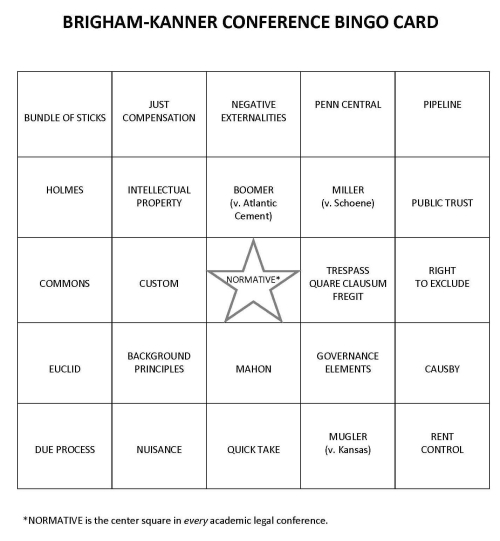
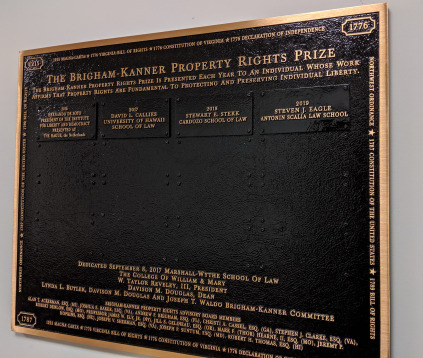
Although it is set to launch this Friday, October 2, 2020, there’s still more than enough time to register (and room at the inn) for you to join us for the 17th Annual Brigham-Kanner Property Rights Conference at the William and Mary Law School.

Like everything else this season, the Conference is online (register here), and although we would have preferred to gather in-person of course, the online format has some advantages: the number of attendees isn’t limited by the classroom size (this year’s registrations are at record levels), you don’t need to travel to Williamsburg, and the Conference is free if you don’t want Virginia CLE credit for attending. What a deal.

In our opinion, this is the best legal academy/practicing bar conference on property law. This year, the Conference honors the Brigham-Kanner Prizewinner, Harvard Law School Professor Henry Smith.

Here are the panel topics

Continue Reading There’s Still Room: Join Us For The 17th Annual Brigham-Kanner Property Rights Conference (Online, Free!)

IMG_20191203_064308

Today, the U.S. Supreme Court is considering our cert petition during the Court’s “long conference.”

This is the case focusing on the interplay between Williamson County‘s “final decision” ripeness rule and the “case and controversy” injury-in-fact standing requirement, and asks: if the government makes its final decision, but the plaintiff isn’t injured until later, has there been an actionable taking? 

Often, the date on which the government ripens a takings claim by making the final decision to apply the regulation to the plaintiff’s property, and the date on which the plaintiff’s property rights are actually affected are the same. But here, the two key events happened on different dates. The feds allege they made their final decision to jettison in the GM bankruptcy the plaintiffs’ tort and related claims on July 1, 2009. The Federal Circuit accepted the government’s assertion that final decision occurred when it uploaded its

Continue Reading Considered In Today’s SCOTUS Conference: What Triggers The Takings Statute Of Limitations?

2010-03-25 16.27.57

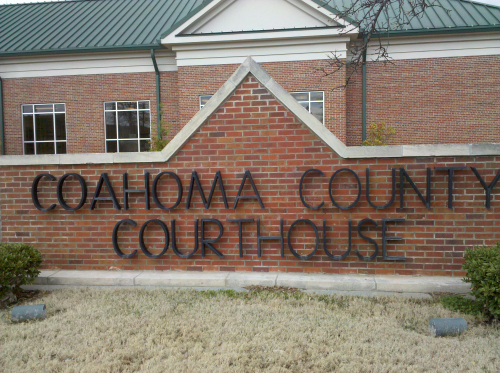
The plaintiff owned property down in the land of the Delta Blues. The intersection of Highways 61 and 361 in Coahoma County, Mississippi. That’s a pic of the courthouse, taken a few years ago, by the way (yeah, we went there). 

The owner tried several businesses there, first a blues club, then another club known as “Showtime,” and later a restaurant. Between Showtime and the restaurant, the County’s public works department struck and damaged the water utility’s supply lines that run along Highway 316, including the line that supplies water to the property. The damaged line is on land on which the County has a right-of-way, and is about 1/2 mile away from the plaintiff’s land. 

Instead of repairing the line, it made more sense for the County and the water company to simply paid each property owner who was then currently receiving water service the cost to repair

Continue Reading Miss App: Takings Statute Of Limitations Didn’t Expire Because There Was No Taking (And Even If There Was One, The Claim Is Too Late)

What place do you think of when you hear the word “earthquake? Most likely California, we’re betting.

And it’s also very likely that you didn’t think “Ohio.”

Well, that’s probably what everyone involved in the Ohio Supreme Court case State ex rel. AWMS Water Solutions, LLC v. Mertz, No. 2019-0493 (Sep. 23, 2020) thought too. Until AWMS sought salt-water injection well permits from the State of Ohio, and “[t]he next day, a 2.7-magnitude earthquake was recorded in Youngstown, Ohio, about seven miles from AWMS’s Weathersfield Township site and about one mile from an injection well known as “Northstar #1” that was not related to AWMS’s wells.” Slip op. at 3. Earthquakes? In Ohio?

A week later, the State determined that Northstar #1 should be taken out of operation, and the very next day, a 4.0 earthquake “was recorded within one mile of Northstar #1. Slip op. at 3. [That

Continue Reading Earthquake In Ohio: The Jury Should Decide Lucas And Penn Central Takings After State Shut Down Injection Wells For Causing Earthquakes