2022

Here’s a recently-filed cert petition in a pipeline case. This one asks whether an agency — here, FERC — has primary administrative jurisdiction over a facial challenge to Congress’ delegation of federal eminent domain authority to a private party. 

Here are the Questions Presented:

Whether a facial challenge to Congress’s delegation of eminent domain power to private parties is properly filed in district court, as this Court held in PennEast Pipeline Co. v. New Jersey, 141 S. Ct. 2244 (2021), or with FERC, which has admitted it has no jurisdiction to adjudicate the constitutionality of this delegation.

Whether a facial challenge to Congress’s overly broad delegation of legislative power to FERC is properly filed in district court or with FERC, which has admitted it has no jurisdiction to adjudicate the constitutionality of this delegation.

Whether a facial challenge to Congress’s delegation of eminent domain power to FERC is properly
Continue Reading New Takings Cert Petition: Can An Agency Decide Constitutionality Of Delegation Of Federal Eminent Domain Power?

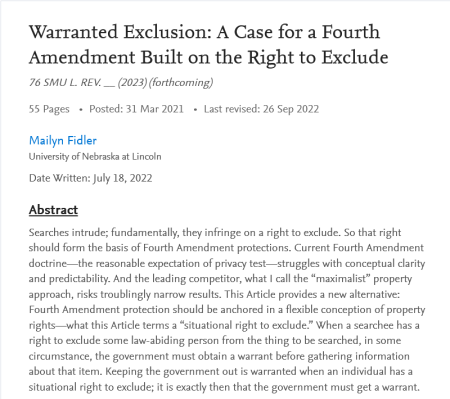
Screenshot 2022-10-02 at 19-57-06 Warranted Exclusion A Case for a Fourth Amendment Built on the Right to Exclude

Check this out: a new article from lawprof Mailyn Fidler (U Nebraska SOL), “Warranted Exclusion: A Case for a Fourth Amendment Built on the Right to Exclude,” 76 SMU L. Rev. ___ (2023) (forthcoming).

The Abstract:

Searches intrude; fundamentally, they infringe on a right to exclude. So that right should form the basis of Fourth Amendment protections. Current Fourth Amendment doctrine—the reasonable expectation of privacy test—struggles with conceptual clarity and predictability. And the leading competitor, what I call the “maximalist” property approach, risks troublingly narrow results. This Article provides a new alternative: Fourth Amendment protection should be anchored in a flexible conception of property rights—what this Article terms a “situational right to exclude.” When a searchee has a right to exclude some law-abiding person from the thing to be searched, in some circumstance, the government must obtain a warrant before gathering information about that item. Keeping the government

Continue Reading New Article: “Warranted Exclusion: A Case for a Fouth Amendment Built on the Right to Exclude”

PXL_20220927_164202969

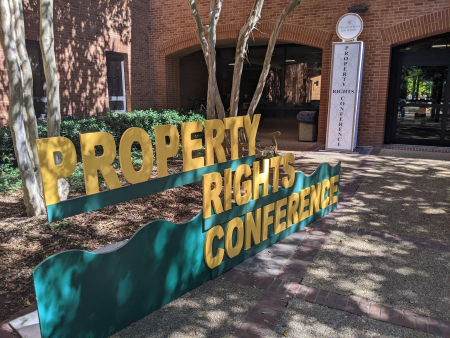
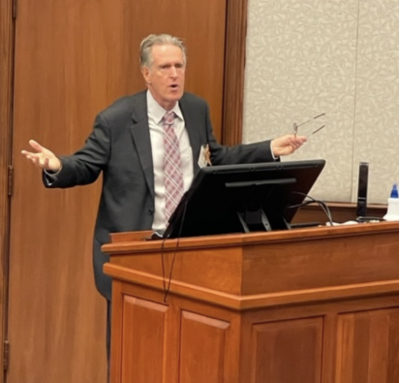
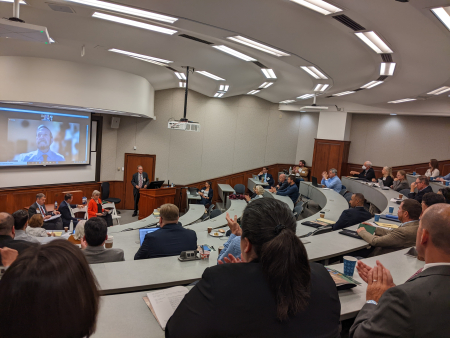
We spoke on the second panel of the day at the 2022 Brigham-Kanner Property Rights Conference at the William and Mary Law School. The subject of our panel — which included Professors David Callies, Tim Mulvaney, and Dave Owen — was “Reshaping the Framework Protecting Property Under the Roberts Court.

Here’s a rough transcript of my remarks.

————————————–

President Reveley, Professor Butler, distinguished Brigham-Kanner Prizewinners (present and future), mentors, colleagues, family and friends: thank you for the opportunity to speak today.

The story goes that when asked what it was like to be a part of the “Rat Pack,*” that Dean Martin responded “It’s Frank’s world, we just live in it.”

Fd5_62PUoAEo-y8

When I first heard the title of this portion of the program and the discussion of how and if the Roberts Court is reshaping property, my first reaction was a paraphrase of Dean

Continue Reading Brigham-Kanner Property Rights Conference 2022 Report: It’s Chief Justice Roberts’ Property World, We Just Live In It

The facts of the Connecticut Appellate Court’s opinion in Schaghticoke Tribal Nation v. Connecticut, No. AC 43811 (Sep. 27, 2022), really stand out.

Back in the day — and we mean waaaaay back in the day — as in 1801! — the State of Connecticut sold some land which in 1752 (!) the Colony of Connecticut had allowed members of the Schaghticoke tribe to use,.

Flash forward to present day when the Nation sued, alleging the 1801 sale was a breach of the State’s trust duties, and a taking of the Nation’s private property. The short story is that the trial court dismissed and the appellate court affirmed. But the real interesting story is the longer one, and we hope you find the time to read the opinion’s factual recitation.

That longer story starts in 1736 when the tribe settled in an area along the Housatonic River. In response

Continue Reading Connecticut’s 1801 Sale Of Tribal Land Was Not A Taking

We were all set to write a deep and insightful takings analysis of the U.S. Court of Appeals’ recent opinion in Net Choice, LLC v. Paxton, No. 21-51178 (Sep. 16, 2022), a challenge by the major social media platforms to a Texas statute that limits the platforms’ ability to censor speech or “de-platform” (kick out) speakers they don’t like.

In NetChoice, the Fifth Circuit sustained the statute against a Free Speech challenge. There’s been a lot of commentary on the court’s reasoning, as well as the conflicting result reached by the Eleventh Circuit in a similar case. See here and here, for example.

But the arguments in both of those cases focused on the First Amendment speech issues. Naturally, we don’t limit our view of the issues, and see lurking property rights questions. But in the Fifth Circuit case, the plaintiffs purposely avoided raising takings claims:

Continue Reading Viewing Social Media Content Censorship Through The Takings Lens

PXL_20220921_210440256
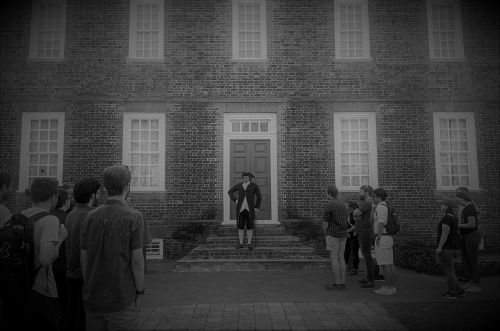
Introduced on George Wythe’s steps.

One of the (many) great things about teaching and studying law at the William and Mary Law School is the location. A short walk from historic Williamsburg, the Law School (the nation’s first law school, by the way) is at the center of where some very important property events took place.

So it was last evening. The W&M Legal History Society asked Thomas Jefferson, Esq., an up-and-coming local Williamsburg lawyer to speak to a group of law students and lawprofs, offering his thoughts about the profession. He even was eager to respond to some very difficult questions about his life, his philosophy and politics, and his personal conduct.

Meeting on the front steps of Jefferson’s mentor George Wythe’s home, we got to know a bit more about Mr. Jefferson’s W&M training, his legal apprenticeship under Mr. Wythe, and some of the lawsuits in

Continue Reading The Pursuit Of Happiness, Or Property? Asking T. Jeff The Tough Questions

  Screenshot 2022-09-20 at 10-17-17 Amazon.com I'm with stupid

Coulda been worse.

When the Third Circuit’s published opinion in Yaw v. Delaware River Basin Comm’n, No. 21-2316 (Sep. 16, 2022) popped up in our feed we got a slight frisson in anticipation – a claim that the Commission’s banning of fracking was a taking.Thank you Knick for opening the federal courts back up to takings claims!

But alas, no decision on the merits. After all, one of the downsides of federal court is the higher justiciability barriers that must be overcome before the court deals with the merits of a takings claim. And so it is in this opinion:

Plaintiffs-Appellants—two Pennsylvania state senators, the Pennsylvania Senate Republican Caucus, and several Pennsylvania municipalities—filed this lawsuit challenging the ban. Among other things, they allege that, in enacting the ban, the Commission exceeded its authority under the Delaware River Basin Compact, violated the Takings Clause of the United

Continue Reading I Made A Takings Claim And All I Got Was This Lousy Opinion On Article III Standing

Clint Schumacher’s Eminent Domain podcast is one of those things that we almost shouldn’t post about. After all, every episode is worth your time. But this one is especially good. After all, it features our law firm colleague and friend Jon Houghton, discussing what you all know is one of our fave topics, regulatory takings.

As Clint describes it:

Jon Houghton of Pacific Legal Foundation joins the podcast today to talk about regulatory takings. This is a complex area of the law, but Jon is a true expert and breaks it down into understandable pieces. He discusses how practitioners can assess when a regulation has risen to the level of a taking. He also discusses regulatory taking issues and cases that are current.

So even though we always say “check out the Eminent Domain Podcast,” we’re saying it again. Check it out.Continue Reading Jon Houghton On Regulatory Takings – Eminent Domain Podcast

On the day we celebrate Constitution Day (or should we say Khaaaaan-stitution Day?) we have to admit that pretty much nothing beats One Named Kirk’s reading of the Preamble

KIRK: This was not written for chiefs.Hear me! Hear this! Among my people, we carry many such words as this from many lands, many worlds. Many are equally good and are as well respected, but wherever we have gone, no words have said this thing of importance in quite this way. Look at these three words written larger than the rest, with a special pride never written before or since. Tall words proudly saying We the People. That which you call “Ee’d Plebnista” was not written for the chiefs or the kings or the warriors or the rich and powerful, but for all the people! Down the centuries, you have slurred the meaning of the words: “We

Continue Reading Hear Me! Hear This! This Was Not Written For Chiefs! – Happy Constitution Day 2022