2022

Check this out: our friend and colleague, eminent domain lawyer Stephen J. Clarke is the new Jeopardy! champion.

And it wasn’t just a plain-old win for Steve. It was an exciting, come-from-behind triumph, based (no doubt) on his careful, strategic thinking and thoughtful play (this is chess, not checkers!). Just like his eminent domain cases!

Watch the above, or see “BUZZER BEATER Jeopardy! fans stunned by WILD upset in final round after champ lost by shocking dollar amount in game with Mayim Bialik.”

The big moment:

Screenshot 2022-07-11 at 20-30-18 Jeopardy! fans stunned by WILD upset as champ loses by shocking dollar amount

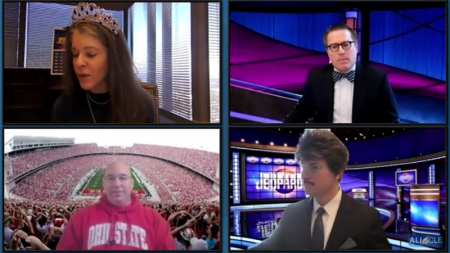
But as many of you know, this wasn’t Mr. Clarke’s first rodeo. Recall that he served as a contestant at our Ethics Jeopardy! at the 2021 ALI-CLE Eminent Domain and Land Valuation Litigation Conference. So yes, in addition to valuable CLE credits, the Conference is great training for your game show appearances!
Es1-dpAXMAo3p_h

Well done, and congratulations Steve.Continue Reading Eminently Outplayed: Condemnation Lawyer Is The New Jeopardy! Champion – Well Done, Steve Clarke!

In Witman v. City of Billings, No. DA 20-0609 (July 5, 2022), the Montana Supreme Court rejected an inverse condemnation damaging claim after a grease clog in city sewers resulted in 1000 gallons of raw sewage flooding the Witman home. Ugh.

Despite rules that limit what is supposed to go into sewage systems, people put all kinds of stuff, including grease, into toilets and drains. The city cleans the pipes out every year, but “experiences ten to fifteen [Sanitary Sewer Overflow events] annually.”

The trial court denied the owner summary judgment on liability, and instead held that the city was not liable as a matter of law because it had not undertaken “deliberative affirmative action.”

The Supreme Court rejected the owner’s argument that purposeful action may be necessary in eminent domain takings, but not in inverse, and an invitation to adopt the California approach to inverse. The owner

Continue Reading Montana: Owners Are You-Know-What-Out-Of-Luck For Sewage-Backup Damaging Claim, Unless They Show Torty Evidence

Here’s the latest in a case we’ve been following from when the takings case was rejected by the Court of Federal Claims, and the dismissal affirmed by the Federal Circuit.

Yes, this is the “bump stock” takings case, and the Federal Circuit decision has now triggered a cert petition.

You remember that one. Petitioners owned “bump stocks” that apparently were legal at the time they acquired them. But later, the feds declared them illegal to own or possess, and the bump stock owners either turned theirs over to the government or destroyed them. Next up, a takings case: if getting bump stocks off the market is a good thing, the Armstrong principle compels compensation (the cost of public benefits should be distributed among the benefited public).

The CFC dismissed. We criticized the CFC’s rationale that the reason the bump stock ban was not a taking was

Continue Reading New Cert Petition: Does Possibility Of Agency Regulation Restrict Property?

Screenshot 2022-07-07 at 13-44-38 The Brigham-Kanner Property Rights Conference

By now, you know that the 19th Brigham-Kanner Property Rights Conference is set for September 29-30, 2022, at the William and Mary Law School in Williamsburg, Virginia (register here – space is limited – fee ranges from free to $195 – a bargain!). And you know that our colleague Jim Burling is this year’s B-K Prize winner.

But now you know who is speaking at the Conference, and the topics: here’s the full agenda. The list of speakers is too long to list here but check out these topics:

  • Panel 1: The Importance of Property Rights: A Tribute to James S. Burling
  • Panel 2: Reshaping the Framework Protecting Property Under the Roberts Court (that’s the panel we’re speaking on)
  • Roundtable: Emerging Issues in Takings and Property Rights Litigation
  • Panel 3: Choosing A Property Regime
  • Panel 4: Property Rights in Times of Scarcity and Crisis

Who can

Continue Reading Here’s The Full Speaker And Topic List For The Brigham-Kanner Property Rights Conference (Sep 29-30, 2022)

IMG_2405
No smoking in Hatu

A short one from the U.S. District Court in Utah, but worth reading because it highlights one of those unresolved issues: the remedy for a “takings” claim.

Now, you’ve heard the Supreme Court describe just compensation as the “default” remedy for regulatory takings and inverse claims. But it isn’t the only remedy, is it? 

Well, in this Order, the U.S. District Court for the District of Utah seems to think so. At least it is in federal court.

Utah adopted a statute that prohibits tobacco businesses from operating within 1000 feet of a school. Smoke shops sued in federal court for a taking under section 1983 and other things (due process, First Amendment, &c.). The defendant was not the State of Utah because, you know, you can’t sue a state for money in federal court unless it consents. So as in other cases,

Continue Reading You Can Sue Utah For Compensation In State Court, So No Injunction In Federal Court

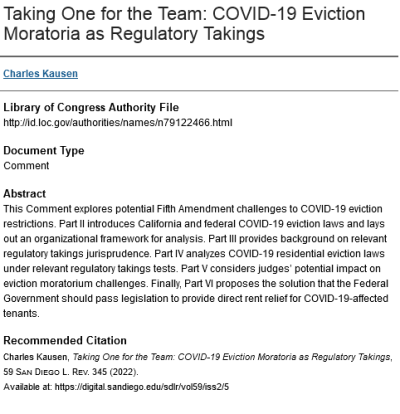
Screenshot 2022-07-02 at 09-16-05 Taking One for the Team COVID-19 Eviction Moratoria as Regulatory Takings

Check it out: a new article from the San Diego Law Review that’s worth reading. Here’s the Abstract:

This Comment explores potential Fifth Amendment challenges to COVID-19 eviction restrictions. Part II introduces California and federal COVID-19 eviction laws and lays out an organizational framework for analysis. Part III provides background on relevant regulatory takings jurisprudence. Part IV analyzes COVID-19 residential eviction laws under relevant regulatory takings tests. Part V considers judges’ potential impact on eviction moratorium challenges. Finally, Part VI proposes the solution that the Federal Government should pass legislation to provide direct rent relief for COVID-19-affected tenants.

Get the pdf here: “Taking One for the Team: COVID-19 Eviction Moratoria as Regulatory Takings,” 59 San Diego L. Rev. 345 (2022).

Our take on Co-19 takings (not just eviction moratoria) here. And our thoughts on emergency response laws, generally.Continue Reading New Article: “Taking One for the Team: COVID-19 Eviction Moratoria as Regulatory Takings”

001q

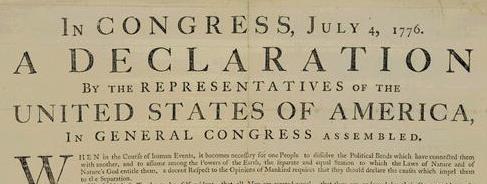
It’s not quite “Yes Virginia…” but here is our annual Independence Day missive on the legal angle on the Declaration. This may have special significance as the nation is in the process of reexamining many of our assumptions and history. But though the Founders may have been flawed individuals, there’s really no question about the ideas they captured, and — thankfully — put down on paper for posterity.

Civil Beat published a version of this post here.

—————————————————————————————

We know lawyers are easy targets (we enjoy lawyer jokes as much as the next person, i.e., What’s the difference between a good lawyer and a great lawyer? A good lawyer knows the law; a great lawyer knows the judge.). Still, as we celebrate our independence, we note that author Thomas Jefferson and 23 other of the 56 signers of the Declaration of Independence were lawyers, and that


Continue Reading The Verified Complaint In Equity: The Declaration Of Independence, 2022 Version

20160126_163953

Here’s the latest in a case we’ve been following.

Now before you get all worked up about the Texas Supreme Court agreeing that the private company proposing to build a bullet train between Dallas and Houston may exercise the sovereign power of eminent domain (see Miles v. Texas Central RR & Infrastructure, Inc., No. 20-0393 (June 24, 2022), remember that this is a case involving only the construction of Texas statutes. Not the court deciding whether the state’s delegation of eminent domain power conforms to some constitutional public use standard. 

That being said, the opinion may have limited reach (thank goodness) but is still worth reviewing for those of you not in Texas.

Property owners objected to the company taking their property, arguing that it did not qualify under Texas statutes delegating the state’s eminent domain power to a “railroad” and to “interurban electric railways.” This thing may

Continue Reading Texas: Proposed Bullet Train Is An “Interurban Electric Railway” And May Exercise Eminent Domain (At Least It Isn’t A Fish)

The owners of the Hollymead Town Center (Route 29, LLC) located, perhaps not surprisingly along U.S. Route 29 in Albemarle County outside of Charlottesville, needed the County to rezone a portion of the property.

Part of the rezone was something called a “conditional proffer” that required a cash donation of $50,000 “[w]ithin thirty days after demand by the County after public transportation service is provided to the Project,” and then additional donations of fifth large each year for 9 years for a total of a half-million.

There was some discussion among the public and County officials about whether this condition would ever be actually realized because public transportation service might not be provided in the future, but in the end the County approved the “Commuter Route” that is projected to run “from northern Albemarle County to downtown Charlottesville.” But the owner objected to the cash payment, throwing up the Nollan

Continue Reading Virginia: Property Owner Can Object To Permit Condition As Unconstitutional, Even After Accepting The Permit

A long-ish opinion from the Alabama Supreme Court in Douglas v. Roper, No. 1200503 (June 24, 2022). But a short post because the good stuff is relatively brief.

Bottom line: property owners have a vested interest in excess money generated from a tax sale of their property, and the Alabama legislature cannot prohibit the owners from claiming that excess equity.

Quick background: the legislature enacted a statute that required property owners who had their properties sold to satisfy tax debts first have redeemed the property before they could claim the excess funds, if any, from the sale. This had the effect of permitting the government in many cases to keep that excess (i.e., the property’s equity), as a little something extra — what our New Orleans friends might call lagniappe. Property owners objected, arguing that retroactively applying the statute would be a taking.

There’s a lot to

Continue Reading Alabama: Government Can’t Keep The Change After A Tax Sale