July 2025

Here’s the latest in a case we’ve been following.

In Englewood Hospital & Medical Center v. State, No A-16-24 (July 16, 2025), the New Jersey Supreme Court rejected physical and regulatory takings claims made by hospitals which are required to treat nonpaying patients even though the Medicare reimbursements available will not cover the hospitals’ costs. 

Here’s the bottom line:  

Under the facts as presented in this case, we hold that charity care is not an unconstitutional “per se” physical taking of private property without just compensation. It does not grant an affirmative right of access to occupy hospitals; it does not give away or physically set aside hospital property for the government or a third party; and it does not deprive hospitals of all economically beneficial use of their property. We also hold that charity care is not an unconstitutional “regulatory” taking of private property without just compensation.

Continue Reading NJ: Forcing Hospitals To Lose Money To Treat Nonpaying Patients Isn’t A Taking
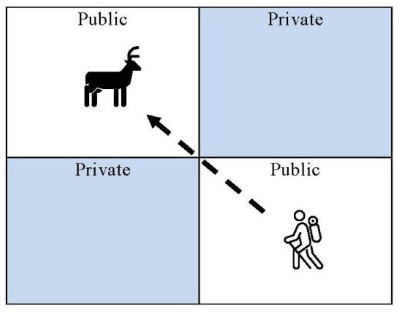
CornercrossingYour Mission: go from Public to Public, without invading Private 

Here’s the latest in a case we’ve been following from its inception.

This is the “corner crossing” case, which as we noted here, is sure to be a mainstay in future Property Law casebooks, because the checkerboard pattern of public and private land ownership has resulted in a fascinating case. We’re not going to wait for the pocket part, and the case will almost certainly make an appearance in our William and Mary Eminent Domain and Property Rights course in the fall.

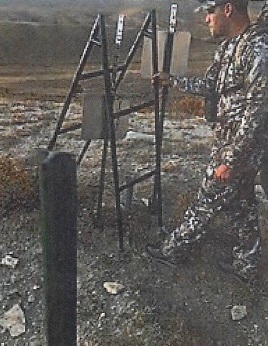
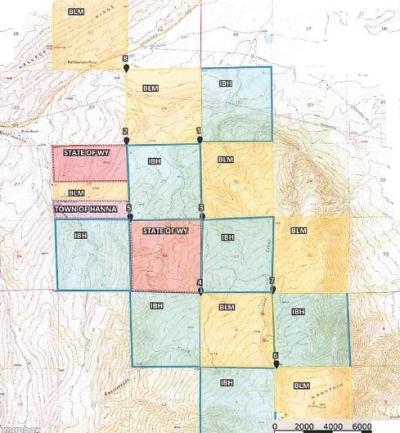
Hunters want to access the public lands. This can only be accomplished by crossing at the corners where the parcels connect as shown in the above illustration. Problem is that this cannot be done without trespassing on the private parcels. Even where the hunters go through “Twister“-like contortions to avoid touching the land or violating private airspace. Check this out:

Ladders
Now that is dedication.

After the Tenth Circuit held that the The private property owner has now filed a cert petition.

Before we go further, here’s the Question Presented:

Between 1850 and 1870, Congress ceded millions of acres of public land in the West to railroads in a distinct checkerboard pattern of alternating public and private plats of land. The result of Congress’s peculiar land-grant scheme is that many parcels of public land in the checkerboard are landlocked and accessible only by “corner crossing”—the act of moving diagonally from the corner of one public parcel to another, trespassing through the adjoining private property in the process.

Nearly fifty years ago, this Court unanimously rejected the government’s argument that Congress “implicitly reserved an easement to pass over the [privately-owned] sections in order to reach the [public] sections that were held by the Government” in the checkerboard. Leo Sheep Co. v. United States, 440 U.S. 668, 678 (1979). In Leo Sheep, that meant the government could not create public access to a Wyoming reservoir by clearing a dirt road that crossed two checkerboard corners—at least not without exercising the government’s power of eminent domain and paying just compensation.

In 2021, four hunters corner crossed through Iron Bar’s property to hunt on public land; Iron Bar sued for trespass. In the decision below, the Tenth Circuit recognized that, under Wyoming law, the hunters had trespassed on Iron Bar’s property. The court nonetheless held that an 1885 federal statute governing fences—the Unlawful Inclosures Act—implicitly preempted Wyoming law and “functionally” created a “limited easement” across privately-held checkerboard land.

The question presented is:

Whether the Unlawful Inclosures Act implicitly preempts private landowners’ state-law property right to exclude in an area covering millions of acres of land throughout the West.

Here are the actual parcels, and some of the corner crossings at issue (again, from the District Court).

Signs1

The Tenth Circuit started by noting that under Wyoming state law, corner crossings are likely actionable civil trespasses. But the court went on, concluding that the federal anti-fencing statute “preempts” state property law and prohibits the private owners from excluding the hunters. In short, the federal statute and interpreting caselaw “have overridden the state’s civil trespass regime[.]” Id.

In short, here is the Tenth Circuit’s rationale: The owners here have a right to exclude corner-crossers. But the statute says that the public has a right to access public lands, which means any private owner that is getting in the way of that — even where that owner does nothing affirmative to impede public access — is creating a nuisance.

Now the issue has been offered up for Supreme Court review. Stay tuned to see what the Court does with this fascinating case. 

Petition for Writ of Certiorari, Iron Bar Holdings, LLC v. Cape, No. ___ (U.S. July 16, 2025) 

Continue Reading New Cert Petition In “Corner Crossing” Case: Can A Federal Anti-Fencing Statute “Preempt” A State-Recognized Right to Exclude?

Sacto_votes

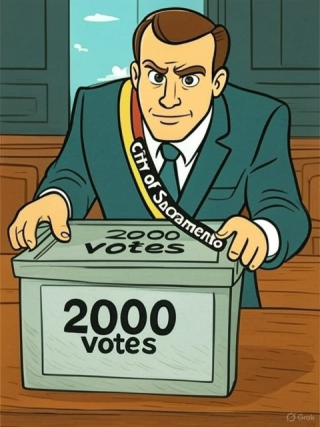
The above is the image Skynet returned when we
asked for a graphic for this post

The California Court of Appeal’s recent opinion in Dessins LLC v. City of Sacramento, No. C100644 (July 9, 2025) doesn’t deal with eminent domain or takings, but is about municipal fees and the way California requires these things get adopted. But we’re going to cover it, if only briefly. 

Why? Because it turns out that this decision tells us a lot about how California courts seem to look for any way to uphold exercises of government power. And when that power comes directly into conflict with the voters as it does here, one guess who wins.  

A bit of background for you non-Californians.

If you were to not have an understanding of the history of local fee collection and property taxation in California, you might be under the impression that it is pretty tough

Continue Reading One City, Many Votes: Cal App OK’s Municipal Sleight-of-Law To Permit City To Impose Fees… On Itself (And Others)

JLEPcover

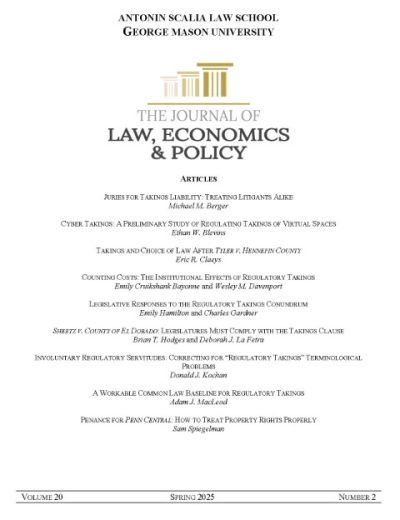
Last year, we attended a conference devoted to the future of regulatory takings, hosted by the Antonin Scalia School of Law (George Mason U), and Pacific Legal Foundation.

The publisher, the Journal of Law, Economics, and Policy has released the articles and essays from that conference, and made them available here

Here’s the list of articles:

  • Michael M. Berger, Juries for Takings Liability: Treating Litigants Alike
  • Ethan W. Blevins, Cyber Takings: A Preliminary Study of Regulating Takings of Virtual Spaces
  • Eric R. Claeys, Takings and Choice of Law After Tyler v. Hennepin County
  • Emily Cruikshank Bayonne and Wesley M. Davenport, Counting Costs: the Institutional Effects of Regulatory Takings
  • Emily Hamilton and Charles Gardner, Legislative Responses to the Regulatory Takings Conundrum
  • Brian T. Hodges and Deborah J. La Fetra, Sheetz v. County of El Dorado: Legislatures Must Comply With the Takings Clause
  • Donald J. Kochan, Involuntary Regulatory Servitudes:


Continue Reading New Property Rights Symposium Published – “Too Far: Imagining the Future of Regulatory Takings”

Here’s the latest in a case we’ve been following.

In Idaho Power Co. v. Bean, No. 23CV12213 (July 9, 2025), the Oregon Court of Appeals reversed a trial court ruling which held that Oregon’s precondemnation entry statute, which requires “reasonable compensation” for physical damage or substantial interference with the owner’s possession or use, sets the bar too high and the U.S. and Oregon Constitutions require “just compensation” for any appropriation of a right to physically invade, not just for physical damage or substantial interferences.

The court of appeals held that “temporary precondemnation entries–at least insofar as they do not cause any ‘substantial interference with the property’s possession or use’ or ‘any physical damage’–are consistent with ‘longstanding background restrictions on property rights’ and ‘traditional common law privileges to access private property.'” Slip op. at 699. In short, the court concluded that the U.S. and Oregon constitutions permit exactly

Continue Reading Oregon App: Not All Precondemnation Entries Are Takings – It’s Gotta Be “Substantial”

“The Irrigation District will disavow any knowledge of your actions…”

In Hamann v. Heart Mountain Irrigation District, No. S-24-0234 (July 11, 2025), the Wyoming Supreme Court unanimously held that a state agency cannot avoid its obligation to provide just compensation when its employee causes a taking or damaging of private property, merely because the employee was not acting under an express instruction to take or damage property. 

In short, an agency can’t simply disavow actions of its employees that take take or damage property (or in this case, physically injure the owner). 

This is one of ours, so we are not going into great detail, but here is the short story.

A county road runs along the northern boundary of Hamann’s ranch. The Irrigation District operates and maintains a canal adjacent to the road and has used the northern road for access for decades. But the District also

Continue Reading Wyoming: Inverse Condemnation Claim Is How Owners Protect Property Rights Even Where Government Hasn’t Instituted Formal Action

What’s going on in the Sixth Circuit? First, there was this opinion in Howard v. Macomb County, which in our view really missed the Knick vibe and resurrected the overruled Williamson County “state procedures” requirement.

Now there’s a doubling down, OPV  Partners, LLC v. City of Lansing, No. 24-2035 (July 9, 2025). Unpublished, most likely because it doesn’t add anything new to an existing existing circuit split, and relies on Howard. Neither OPV nor Howard uses the word “exhaustion” or even mentions Williamson County or worse yet, Knick. Nor do they mention administrative remedies. But that’s sure what it looks like to us.

The issue in OPV was whether the city is liable for, inter alia, taking OPV’s private property by denying a certificate of occupancy for residential units that OPV rented. The city had flagged these units for maintenance problems and hit them with “pink”

Continue Reading CA6 Adds To Williamson County Resurrection: You “Forfeit” Your Takings Claim When You Don’t Exhaust Administrative Procedures To Ask For Compensation

The latest episode of the Is That Even Legal?” podcast features a familiar voice, that of former Eminent Domain Podcast host, Clint Schumacher who joins host Bob Sewell as a guest to discuss takings by eminent domain, and by overregulation. 

Clint joins the ITEL Podcast to discuss a situation that has been in the news lately, the possible taking of American-born Pope Leo XIV’s childhood home in Illinois to preserve it. What was just an old house yesterday is today history worth preserving, apparently!

Here’s a description of the episode:

What happens when the government decides it needs your land? Does the Constitution really allow officials to seize your family home, farm, or business property against your will? The answer might disturb you.

Attorney Clint Schumacher, a leading eminent domain expert, joins us to unravel the complex world where constitutional rights, property ownership, and government power collide. Schumacher

Continue Reading New “Is That Even Legal” Pocast Ep: “This Land Is Your Land…Till It’s Not” (Clint Schumacher)

A fascinating dirt … err water law (?) decision from the Texas Supreme Court.

We were all set to write up the recent decision in Cactus Water Services, LLC v. COG Operating, LLC, No. 23-0676 (June 27, 2025), when the Texas Agriculture Law Blog beat us to the punch and published a great summary and analysis of the case that we could never beat. Check out Tiffany Lashmet, “Texas Supreme Court: Produced Water Conveys to Mineral Lessee” (June 30, 2025) for details and analysis. 

The fight was between the surface owner and the owner of the mineral estate about who owns “produced water,” a fancy way of saying the byproduct of fracking for oil and gas. As the court described it, it is “a mixture of fracking fluid, hypersaline brine, residual hydrocarbons, and other substances of varying concentrations.” Slip op. at 6-7. Perhaps not surprisingly, until fairly recently

Continue Reading Texas: Liquid Oil And Gas Waste Belongs To Mineral Owner

Bradyfrontpage

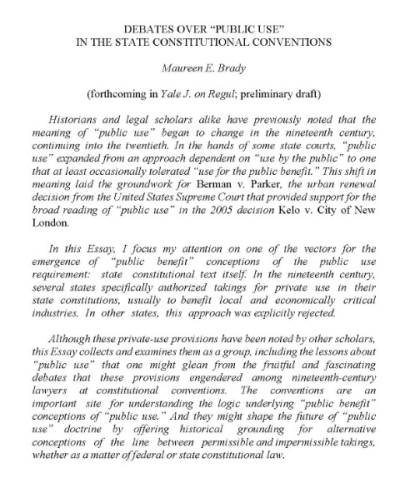
Be sure to check out the latest scholarship from lawprof Molly Brady, which sheds new light on the public use question in eminent domain, “Debates Over ‘Public Use’ in the State Constitutional Conventions,” forthcoming from the Yale Journal of Regulation. 

Here’s the Abstract:

Historians and legal scholars alike have previously noted that the meaning of “public use” began to change in the nineteenth century, continuing into the twentieth. In the hands of some state courts, “public use” expanded from an approach dependent on “use by the public” to one that at least occasionally tolerated “use for the public benefit.” This shift in meaning laid the groundwork for Berman v. Parker, the urban renewal decision from the United States Supreme Court that provided support for the broad reading of “public use” in the 2005 decision Kelo v. City of New London.

In this Essay, I focus my

Continue Reading Forthcoming Article: Maureen Brady, “Debates Over ‘Public Use’ in the State Constitutional Conventions,” Yale J. Regulation