


LUI 2020 slider

Join us starting tomorrow, Tuesday, May 12, 2020 for the 34th Land Use Institute. Originally scheduled for April in Tampa, we obviously couldn’t do tha, so we did the next best thing — moved this venerable course online. The Planning Chairs (Frank Schnidman and Dean Patricia Salkin) have assembled the usual hot topics session and a lineup of expert faculty (we’re speaking at the 2:45 ET session on Federal Laws (in our case, NEPA, Water, and Wetlands (including the Maui case from SCOTUS)). 

The program takes place over three days Tuesday, Wednesday, and Thursday, and you can either register for the sessions or all three days, with various discounts if you are a member of the American Bar Association, and even more if you are a member of the Section of State and Local Government Law. 

Here’s the three-day agenda. There is a lot here to like, and we

Continue Reading Join Us This Week: May 12-14, 2020 For (Virtual) Land Use Institute Webinar Series

Here’s the latest in a case we’ve been following. In Pakdel v. City and County of San Francisco, No. 17-17504 (9th Cir. Mar. 17, 2020), a 2-1 panel of the U.S. Court of Appeals held that a federal takings case was not ripe because the plaintiffs had not sought an exemption (“variance”) from the regulation.

Now, the property owners have asked the en banc Ninth Circuit in this petition to consider the issue. The panel decision created a “target rich environment” as they say: 

The panel decision conflicts with the Supreme Court’s decisions in Patsy v. Board of Regents of State of Florida, 457 U.S. 496 (1982), and Williamson County Reg’l Planning Comm’n v. Hamilton Bank of Johnson City, 473 U.S. 172 (1985), and previous decisions of this Court. Dodd v. Hood River County, 59 F.3d 852 (9th Cir. 1995); Mechammil v. City of San Jacinto

Continue Reading CA9 En Banc Petition: Must A Property Owner Exhaust Admin Remedies Before Filing A Federal Takings Claim?

IMG_20191024_125128
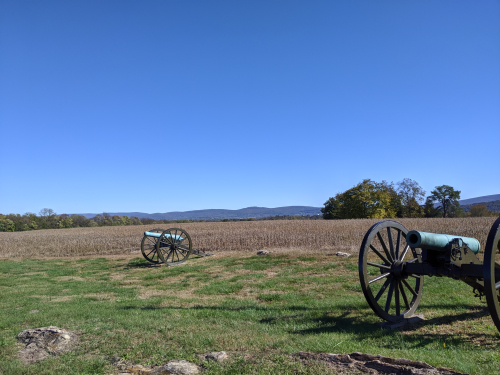
“The Cornfield” at Antietam

Two more complaints that challenge state-ordered shut-down orders as takings. The first from Maryland, the second from across the country in Nevada. These join an ever-growing list of such lawsuits. See here, here, here, here and here, for example.

We set out what we think about how these type of claims should be analyzed in this article (“Evaluating Emergency Takings: Flattening The Economic Curve“). And, we’ll be moderating a Federalist Society teleforum (open to the public!) next Friday on “COVID-19 & Property Rights: Do Government Actions in Response to the Coronavirus Pandemic Create Compensable Takings?” if you want to get in on the issue.

Of course, we shall keep following along. 

(What’s the deal with the photos you ask? Nothing, except the first is from the Antietam Battlefield on our last visit (the Maryland complaint is

Continue Reading Two More Complaints Challenging Shut-Down Orders As Takings (Md, Nev)

Please mark your calendars for Friday, May 15, 2020 at 2:30pm Eastern Time, for the teleforum sponsored by the Federalist Society’s Environmental Law & Property Rights Practice Group, “COVID-19 & Property Rights: Do Government Actions in Response to the Coronavirus Pandemic Create Compensable Takings?”  

The issue: how should courts evaluate the claims for compensation arising out of emergency measures? This question is on the front burner at the moment (and will continue to be because the courts will likely be confronted from these type of claims as the fallout continues). For example, here are some of the complaints that have been filed in courts around the nation: see here, here, here, here and here.  

Please join the program (public welcome). It will be a moderated discussion between two experts in the area, both of whom have been following the issue closely, and who have written

Continue Reading Join Us Next Friday, May 15 (2:30pm ET, 11:30am PT, 8:30am HT): FedSoc Teleforum: “COVID-19 & Property Rights: Do Government Actions in Response to the Coronavirus Pandemic Create Compensable Takings?”

Thanks to a colleague for cluing us in to the first case on the docket today, that brings to mind ferae naturae, Pierson v. Post, and (of course) takings.

In Britton v. Keller, No. 1:19-cv-01113 (D. N.M. Apr. 16, 2020), the U.S. District Court for the District of New Mexico held that the City of Albuquerque could not be liable for a taking of a homeowner’s property when it set up a “trap, neuter, and release” site for feral cats next to her house. As you might expect, setting up a feral cat farm next to your house results in things like “disease vectors, property damage as a result of cat defecation and urination, and property damage from the feral cats themselves[.]” Slip op. at 2.  

We don’t have much to add to that, except to say the court goes about its analysis in the wrong way. First

Continue Reading Hey All You Cool Cats And Kittens: Creating A Feral Cat Colony Next To Your Property Isn’t A Taking

How should courts evaluate the claims for compensation arising out of emergency measures (many of which we’ve already seen; see here, here, here, here and here, for example)?

Rather than think about it piecemeal, we decided to write it up in a more comprehensive fashion. Here’s the result, so far. Rather than summarize it, let’s just cut-and-paste the Introduction. The complete piece is posted on SSRN, if you want to read it. 

Desperate times may breed desperate measures, but when do desperate measures undertaken during emergencies trigger the Fifth Amendment’s requirement that the government provide just compensation when it takes private property for public use?[1] The answer to that question has commonly been posed as a choice between the “police power”—a sovereign government’s power to regulate and restrict property’s use in order to further the public health, safety, and welfare[2]—and the eminent domain power, the authority to seize private property for public use with the corresponding requirement to pay compensation.[3]

But that should not be the question. An invocation of police power does not answer the compensation question at all, but is merely the predicate issue: all government actions must be for the public health, safety, or welfare, in the same way that an exercise of eminent domain power must be for a public use. In “normal” times, it is very difficult to win a regulatory takings claim for compensation. In the midst of emergencies—real or perceived—the courts are even more reluctant to provide a remedy, even where they should, and emergencies are a good time to make bad law, especially takings law. Emergencies do not increase government power, nor do they necessarily alter constitutional rights.[4] 

This article provides a roadmap for analyzing these questions, hoping that it will result in a more consistent approach to resolving claims for compensation that arise out of claims of emergencies—real or perceived. This article analyzes the potential takings claims stemming from emergency measures, mostly under current takings doctrine. What type of claims are likely to succeed or fail? Can a better case be made analytically for compensation?

Part I summarizes the economic “flattening the curve” principle that motivates takings claims for compensation. Part II sets out the prevailing three-factor Penn Central standard for how courts evaluate claims that a health, safety, or welfare measure “goes too far,” and requires compensation as a taking, examining the character of the government action, the impact of the action on the owner, and the extent of the owner’s property rights.[5] Deep criticism of Penn Central is beyond the scope of this article, and I will not here do more than accept it as the “default”[6]  takings test. But I do argue that the government’s motivation and reason for its actions—generally reviewed under the “rational basis” standard—should not be a major question in takings claims. Rather, as this article argues in Part III, the government’s emergency justifications should be considered as part of a necessity defense, and not subject to the low bar of rational basis, but a more fact and evidence driven standard of “actual necessity.” Part IV attempts to apply these standards and examines the various ways that emergency actions can take property for public use: commandeerings, occupations of property, and restrictions on use. I do not conclude that the approach will result in more (or less) successful claims for compensation, merely a more straightforward method of evaluating emergency takings claims than the current disjointed analytical methods.

In sum, this article argues there is no blanket immunity from compensation simply because the government claims to be acting in response to an emergency, even though its reasons and actions may satisfy the rational basis test. Instead, claims that the taking is not compensable because of the exigency of an emergency should only win the day if the government successfully shows that the measure was actually needed to avoid imminent danger posed by the property owner’s use, and that the measure was narrowly tailored to further that end.

————-

[1] See Robert Higgs and Charlotte Twight, National Emergency and the Erosion of Private Property Rights, 6 Cato J. 747 (1987) (“Much of the reduction [of private property rights] occurred episodically, as governmental officials too control of economic affairs during national emergencies—mainly wars, depressions, and actual or threatened strikes in critical industries.”).

[2] “Police power” describes everything a sovereign government can do. It even might be said to encompass the eminent domain power. See Hawaii Housing Auth. v. Midkiff, 467 U.S. 229, 240 (1984) (“The [Fifth Amendment’s] ‘public use’ requirement is thus coterminous with the scope of a sovereign’s police powers.).

[3] See U.S. Const. amend. V. The Fifth Amendment conditions the federal government’s takings power. See Barron v. Baltimore, 32 U.S. (7 Pet.) 243 (1833) (noting a wharf owner’s argument that city’s diversion of water pursuant to its police power could support a Fifth Amendment claim, but holding that the Fifth Amendment only limited the actions of the national government). The Fourteenth Amendment extended the just compensation requirement to the states as part of due process of law. See Chicago, B. & Q. R. Co. v. City of Chicago, 166 U.S. 226, 235 (1897).

[4] See Steven M. Silva, Closed for Business—Open for Litigation?, Nw. L. Rev. of Note (Apr. 29, 2020), https://blog.northwesternlaw.review/?p=1361 (“First, it must be recognized that the Constitution exists even in an emergency. The Constitution expressly permits some alterations to our ordinary system of rights during times of war—for example, the Third Amendment provides differing provisions for the quartering of soldiers in times of peace versus times of war—but those alterations are baked into the system, the Constitution does not disappear in war. And a pandemic is not even a war.”) (citing Home Bldg. & Loan Ass’n v. Blaisdell, 290 U.S. 398, 425 (1934))..

[5] Penn Cent. Transp. Co. v. New York City, 438 U.S. 104, 124-25 (1978).

[6] The Supreme Court has labeled Penn Central “default” test for regulatory takings. See Lingle v. Chevron U.S.A. Inc., 544 U.S. 528, 538-39 (2005).

Entire draft here

.
Continue Reading New Article – Evaluating Emergency Takings: Flattening The Economic Curve

Two more complaints challenging covid shutdown orders as takings (inter alia). Add to the growing list. See here, here, here and here, for other similar complaints.

The first is from California. It asserts that ordering “nonessential” businesses to shut down is a taking. The complaint alleges that unless the shut down is for “(1) destroying a building in front of a fire so as to create a fire break, (2) destroying a diseased animal, (3) rotten fruit or (4) infected trees,” it is a taking. 

The second is from New Jersey. So rather than get into the details, we’re going to send you over to our NJ colleague Tony Della Pelle, who has some thoughts here (“NJ Shutdown Challenge – I Can’t Rent My Beach House!“). 

Will there be more of these? As we have said before, for sure. Fasten your

Continue Reading Two More Takings Complaints Challenging Shut-Down Orders

What do you think of when you think of south Florida? Beaches? Jai Alai? Cuba Libre? Crockett and Tubbs and a career in southern law enforcement

Well, it better not be dog racing. Because by an amendment to the Florida Constitution (Amendment 13), the people of Florida banned it. Well, wagering on dog racing, technically. You can, apparently, still race dogs just for dog s**t and giggles.

Well, after the ban, the inevitable takings claim arrived, like the tail wagging the dog. In this Order, the U.S. District Court for the Northern District of Florida, dismissed the complaint for failure to state a claim. The court held the plaintiffs had standing, and the case was ripe and wasn’t barred by the 11th Amendment for some of the defendants. 

But naturally, we focused on the takings analysis. First, the court agreed with the

Continue Reading A Little Preview Of How Courts Are Going To Misapply Takings Analysis In Shutdown Cases – Federal Court: No Taking For Outlawing Dog Racing

If you were thinking of teeing up a case “just so” for Supreme Court review, what does your fevered quill-pen dream checklist look like? Well, here’s some of the usual things that are good indicators:


Continue Reading Your Takings Cert Petition Checklist: Ninth Circuit, En Banc Denial, Concurral, Dissental, Circuit Split, PLF

6a00d83451707369e201b8d25028d2970c-800wi

CHALLENGE: find the “damage” on the Loretto building

Here’s the amicus brief filed today by Pacific Legal Foundation that urges the Supreme Court to grant our cert petition in a case that asks:

To constitute a taking under the Fifth and Fourteenth Amendments, must a physical invasion also destroy or substantially impair an owner’s economically beneficial uses of property?

Yes, takings mavens, we’re talking Loretto and related. (If you want to see the truly “de minimis” invasion — and no damage — that resulted in Justice Marshall in that case concluding that the Takings Clause imposes a “categorical duty” to provide compensation for physical invasions, check out some recent photos of the Loretto building on Manhattan’s Upper West Side.)

Here’s the amicus brief’s Summary of Argument:

The Fritzes’ petition for a writ of certiorari raises an important question concerning the protections provided by the Takings Clause of the Fifth Amendment

Continue Reading New SCOTUS Amicus Brief Highlights Govt’s “Categorical Duty” To Compensate, Even Without Substantial Damage To Remainder