ALICLE-tagline-250x90

There’s still time to join us tomorrow, Friday, April 24, 2020 at 2-3pm Eastern Time, they will be presenting “Strategies for Litigating Regulatory Taking Cases” in a webinar produced by ALI-CLE. Register here (multiple attendee discounts available). 

At the recent ALI-CLE Eminent Domain and Land Valuation Litigation Conference in Nashville, our colleagues, New York’s Jon Houghton and Hawaii’s Dave Day presented a very informative program on litigating regulatory takings cases. Jon is a property owner-side lawyer, while Dave is a Deputy Attorney General who represents the State of Hawaii in such cases. So it was a practical and balanced presentation. Jon and Dave are taking it to the next level. This isn’t simply a repeat of their Nashville program, but they will be exploring in more detail the practicalities of building and defending these difficult cases. 

Here’s the description of the program:

The U.S. Constitution provides that

Continue Reading Still Time To Join Us (Tomorrow): ALI-CLE Webinar – Strategies for Litigating Regulatory Taking Cases

FULJ_logo_2-5-300x66@2x

Lacking things to read during your shut-down? Well, we have the solution: the Fordham Urban Law Journal has devoted an entire issue to Knick and takings ripeness (“Taking Account: Procedure, Substance, and Stare Decisis in the Post-Knick World“). 

Our article “Sublimating Municipal Home Rule and Separation of Powers in Knick v. Township of Scott,” 47 Fordham Urb. L.J. 509  (2020), leads the way (thank you, editors).

Other articles:


Continue Reading Takings Nerd Christmas: Fordham Urban Law Journal’s Knick Symposium (feat. “Sublimating Municipal Home Rules and Separation of Power in Knick v. Township of Scott”)

Here’s the latest complaint challenging a governmental business shut-down order. In this case, it is an order by the Michigan governor. We’ve seen similar lawsuits recently (see here, here and here, for example). So far, these complaints have have not met with receptive audiences. This one was tossed aside quickly. This one resulted in an opinion, but also lost.  

But unlike the other complaints, this latest one puts the takings argument front and center and lays out, in great detail, the theory behind the argument. It reads more like a brief (or maybe a press release) than the typical “short and plain statement” complaint. 

Does that mean we think it has any better chance than other efforts? No, for the same reasons that so far, we haven’t seen a takings claim that jumps out to us as one highly likely to get traction. Doesn’t mean the

Continue Reading A Clean Well-Pleaded Complaint: Latest Takings Challenge To Shut-Down Order

Title

To all who joined from Hawaii and across the nation, thank you for doing so. As I mentioned during the webinar, here is the video and links to the cases and other materials I spoke about: 

  • “Emergency does not create power. Emergency does not increase granted power or remove or diminish the restrictions imposed upon the power granted or reserved.”  Home Building & Loan Assoc. v. Blaisdell, 290 U.S. 398 (1934).  
  • The King v. Tong Lee: Hawaii Supreme Court upholds restrictions on commercial laundries in Honolulu’s Chinatown deferring to the government’s assertion that doing so was necessary to preserve the public health. 
  • United States v. Pac. R.R., 120 U.S. 227 (1887): during the Civil War, the Union Army blew up railroad bridges “to prevent the advance of the enemy.” No compensation because the destruction of the bridges was a “military necessity.” “The destruction or injury of


Continue Reading Video, Materials And Links From Today’s Webinar, “Safety vs. Freedom: Are There Limits to Lockdowns?”

Untitled Extract Pages

Here’s yet another complaint alleging that a virus-related order is a taking, this time with an interesting twist (other complaints here, here and here).

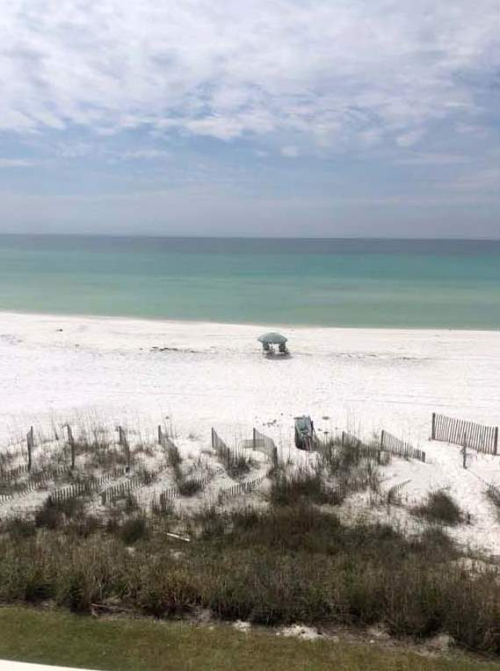
The twist is that the plaintiff/property owners (who include former Arkansas governor Mike Huckabee) assert that they are being prevented from using their own residential property. The complaint asserts that sheriffs and code enforcement officers have trespassed on the owners’ private beaches by “patrolling,” and that the officers “have physically prevented Plaintiffs from being able to use or even set foot in their own backyards.” Complaint at 11.

The complaint seeks a declaratory judgment, an injunction, and just compensation. They also assert due process and search-and-seizure claims, that the emergency orders were preempted by other orders allowing the plaintiffs’ uses, and a claim under the Florida Constitution for breach of the right of privacy.

Will there be more of these? Bien sûr.

Complaint

Continue Reading Private Beach Owners: Closing All Beaches Is A Physical Taking

Here’s the latest complaint challenging the virus-related business shut down orders springing up nationwide. (Other lawsuits are posted here and here.)  

This one alleges a host of constitutional violations (and defamation!) after the Connecticut governor banned large gatherings and ordered all restaurants and bars to close, and the New Haven mayor publicly “highlighted” the plaintiff — a lounge — as a noncompliant business.

Relevant for our purposes here, buried in the complaint is a takings claim:

Count Eleven – Violation of Constitutional Rights of The Right To Receive Compensation For A Taking of Property as to Defendant Ned Lamont

73. Paragraphs 1 through 22 and 58 through 72 of the Complaint are incorporated herein.

74. Lamont’s order limiting the activities of businesses and deciding which businesses can remain open based on their purposes regulates the use of private property to such a degree that it effectively deprives the Plaintiffs of

Continue Reading Another Takings Challenge To Business Shut Down Order

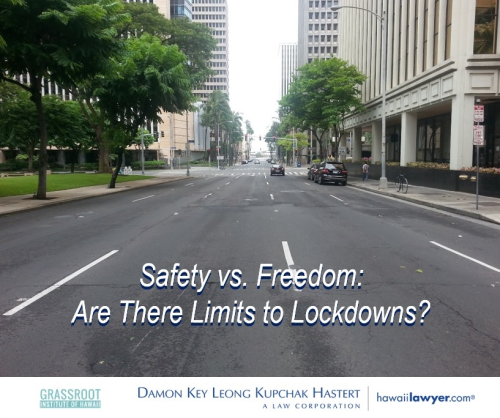
Join us next Tuesday, April 14, 2020, at 12 noon Hawaii Time (3pm PDT, 6pm EDT) for a free webinar sponsored by the Grassroot Institute of Hawaii, “Safety vs. Freedom: Are There Limits to Lockdowns?” Register here

Here’s the description of the program:

Governments at every level in Hawaii have responded to the coronavirus pandemic by implementing lockdown measures never before seen in the United States during peacetime. We have been forced to give up many of our freedoms, but by what authority can our governor and mayors shutter our businesses, declare vast swaths of our communities “non-essential” and make us stay home? Are there any legal limits to these shutdowns?

Joining us for a free webinar at noon, Tuesday, April 14, to help answer these questions will be Grassroot Scholar Robert Thomas, a widely published attorney who is a director with the law firm

Continue Reading Safety Dance: Are There Limits To Lockdowns? Free Webinar April 14

Suppose you’re walking your pooch “Kaiser” in the local dog park. Another owner is walking his dog “Odin” in the same park. Off-leash Odin attacks you and Kaiser, unfortunately killing Kaiser.

Those bastards took Kaiser, my property! A total wipeout Lucas taking (after all, you plainly have been 100% deprived of both the use and value of poor Kaiser, who is no more). 

So you sue. But who do you sue? The owner of the miscreant Odin? Nope, not a state actor, no power of eminent domain. So not liable for a taking. How about Odin himself? After all, courts are entertaining lawsuits by ape plaintiffs, so why not dogs as defendants? Nope, besides the standing problem, like his master, Odin isn’t a state actor and does not have the power of eminent domain.

How about the animal shelter, because it is operated by the county? Genius!

Thus, your

Continue Reading CA4: No, Your Dog Being Killed By Adopted Violent Shelter Dog Isn’t A Taking

20160114_125445

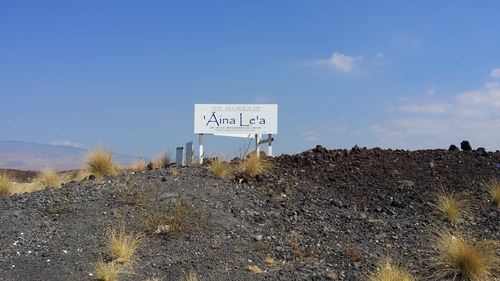
Here’s an article, just published in the American Planning Association’s monthly magazine, Planning (read the entire April issue here), summarizing the Ninth Circuit’s latest foray into regulatory takings, Bridge Aina Lea, LLC v. State of Hawaii Land Use Comm’n, No. 18-15738 (9th Cir. Feb. 19, 2020).

In Legal Lessons – What Constitutes Loss? we write about the decision and the court’s conclusion that losses short of 100% do not qualify for a per se Lucas taking, and are not enough to tip the scales for a Penn Central taking either. The opinion also adds to the growing confusion about whether the regulatory takings doctrine deals with use or value.  

Our thanks to the APA for asking us to contribute, for making the editing process so easy, and for allowing reprinting of the piece here. Check it out. 

Legal Lessons – What Constitutes a Loss? Planning Magazine (Apr. Continue Reading New Article: Ninth Circuit’s Latest Foray Into Lucas And Penn Central Takings

We don’t usually post trial court decisions, but when one comes along that tees up some interesting issues and is likely to get pushed further up the food chain, we’re all ears.

That’s the case with the Eastern District of North Carolina’s order in Zito v. North Carolina Coastal Res. Comm’n, No. 2:19-CV-11-D (Mar. 27, 2020). A North Carolina property owner alleged that the application of the Commission’s shoreline setback rules are a taking, and filed a suit in federal court. Yes, this is a federal court deciding a regulatory takings claim (yay, Knick). 

The property owners did all of the right things to ripen their claim. They obtained a final agency decision (helpfully labeled the “Final Agency Decision”) and were denied a variance. And although the owners filed their federal lawsuit before Knick, by the time the District Court was considering the Commission’s motion to dismiss,

Continue Reading Backing Back Into Williamson County: Federal Court Case Tees Up 11th Amendment Immunity For Takings