20180805_155740_HDR
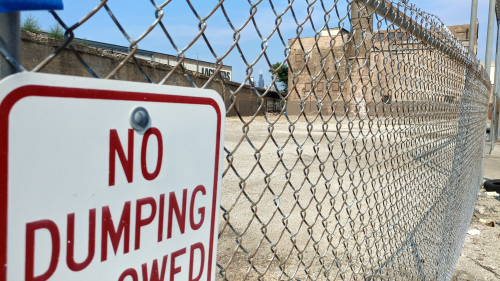
Where is this? The clues are all in the picture. 

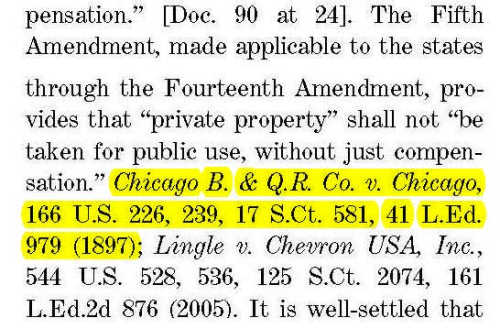
You’ve seen the citation so many times, your eyes probably gloss over it. After all, Westlaw lists it with 4,507 “Citing References.” That’s a heckuva lot of citations to a single case. 

Like this one, pulled from a recent random federal district court opinion: 
Chcago cite

And we admit that we’ve done it: cited (but didn’t read) Chicago B. & Q.R. Co. v. Chicago, 166 U.S. 226 (1897) for the proposition that the rights in the Bill of Rights (in that case, the Fifth Amendment right to Just Compensation) have been selectively incorporated against states and local governments under the Due Process Clause of the Fourteenth Amendment. You’ve done it. We’ve all done it. 

To cure that shortcoming, we read and analyzed the case in our William and Mary class. And before we included it in the syllabus, we had
Continue Reading Just Compensation Site Visit: The First Right “Incorporated” Against States, And Local Govts

We were all set to take a deeper dive into the Court of Federal Claims’s recent opinion in the “downstream” Harvey flooding cases (we could not do so at the time the opinion was issued last week because we were tied up doing real lawyer stuff), when our Reno, Nevada colleague Steve Silva (who most recently was on the faculty at the ALI-CLE Conference in Nashville) beat us to the punch.

On his Taking Nevada blog, Steve has posted “Major flood decision in Texas turns on Divine Intervention” —

Analyzing and comparing tort to taking is difficult. A tort is generally seen as something wrongful. A private injury committed by one person against another. A classic “taking” by exercising the power of eminent domain in direct condemnation to acquire land and pay compensation is not a wrongful act. It merely is.

Further complicating things, the clearest

Continue Reading Steve Silva (Taking Nevada) On Flood Takings, Torts, And Tortes

Check out the latest (and final) episode of the Institute for Justice’s “Bound by Oath” podcast. IJ’s John K. Ross was kind enough to ask us to be a guest on the show titled “Excessive Fines,” and our friend and colleague Bob McNamara and I sat down in Nashville to record our sound bytes. 

The series (not simply a podcast, but more like an audio documentary) is about the Fourteenth Amendment, and covers (inter alia) how and why the rights in the Bill of Rights have, over time, been applied by the Supreme Court to state and local governments under the Due Process “selective incorporation” doctrine.

So why was a takings guy a guest on a show about the Excessive Fines Clause of the Eighth Amendment?  Because last year in Timbs v. Indiana, the Supreme Court held, in a civil forfeiture case, that the Excessive

Continue Reading IJ’s “Bound by Oath” Podcast, Ep. 9: Excessive Fines, 14th Amendment Incorporation (And The Just Compensation Clause)

Here’s the latest in a long-running, multi-forum takings case about the development of affordable housing on the Big Island of Hawaii. 

Last we saw, the District Court awarded nominal compensation ($1), after the jury concluded that the State of Hawaii took Aina Lea’s property. The parties cross-appealed: the State argues the district court should have granted the State’s JMOL on liability, while the property owner appealed the $1 judgment. 

Today, the Ninth Circuit reversed the District Court’s ‘s opinion, holding that the district court should have ruled in the State’s favor on liability. The court remanded the case for entry of judgment in the State’s favor (meaning even the $1 just compensation judgment is gone). Bridge Aina Lea, LLC v. State of Hawaii Land Use Comm’n, No. 18-15738 (Feb. 19, 2020).

We’re tied up doing lawyer stuff today, so can’t read or analyze the decision in detail. But once

Continue Reading CA9: Remember That $1 The Court Awarded You For The Jury’s Finding Of A Regulatory Taking? We’re Taking That Away, Too

6a00d83451707369e20240a4699139200c-800wi

Check out these two amici briefs, just filed in a case we’ve been following, about what a property owner who is awarded just compensation in a state court eminent domain lawsuit is supposed to do if the local government that is ordered to pay the just compensation judgment … doesn’t. 

The property owner sued the local government — a Louisiana Port District — in U.S. District Court, alleging a violation of 42 U.S.C. § 1983. That court dismissed for failure to state a claim. The property owner appealed to the Fifth Circuit. 

Several amici have joined together to file two briefs in support of the property owner: 

The IJ brief focuses on the long-standing requirement that just

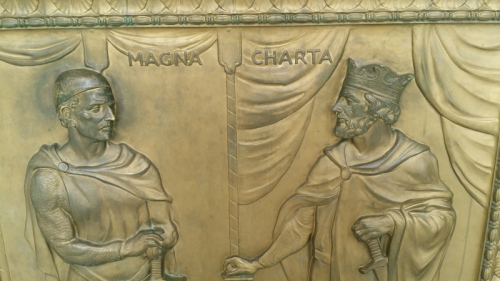
Continue Reading Amici Briefs: What Do You Do With A Recalcitrant Condemnor Who Won’t Pay The Judgment? Magna Carta ‘Em!

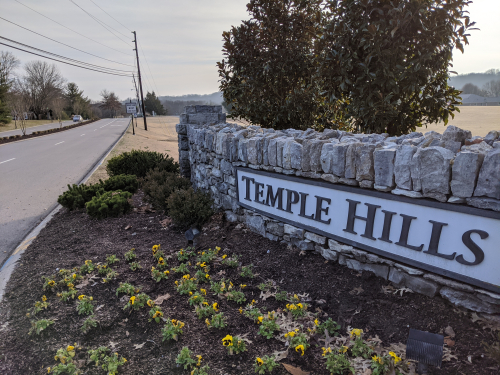
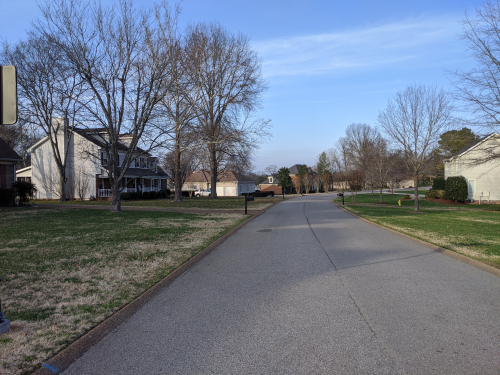
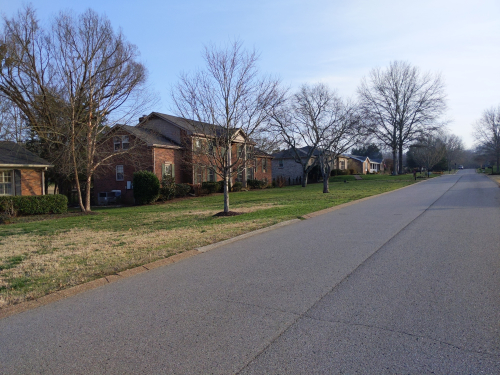
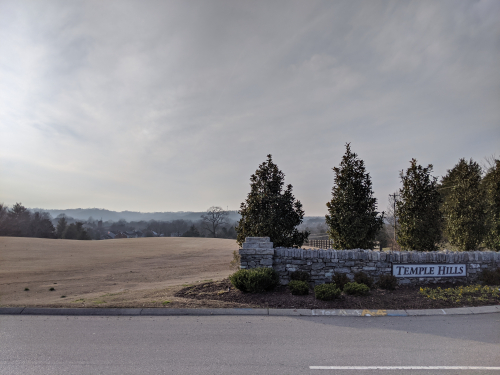
As we briefly noted in this post, before we departed the ALI-CLE Eminent Domain and Land Valuation Litigation Conference in Nashville, we just had to stop by the subdivision that was at issue in the Williamson County litigation. 

Frankly, there’s nothing especially special or noteworthy about this place, and only takings nerds will truly appreciate these pics. But given our propensity to make “takings pilgrimages” to the sites of famous property cases (see here (Claude Monet), here (Loretto), here (Chicago, B & Q RR), here (Dolan), here (Seneca Village), here (High Line), here (Hadacheck), and here (Nollan), for example), we just could not resist. 

So dig it, takings mavens. 

IMG_20200128_155300

There’s a golf course, of course. (There’s always a golf course.)

IMG_20200128_155147_1

“Temple Hills” beats “Glengarry Glen Ross”

PANO_20200128_154217.vr

A panorama of the main drag

IMG_20200128_154406

Up the street 

IMG_20200128_154302

Down the Continue Reading Williamson County, In Pictures

You know how the process is supposed to work. A condemnor exercises its eminent domain power and files a lawsuit to take property for public use. If the owner believes the condemnor’s price is too low, the court adjudicates the just compensation that must be paid. As we know, the point of that lawsuit is to establish the price. If the price eventually adjudicated is too dear (from the condemnor’s perspective), it isn’t required to acquire the property (unless, in some jurisdictions, it has taken advantage of the quick-take or immediate possession process). But if the condemnor wants the property, it must pay the adjudicated compensation. So far, so good.   

But what about those cases where the court adjudicates the price the condemnor must pay to acquire the property, and the condemnor actually takes the property — but the condemnor does not actually pay the compensation adjudicated by the

Continue Reading Does A Property Owner Have A § 1983 Claim If A Condemnor Doesn’t Pay A Just Comp Judgment In A Reasonable Time?

Profcorner.jpf

Please mark your calendars and join us next Tuesday, February 11, 2020 at 12:30pm ET for the free (for members of the ABA’s Real Property, Trust and Estate Section) webinar, the monthly “Professors’ Corner.”

This one will be on the aftermath of Knick v. Township of Scott, 139 S. Ct. 2162 (2019), in which the Supreme Court formally overruled the “state procedures” ripeness requirement in federal regulatory takings cases. 

We shall be speaking about the case and what’s next along with Professors Stewart Sterk and Michael Pollack (moderated by Professor Shelby D. Green). Here’s the summary of the webinar from the ABA website:

Last term, in Knick v. Township of Scott, the Supreme Court overruled the long-standing requirement that state takings claims first be litigated in state courts. The Court held that a property owner has an actionable takings claim when the government takes property without paying for

Continue Reading Tuesday Feb 11, 2020: Professors’ Corner – The Supreme Shift in Takings Litigation – Knick v. Township of Scott

In case you were not able to attend the recent program sponsored by Howard University Law School about the “heirs property” issue (Jan. 29, 2020), they recorded it and have now posted it on YouTube

Here’s a description of the program:

Experts say that real estate is the steadiest and safest way to build wealth in America. And yet, African Americans continue to be displaced from their homes and land. For example, the last century has seen a precipitous decline in the amount of black-owned agricultural land, partly as a result of the heirs property land ownership system, which has been exploited to force partition sales and remove black families from their property. And heirs property is hardly the only example of the pernicious impacts of property rights insecurity. Here in the District, gentrification is displacing African American residents at some of the highest rates in the country. Nationally

Continue Reading Video: The Biggest Problem You’ve Never Heard Of (“Heirs Property And Black Property Loss”)

EOGnEv8W4AAoKnI

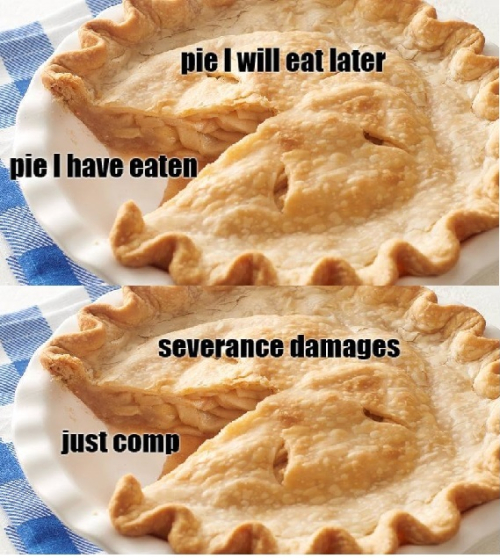
Picture 1: how normal people see pie.

Picture 2: how you see pie if you’re coming to the
ALI-CLE Eminent Domain Conference. 

If you get the above, you probably are already set to join us next week for the 37th Annual ALI-CLE Eminent Domain and Land Valuation Litigation Conference in Nashville. (If not, shame on you!).

And having just reviewed the latest registration list, I can report that we have an all-time record attendance.  But there’s still room for those of you still not committed. Register here. Don’t miss out. There will be pie. Continue Reading Record Attendance (But There’s Still Time For You Last-Minute Filers) At Nashville ALI-CLE Eminent Domain Conference