One does not simply walk to nashville

You can also fly, drive, or bike to the upcoming 37th Annual ALI-CLE Eminent Domain & Land Valuation Litigation Conference. in Nashville. Limited space still available, so don’t delay further and register now. We’re on track to record attendance, so you don’t want to miss the best nationally-focused three-day program on our area of law.

Takings, Knick, compensation, appraisals … and a bit of fun thrown in. We have many new attendees, and many new speakers, too.  Continue Reading (Nearly) Last Chance To Join Us In Nashville For ALI-CLE’s Eminent Domain Conference
20170918_171029_Richtone(HDR)

We’re seeing a lot of “end of year” and “end of decade” wrap-ups, so figured we’d better chime in.

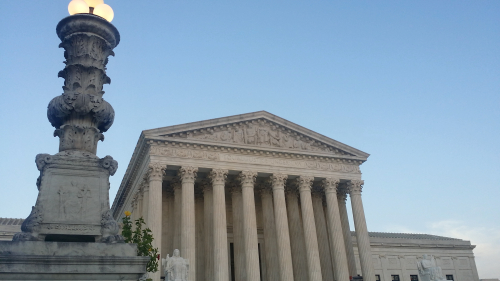
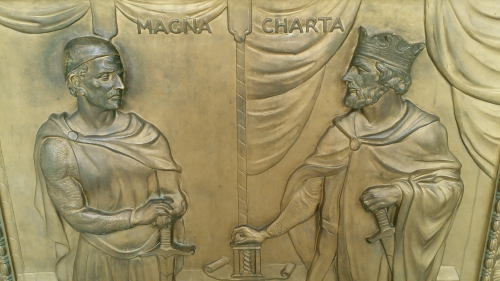
As the above graphic hints (this is detail of the doors of the U.S. Supreme Court), our biggest case of 2019 (and probably of the twenty-aughts) is Knick v. Township of Scott, 139 S. Ct. 2162 (2019). The federal courthouse doors are open again to federal takings claims. 

Yes, the U.S. Supreme Court doors were technically already open (via cert petitions from state supreme court takings cases), and Knick simply re-set the clock back to 1985, but if the two-thousand double-ohs were the decade of Kelo (a loss), will not the 2010’s be defined by Knick (a big win) even if the ruling came at the tail end of the decade?  

Compare where we are today with where in 2016 we thought we were heading

Continue Reading Biggest Case Of The Year…Or Maybe The Decade?

Untitled Extract Pages

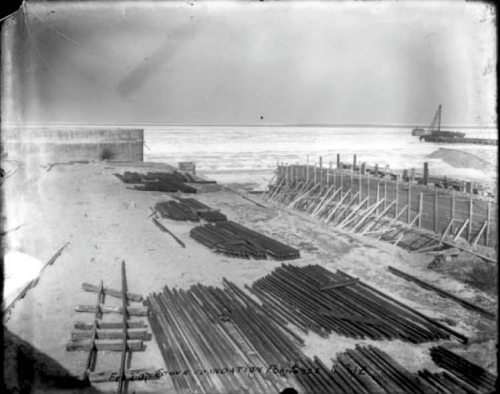
Here’s the Complaint filed earlier this month in an Indiana federal court, which alleges that the State of Indiana is liable for a judicial taking in a case we’ve been following. Yes, a judicial taking! 

You recall that in Gunderson v. Indiana, 90 N.E.3d 171 (Ind. 2018), the Indiana Supreme Court concluded that the public owns up to the ordinary high water mark on Lake Michigan and had done so all the way back to statehood in 1816. Problem is, according to the plaintiffs here, “undisputed local, state, and federal acknowledgement over the years” was otherwise – the law said that the property was private, not public. Thus (again, according to the Complaint), “the Gunderson judgment changed the law of the State of Indiana, as recognized by prior Indiana court precedent as well as federal, state, and local authorities.” Complaint at 2.

We suggest you read the entire Complaint. It

Continue Reading New Fed Ct Judicial Takings Complaint: Indiana Supreme Court “Transformed Established Law” Of Shoreline Ownership

Here’s the cert petition, filed today (by the same folks who brought you Knick v. Township of Scott, 139 S. Ct. 393 (1922)), which poses this straightforward question:

Whether the “self-executing” Just Compensation Clause abrogates a State’s Eleventh Amendment immunity, allowing a property owner to sue the State for a taking of property.

Now before you pooh-pooh the notion that you can sue a State for retrospective money damages in federal court despite the Eleventh Amendment, take a read. This is a topic which we’ve been furiously researching since Knick (more on that down the road a bit), and the issue is not as clearly on the side of “no you can’t” as you might think. 

As we noted in this short post a couple of months ago, the Fifth Circuit’s opinion in Bay Point Properties, Inc. v. Mississippi Trans. Comm’n, 937 F.3d 454 (5th Cir. 2019)

Continue Reading New Cert Petition From The Knick Team: You Can Sue A State For A Taking In Federal Court

We were not as creative as our colleague Paul Henry (see below), but our Planning Co-Chair Joe Waldo and I wanted to personally invite you to join the “big guns” in our area of law at the 37th Annual ALI-CLE Eminent Domain and Land Valuation Litigation Conference, January 23-25, 2020, in Nashville, Tennessee.

We’ve assembled an excellent faculty, and an agenda that covers the hot topics of the day. Go here to view the complete faculty list and agenda. Water rights, Knick, appraisal, ethics, civil rights, and a whole lot more in three days of the longest (and we think best) conference in our area of law. Also, for those new to the field, Andy Brigham and Jack Sperber are again leading their “Eminent Domain 101” program. A great way to learn the topic, or for experienced lawyers to get a quick refresher on the basics. Your registration

Continue Reading Don’t Miss Out: Join The “Big Guns” And Secure Your Space At ALI-CLE’s Upcoming Eminent Domain & Land Valuation Litigation Conference (Jan 23-25, 2020, Nashville)

20170918_185734_Richtone(HDR)

Here’s the latest in a case we’ve been following for a while, Smyth v. Conservation Comm’n of Falmouth, No. 19-223 (cert. petition filed Aug. 16, 2019). 

The petition seeks review of a Massachusetts decision which held that a judge, not a jury, determines Penn Central takings questions, and also that the owner lost anyhow because, you know, Penn Central. The petition asks the Supreme Court to review these Questions Presented:

  1. Whether the loss of all developmental use of property and a 91.5% decline in its value is a sufficient “economic impact” to support a regulatory takings claim under Penn Central.
  2. Whether a person who acquires land in a developed area, prior to regulation, has a legitimate “expectation” of building and, if so, whether that interest can be defeated by a lack of investment in construction?
  3. Whether the Court should excise the “character” factor from Penn Central regulatory


Continue Reading Latest In SCOTUS Penn Central Cert Petition

Check this out. The Complaint that we’ve been meaning to post for a while, filed last month in a Los Angeles U.S. District Court, alleging that California’s new rent control laws are a taking, among other things.

Are rent control laws takings? Yes, pretty sure about that. But will courts conclude that they are takings? If past experience is any guide, courts look for (and find) ways to conclude they are not takings, because, you know, this is one government regulatory scheme that people — here, tenants, can rely on (compared to others, where if you claim a property right in government regulation you are, in Chief Justice Roberts’ words, a “chump”).

Chump on, rent control challengers.

Complaint, Better Housing for Long Beach v. City of Long Beach, No. 2:19-CV-08861 (C.D. Cal. Oct. 15, 2019)… 

Continue Reading New Fed Ct Complaint: City’s And California’s New Rent Control Laws Are Takings

Registration underway, so come join us! Agenda full of hot topics in takings and appraisal law! The best national faculty! Renew friendships, and make new colleagues! And Nashville! 

Download the brochure and make your plans for January. (Don’t wait, we’ve sold out the past three years.)Continue Reading Register Now! ALI-CLE Eminent Domain And Land Valuation Litigation Conference (Nashville, Jan 23-25, 2020)

EXHIBIT A

We’re back again at that supposed distinction between the police power and the eminent domain power, which reminds us of that old tale about President Lyndon Johnson:

After reviewing a contingent of Viet Nam-bound Marines in California, Lyndon Johnson strode purposefully toward what he thought was his helicopter. “That’s your helicopter over there, sir,” said an officer, steering the President toward a different craft.

“Son,” replied Johnson evenly, “they are all my helicopters.”

Well, it’s all government power. 

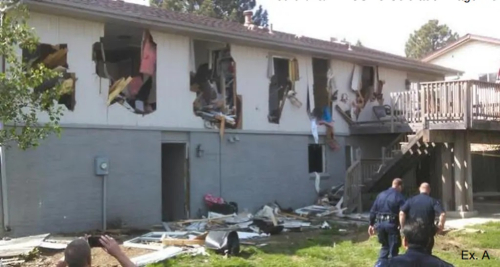
But not to the Tenth Circuit, which in this unpublished order concluded that when local SWAT teams destroyed an innocent family’s house to dislodge a fleeing suspect who had for hours holed up there and taken shots at the police, it wasn’t a taking because, guess what, the police were not exercising eminent domain power, it was the police doing what police do.

The Tenth Circuit relied on the fact that

Continue Reading CA10: SWAT Attack On Home Where Shoplifting Suspect Holed Up Isn’t A Taking