In this very short (but apparently published) opinion, the U.S. Court of Appeals held that it was not right to dismiss a claim on the pleadings and that factual development is warranted, even where the complaint alleges that a municipal land use ordinance is arbitrary and capricious, and the city claims it has a rational basis for the ordinance.

And when we say “short,” we mean it. Here’s the entirety of the opinion:

Plaintiffs here appeal the Rule 12(b)(6) dismissal of their complaint alleging that the City of New Braunfels’s zoning regulation banning short-term rentals of residential properties in certain areas of the city is unconstitutional. The district court ordered dismissal by approving a few conclusory paragraphs in the magistrate judge’s recommendation. This court’s relevant case law, however, indicates that some factual development may often occur in these cases, and that summary judgment may often follow. See, e.g

Continue Reading CA5 Makes Short Work Argument That Asserting A Rational Basis For A Short-Term Rental Ban Is Enough To Secure Pleadings Dismissal Of Arbitrary And Capricious Challenge

Here’s the cert petition, filed last week, in a case we’ve posted about. See here (Ninth Circuit arguments) and here (en banc petition).

The Ninth Circuit affirmed dismissal of a takings claim because (it held) the claim isn’t ripe. The government hasn’t made up its mind, and just might allow the owners to make some use of their residentially-zoned land (even though the property is also subject to an overlay zone that expressly prohibits residential development). More background here

This is one of ours, so we’re not going to be saying too much more about it. The petition also lays out the situation.

Here are the Questions Presented:

Randy Ralston and Linda Mendiola (Ralstons) wish to build a retirement home on their residentially-zoned land in San Mateo County, California. However, their property sits entirely within an overlay zone, the Montecito Riparian Corridor (Corridor), which categorically bans residential

Continue Reading New Takings Ripeness Cert Petition (Ours): Knowing The Permissible Uses “to a reasonable degree of certainty” Is All You Need For A Claim To Be Ripe

Here’s what we’re reading this Tuesday:

Worth checking Continue Reading Tuesday Round-Up: Sackett, Tyler, Defending Zoning, Canada Property Rights … And More

Here’s the latest in a case we’ve been following since before it became one of ours.

In Gearing v. City of Half Moon Bay, No. 21-16688 (Dec. 8, 2022), the Ninth Circuit upheld the district court’s dismissal of a regulatory takings case, holding that federal courts should abstain from considering regulatory takings cases in favor of pending state court eminent domain actions, even when the condemnor instituted the state court action after the federal takings lawsuit was filed.

In the time since the Ninth Circuit issued the opinion, our law firm has joined up with our colleague Kristen Renfro who represented the owner in the court of appeals. That’s why we won’t be commenting further, and instead suggest you read the cert petition we filed today, chiefly authored by Counsel of Record Deborah LaFetra (lately of the Tyler v. Hennepin County takings case)

Here is the Question

Continue Reading New Takings Cert Petition (Ours): Can Govt Thwart Federal Court Regulatory Takings Claims By Seeking Abstention In Favor Of State Courts?

Here are what others are saying about Supreme Court’s recent ruling in Tyler v. Hennepin County, No. 22-166 (U.S. May 25, 2023), the case in which the Court unanimously held that the county’s keeping the excess equity in Ms. Tyler’s home over what she owed in property taxes and fees is an uncompensated taking of private property.

  • As usual, lawprof Ilya Somin was first out of the gate with “Major Unanimous Supreme Court Victory for Property Rights in Tyler v. Hennepin County” (“While the Supreme Court decision left some notable issues unresolved, it nonetheless sets a significant precedent. Most obviously, the jurisdictions that currently authorize home equity theft—some twelve states and the District of Columbia—will no longer be allowed to do so. In addition, the holding that states cannot just redefine property rights at will has important implications for other property rights issues. It makes it harder


Continue Reading Tyler Takings Round-Up

Harding

Here’s a new cert petition, filed this week by Michael Berger that asks whether Knick‘s no-need-to-exhaust-or-chase-state-compensation rule applies retroactively.

The Second Circuit held that no, the owner’s claims were too late, and although Knick overruled the Williamson County rule that kept him from a timely filing in federal court, that’s just too bad:

We also agree with the district court that the remaining claims are largely time barred. Demarest filed this lawsuit in June 2021, yet much of the conduct targeted by his complaint dates from long before. Since a § 1983 claim adopts the limitations period for a state personal injury tort-which in Vermont is three years, see Morse v. Univ. of Vt., 973 F.2d 122, 125-27 (2d Cir. 1992)-claims accruing before June 2018, which comprise the majority of Demarest’s complaint, would be time barred. Although Demarest argues that his claims accrued only when a

Continue Reading New (Michael Berger) Cert Petition: Knick “Changed the world of takings litigation” And Applies Retroactively – And Statutes Of Limitations Are Affirmative Defenses

52851572390_8ab246acf3_o
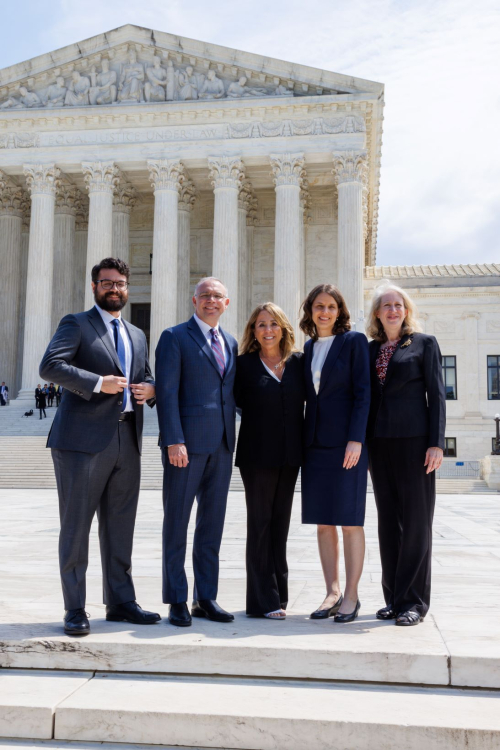
Our Pacific Legal Foundation Property Rights Litigation Tyler team,
and Counsel of Record Christina Martin (second from right)

Here are your links to the buzz about Tyler v. Hennepin County, No. 22-166, our law firm’s case which argues that Hennepin County’s seizure of Ms. Tyler’s condo and then keeping the excess equity over what she owed in property taxes and fees, is an uncompensated taking of private property, and also violates the Excessive Fines Clause.


Continue Reading Tyler SCOTUS Takings Argument Round-Up

SCOTUS

Tomorrow, Wednesday, April 26, 2023, at 10:00 a.m. Eastern Time, the U.S. Supreme Court will be hearing oral arguments in Tyler v. Hennepin County, No. 22-166, our law firm’s case which argues that Hennepin County’s keeping the excess equity in Ms. Tyler’s home over what she owed in property taxes and fees, is an uncompensated taking of private property, and also violates the Excessive Fines Clause.

Listen to the arguments live, here.

We posted some preview links earlier this week here. But wait, there’s more!


Continue Reading More SCOTUS Takings Previews (Argument Tomorrow, 10am ET)

One_does

Check out the U.S. Court of Appeals for the Eighth Circuit’s opinion in Pharmaceutical Research and Manufacturers of America v. Williams, No. 21-1731 (Apr. 3, 2023), where the court reinstated a complaint dismissed by the district court for lack of standing.

The Eighth Circuit held that even though the “usual” remedy for a regulatory taking is just compensation, where a state’s just compensation remedy would be inadequate, the property owner may seek equitable relief such as a declaratory judgment or an injunction. [Disclosure: our law firm filed an amicus brief in support of the plaintiffs, arguing that equitable is available in takings claims.] 

The complaint challenged Minnesota’s Insulin Affordability Act, which requires insulin manufacturers to provide insulin at no charge to eligible Minnesotans in 90-day increments for up to one year. The manufacturers argued that the Act works a taking, and sought to enjoin its enforcement. Note that

Continue Reading CA8: Where A State’s Just Comp Remedy Is Inadequate, You Can Sue For Injunctive Relief For A Taking

As most of you probably already know, there’s a demon lurking out there in takings claims. Not of the Levon Helm-narrated The Right Stuff variety, but maybe just as deadly in litigation.

That’s right, the too-early-or-too-late thing (or in some cases, the too-early-and-too-late argument). Getting caught between arguments that a takings claim isn’t ripe, and arguments that it is too late (statutes of limitation).

The U.S. Court of Appeals for the Fourth Circuit was dealing with the latter (a statute of limitations) in Epcon Homestead, LLC v. Town of Chapel Hill, No. 21-1713 (Mar. 20, 2023), but there are lessons in the case for the other side of the issue, ripeness.

The facts are pretty straightforward. If you are going to build at least five single-family units, the town’s zoning ordinance contains a requirement of “inclusionary zoning” (aka affordable housing; aka below-market units. Or if

Continue Reading CA4: Exactions Takings Claim Accrues When Owner Knows Of The Demand, Not When It Paid