To all of you who attended the first day of the Hawaii Land Use Conference today, thank you. As promised, here are the items I discussed during my two sessions:

  • United States v. Milner, 583 F.3d 1174 (9th Cir. 2009) – the case in which the Ninth Circuit affirmed a finding of common law trespass for the building of a wall on fast land, because the shoreline eventually eroded up to it. Both parties had “vested rights” to an ambulatory littoral boundary. The U.S. Supreme Court denied review, as noted here.


Continue Reading Cases And Links From Today’s Hawaii Land Use Conference Sessions On Coastal Issues And Water Law

In Building Industry Ass’n of Central California v. County of Stanislaus, No. F058826 (Nov. 29, 2010), the California Court of Appeal (Fifth District) concluded that the County’s Farmland Mitigation Program — which requires property owners to dedicate or acquire perpetual agricultural conservation easements in a 1-to1 ratio as a condition of obtaining development approvals or permits — was not facially invalid.

The trial court had invalidated the FMP on its face because the County “failed to provide sufficient evidence to demonstrate a reasonable relationship between the exactions requires under the FMP and any adverse public impacts resulting form the new applications to change … to ‘residential’ uses,” but the Court of Appeal concluded that the burden was not on the County to show the FMP bears a rational relationship to farmland loss, but on the plaintiff BIA to show the FMP bears no reasonable relationship. Slip op. at 9.

Continue Reading Cal Ct App: Farmland Mitigation Exaction Has Nexus And Proportionality

The week before last, the Hawaii State Bar Association’s Real Property and Financial Services Section held a session on recent developments in land use law of interest to local dirt lawyers.

We were not able to attend (we were teaching a seminar on water law), but our Damon Key colleagues Mark Murakami, Greg Kugle (who Chairs the Section), and Ken Kupchak were able to go, and reported that the following decisions were discussed and debated:

  • County of Hawaii v. Ala Loop Homeowners, No. 27707 (July 9, 2010). In that case, the Hawaii Supreme Court concluded that state zoning statutes are “environmental laws” as defined in the Hawaii Constitution, and therefore a private right of action exists. We suggested that


Continue Reading Land Use And Takings Cases Discussed At The HSBA Real Property Session

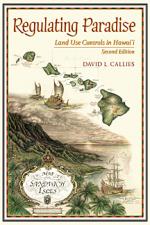
Regulatingparadise University of Hawaii lawprof David L. Callies needs no introduction to the readers of this blog. He’s one of the deans of the national and international land use bar and professoriate, but those of us who practice land use law in Hawaii consider him our special mentor (dare I say guru?) when the topic of Hawaii land use law is raised. Virtually every dirt lawyer practicing here has studied under or with him.

Those of us who consider this area of law our calling have for years looked forward to an update of Regulating Paradise, his seminal book on Hawaii’s complex and multi-layered system of land use and regulation.

Well wait no further. The University of Hawaii Press has published the second edition of Professor Callies’ essential work. Purchase your copy here (a mere $22). Here’s the Introduction.

We haven’t had an opportunity to pore through the nearly 400 pages of text (illustrated with the irreplaceable Corky Trinidad‘s editorial cartoons), so a more complete review will follow once we’ve had a chance to do so. In the meantime, voices more eminent than our own have weighed in:

“A masterful analysis of [Hawai‘i’s] land use laws.” —Daniel R. Mandelker, Stamper Professor of Law, Washington University, St. Louis

“Essential reading for all who seek to understand how land use is regulated in Hawai‘i or to apply the lessons learned there to other states.” —Dan Tarlock, Distinguished Professor of Law, Chicago-Kent College of Law

“A must-read for both neophyte and veteran legal practitioners. Callies’ in-depth and insightful explanations and commentaries on Hawai‘i’s complex land use and planning laws provide a road map for understanding the state’s multi-layered regulatory scheme.” —Benjamin A. Kudo, Ph.D.

“With this magnificent new work, and its far ranging, comprehensive analysis – from the feudal land holdings of the monarchy to regulating McMansions – Professor Callies teaches and entertains us with tales of success and failure in Hawaiian land use and development law. There are lessons here for every one of us, all across this country.” —Dwight Merriam, Robinson & Cole

If the second edition is anything like the first, Regulating Paradise will occupy an frequently-used spot on our back bookshelf. More to follow.
Continue Reading New Book: Callies, Regulating Paradise – Land Use Controls In Hawaii (2d ed. 2010)

The State (actually Waiola Waters of Life, the defunct charter school) has asked the Hawaii Supreme Court to reconsider its decision in County of Hawaii v. Ala Loop Homeowners, No. 27707 (July 9, 2010). In that case, the court held “[w]e further conclude that article XI, section 9 of the Hawai’i Constitution creates a private right of action to enforce chapter 205 in the circumstances of this case.” Slip op. at 4. 

The State argues:

Wai’ola asks for reconsideration for three reasons. First, the Court has made new law that will significantly affect multiple sectors of our community, all levels of state and county government, and countless administrative and judicial proceedings that are pending in the courts and before state and county land use and environmental regulatory agencies.

Given the present procedural posture of the case, the principle of judicial restraint counsels again addressing the argument the Ala Loop

Continue Reading Motion For Reconsideration Of HAWSCT’s Opinion In Ala Loop: Are Zoning Statutes “Environmental Laws?”

There are a host of issues in DSG Evergreen v Town of Perry, No. 2009AP727 (Wis. Ct. App. July 22, 2010) (the appellant raised seven grounds for appeal in this condemnation case), but this is the one that caught our eye. The property owner claimed that the town could not condemn its 1.5 acre parcel because it would create a lot that violated the county’s minimum lot size for agriculture-exclusive parcels. Under the county land use ordinance, unless an ag parcel fronts a public road, it must be at least 35 acres. See slip op. at 12. The court held that yes, the parcel did fall below the 35-acre minimum size because it did not front a public road, but that it was the property owner who created the problem with it “swapped property with its neighbor after the appraisal.” Id. at 13. Thus, the court concluded, the

Continue Reading Wisconsin Ct App: Property Owner’s “Check” Is Subject To Town’s Condemnation “Checkmate”

We rarely post developments from trial courts, but every now and then a trial court order is so interesting that we deviate from our usual rule. Here’s one that’s worth sharing.

In Sterling v. California Coastal Comm’n, No. CIV. 482448 (Cal. Super. June 18, 2010), the San Mateo County Superior Court (the county immediately south of San Francisco) invalidated a permit condition imposed by the California Coastal Commission that would have required the property owners maintain their property “in active agricultural use,” meaning that they “either personally conduct agriculture on all their land or enter into a lease with a third party willing to engage in agricultural use on the land.” In other words, forced farming.

You read that right. Did we mention that the family seeking the permit are not farmers or ranchers, that the vast majority of the 143-acre parcel is not prime ag soil, that the

Continue Reading Permit Condition Requiring “Active” Farming Struck Down Under Nollan/Dolan

Orange-fruit-2When the state purposely destroys healthy citrus trees as part of a program to address citrus canker, it must pay the owners of the trees just compensation.

In Dep’t of Agriculture & Consumer Services v. Borgoff, No. 4D08-4474 (May 12, 2010), the Florida District Court of Appeal (Fourth District) affirmed an $11 million class action jury verdict ordering the Department of Agriculture to pay for the more than 100,000 non-commercial trees it cut down and destroyed in Broward County. The Department’s eradication program destroyed any citrus tree within 1,900 feet of any tree found with citrus canker. The court concluded this was a taking: 

Cutting down and destroying healthy noncommercial trees of private citizens could hardly be more definitively a taking. Government has regulatory power for the very purpose of safeguarding the rights of citizens, not for destroying them.

Slip op. at 6 (footnote omitted) (emphasis added). The court

Continue Reading Florida Court Of Appeal: State Must Pay When It Destroys Healthy Orange Trees

What we’re reading today:

  • Curbing abuse of eminent domain – A Denver Post editorial on a new Colorado statute designed to limit the power of the government to declare farmland “blighted” (“The new law says land that has been classified by the county assessor as agricultural land cannot be condemned for urban renewal. However, it makes an exception for agricultural land that is an enclave within cities and has had development around it for at least three years. We will have to see how the law shakes out in the coming years, but that seems to be an awfully big exception. That’s exactly the kind of land that usually needs the most protection from government.”).


Continue Reading Sunday Eminent Domain Round-Up

Update: we confirmed with the Clerk that the arguments are on Tuesday, October 13, 2009, and not on “Thursday” October 13 as noted on the Judiciary web site. We will be live blogging the arguments starting at about 9:45 a.m., Hawaii time.

+++++++++++++++++++++++++++++++++++++++++++++++++++++++++++++++++

On Tuesday, October 13, 2009 at 10:00 a.m., the Hawaii Supreme Court will hear oral arguments in a case considering whether Haw. Rev. Stat. §  205-1 et seq., gives rise to a private right of action. The core issue in the appeal is whether Hawaii’s statewide zoning laws are “laws relating to environmental quality” which may be privately enforced, or whether they are classic Euclidean zoning laws which can’t. The Hawaii Constitution (art. XI, § 9) provides that “any person may enforce” the “right to a clean and healthful environment, as defined by law relating to environmental quality, including

Continue Reading Upcoming HAWSCT Oral Arguments: Are State Zoning Laws “Environmental” Statutes?