Well, that didn’t take long: as we surmised back when the CDC first issued its order halting residential evictions until the end of the year due to COVID (see “How Can? U.S. DHS: National Eviction Moratorium (Roscoe Filburn Could Not Be Reached For Comment),” the order has resulted in a complaint in the U.S. District Court for the Northern District of Georgia that alleges the order is unconstitutional.

No takings claim (not the right court to raise a just comp claim), but there’s a lot “there,” so to speak: admin law (CDC exceeded its authority), violation of the right of court access, Supremacy Clause, Tenth Amendment, anti-commandeering, this is an invalid exercise of legislative power under Article I.

No takings claim, but read the complaint anyway.  

Complaint, Brown v. Azar, No. 1:20-cv-03702 (N.D. Ga. Sep. 8, 2020)
Continue Reading Complaint (N.D. Ga.): CDC Eviction Moratorium Is Unconstitutional (No Takings Claim, However)

IMG_20200917_110719

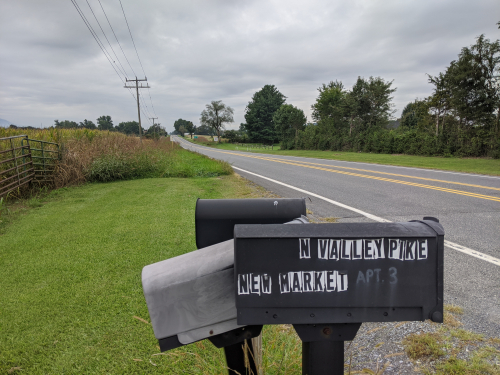
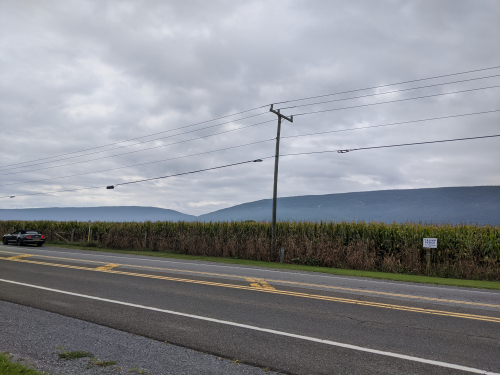
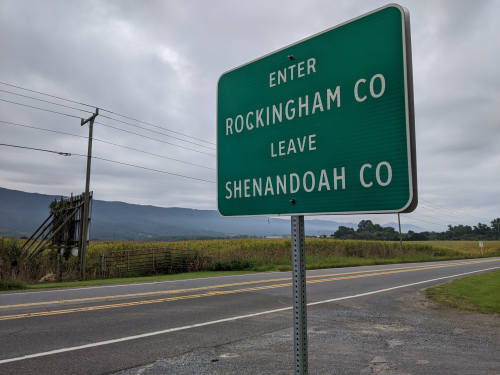
Recently, we visited the site of a very well-known (and now very relevant) U.S. Supreme Court case. Why? Because we do things like that. See here, here, here, here, here, and here for some of our prior pilgrimages.

We’ll have more on the visit later. but we thought we would try and make Friday a bit more interesting by not telling you the location, but seeing whether you can guess what case this is.

The clues are all there.

[Hint: there are still a few apple orchards around, even after all these decades.]

IMG_20200917_110650
IMG_20200917_110727
Continue Reading Takings Places (Preview)

As if to respond to a sibling federal court’s recent order upholding a covid-reaction shut down orders, the U.S. District Court for the Western District of Pennsylvania’s opinion in County of Butler v. Wolf, No.2:20-cv-00677 (Sep. 14, 2020) reaches an entirely different conclusion:

The fact is that the lockdowns imposed across the United States in early 2020 in response to the COVID-19 pandemic are unprecedented in the history of our Commonwealth and our Country. They have never been used in response to any other disease in our history. They were< not recommendations made by the CDC. They were unheard of by the people this nation until just this year. It appears as though the imposition of lockdowns in Wuhan and other areas of China-a nation unconstrained by concern for civil liberties and constitutional norms-started a domino effect where one country, and state, after another imposed draconian and hitherto untried

Continue Reading Fed Ct: “[T]he stay-at-home and business closure components of Defendants’ [COVID] orders violate the Due Process Clause” (Applying Rational Basis Review!)

The District Court’s bottom line in Lukes Catering Service, LLC v. Cuomo, No. 20-CV-1086 (Sep. 10, 2020)? The New York governor’s emergency orders aimed at coronavirus “imposing quarantines, mandating workforce reductions, closing schools, requiring face-coverings, and restricting activities of all types,” are not takings of the businesses of event, banquet, and catering services that have been shut down as a result. The specific emergency measure challenged was the order limiting gatherings to no more than 50 people.

The controlling authority? You guessed it, Jacobson v. Massachusetts, 197 U.S. 11 (1905). That’s the case in which the Court defined “real liberty,” and which has been most prominently applied in emergency order cases to reject due process challenges. But if you want the court’s takings analysis, jump to page 24. The court rejected the categorical (Lucas) claim:

Plaintiffs allege a categorical regulatory taking in their complaint. (Complaint, ¶¶

Continue Reading NY Fed Ct: “When faced with a society-threatening epidemic, state officials are empowered to … infringe federal constitutional rights. They may generally do so at their sole discretion and for so long as is necessary.”

If you are available at 9:30 a.m. Eastern Time today (Wednesday, September 9, 2020), tune in to the Michigan Supreme Court’s YouTube channel and watch and listen live as the court hears arguments in a case challenging the governor’s exercise of emergency powers to respond to the covid epidemic.

The case started in U.S. District Court, but that court certified what it thought were dispositive questions of state law to the Michigan Supreme Court, which accepted the certification. Here are the questions to be answered:

1. Whether, under the Emergency Powers of the Governor Act, MCL § 10.31, et seq., or the Emergency Management Act, MCL § 30.401, et seq., Governor Whitmer has the authority after April 30, 2020 to issue or renew any executive orders related to the COVID-19 pandemic.

2. Whether the Emergency Powers of the Governor Act and/or the Emergency Management Act violates the Separation

Continue Reading This Morning: Michigan Supreme Court Hearing Arguments: Governor’s Covid Emergency Powers Expired (And A Long-Term Pandemic Isn’t An “Emergency”)

Please join us and a panel of expert speakers including our friend and colleague Tony Della Pelle (see the flyer for the complete list), this Thursday, September 10, 2020 at 1pm Eastern Time for the ABA-produced webinar “Governmental Emergency Powers and the Constitutional Implications Arising from Pandemic Orders.”

Free to ABA members, a modest cost for those who are not. Register here.

Here’s the plan:

In the wake of the unprecedented global pandemic, every level of government has taken steps to address the public health crisis. These steps have manifested in orders which impact businesses and individuals alike including quarantine orders, travel restrictions, occupancy limitations, and restrictions on movement. This is the not the first pandemic, nor the first national crisis, faced by the United States. There have been several lawsuits filed challenging the constitutionality of the COVID-19 orders, including challenges based on the right to

Continue Reading This Thursday, Sept 10: “Governmental Emergency Powers and the Constitutional Implications Arising from Pandemic Orders” (Free to ABA Members)

In Hawaii we employ a phrase, “how can?” as a shorthand response when you’re wondering how something can be. It’s easy, short, and more efficient than saying “I’m sorry, I don’t understand how you think you can accomplish this.”

Thus, “how can?” was our first response when the U.S. Department of Health and Human Services’ recently-released agency order establishing a covid response nationwide residential eviction moratorium crossed our desk yesterday. By what authority does the federal government purport to dictate (yes, we’re going to use that word) whether state and local governments (and state courts) allow evictions for not paying rent? We thought that property law was one of those local things?

Just as we were about to dive in, our friend and colleague Tony Della Pelle produced an analysis more cogent than “how can?” In “COVID Eviction Freezes – Who Is Supposed To Pay?,” Tony asks, “Did

Continue Reading How Can? U.S. DHS: National Eviction Moratorium (Roscoe Filburn Could Not Be Reached For Comment)

Here, the ruling of the Massachusetts Superior Court (Suffolk County) in Matorin v. Commonwealth of Massachusetts, No. 2084CV01334 (Aug. 26, 2020).

The short story is that the court denied the plaintiffs’ motion for a preliminary injunction on the grounds that they were not likely to succeed on the merits of their as-applied regulatory takings challenge to the Commonwealth’s series of moratoria on residential evictions. The moratoria allow the property owners to recover possession after expiration, and the tenants are not freed from the eventual obligation to pay rent.

Skip forward to page 17 for the court’s takings analysis (although it would be a shame to not read the intervening pages, because the opinion also deals with the related separation of powers and access-to-the-courts questions). The court first rejected the argument that the moratoria allowed physical occupations (based on Yee), because it isn’t “permanent,” merely temporary. And (also based

Continue Reading Mass Super: State’s Temporary Eviction Moratorium Is Not Likely A Taking

Like a lot of other jurisdictions, Hawaii’s emergency response statutes contain an “automatic termination” limitation on the governor’s or a mayor’s declaration of emergency:

A state of emergency and a local state of emergency shall terminate automatically sixty days after the issuance of a proclamation of a state of emergency or local state of emergency, respectively, or by a separate proclamation of the governor or mayor, whichever occurs first.

Haw. Rev. Stat. § 127A-14(d).

Hawaii’s Governor David Ige issued a declaration of emergency way back in March, and as the coronavirus thing dragged on, later issued multiple “supplemental” declarations, some of which purported to adopt countermeasures or suspend laws past the original sixty-day window. The two-week quarantine for inbound travelers is one of those restrictions.

Here’s the Complaint filed yesterday in a Hawaii state court (Third Circuit, Kona), which challenges the Governor’s authority under section 127A-14. Check it out.

Continue Reading New Challenge: Hawaii Governor’s COVID Orders Are Pau Already

Here’s the latest order in one of the various challenges to coronavirus-related shut down orders. (See here, here, here, here and here, for example.)

In Xponential Fitness v. Arizona, No. CV-20-01310 (July 14, 2020) (unpub.), the U.S. District Court for the District of Arizona denied preliminary relief in a case which sought an injunction against the Arizona governor’s orders. The complaint including a takings claim among others (contracts clause, due process, equal protection, as well as state law claims). The only relief sought for the taking was an injunction, not just compensation. 

[Sidebar: interestingly, there’s no mention of the Eleventh Amendment, despite the State of Arizona being the lead defendant in the case; we haven’t taken a dive into the docket to see if the State consented, or objected elsewhere to being haled into federal court.]

To the court, that was fatal to the likelihood of the plaintiffs’ success on the merits. Here’s the entirety of the court’s takings analysis:

Plaintiffs’ Fifth Amendment takings claim cannot support their request for injunction relief. See Knick v. Twp. of Scott, Pennsylvania, 139 S. Ct. 2162, 2176 (2019) (“As long as an adequate provision for obtaining just compensation exists, there is no basis to enjoin the government’s action effecting a taking.”). “The Fifth Amendment does not proscribe the taking of property; it proscribes taking without just compensation.” Williamson Cty. Reg’l Planning Comm’n v. Hamilton Bank of Johnson City, 473 U.S. 172, 194 (1985), overruled on other grounds by Knick, 139 S. Ct. 2162. Thus, even if the June 29, 2020 Executive Order did violate Plaintiffs’ Fifth Amendment rights, Plaintiffs would not be entitled to injunctive relief because damages are the proper remedy for a taking. See Bridge Aina Le’a, LLC v. State of Hawaii Land Use Comm’n, 125 F. Supp. 3d 1051, 1066 (D. Haw. 2015), aff’d sub nom. Bridge Aina Le’a, LLC v. Land Use Comm’n, 950 F.3d 610 (9th Cir. 2020).

Slip op. at 16.

Before we move on, a comment. We’re not sure that just compensation should be considered the only remedy for a taking. First, we’ve seen cases in which the Supreme Court has recognized that an award of just compensation is not the sole way to raise a takings claim. You can raise it as a defense to some government action (“you can’t do X, government, because to do X without compensation would be an unconstitutional taking” – this is more like a rule that government cannot act except in conformity with the constitution than an actual “takings” claim for compensation). The raisin case (Horne v. USDA) is a good example. Another is Kaiser Aetna v. United States, 444 U.S. 164 (1970), where the property owner raised a similar argument in response to the Corps of Engineers’ district court lawsuit under the Rivers and Harbors Act.

Or, you might raise a takings argument affirmatively by declaratory judgment:

MR. JUSTICE REHNQUIST suggests that appellees’ “taking” claim will not support jurisdiction under § 1331(a), but instead that such a claim can be adjudicated only in the Court of Claims under the Tucker Act, 28 U.S.C. § 1491 (1976 ed.). We disagree. Appellees are not seeking compensation for a taking, a claim properly brought in the Court of Claims, but are now requesting a declaratory judgment that, since the Price-Anderson Act does not provide advance assurance of adequate compensation in the event of a taking, it is unconstitutional. As such, appellees’ claim tracks quite closely that of the petitioners in the Regional Rail Reorganization Act Cases, 419 U. S. 102 (1974), which were brought under § 1331 as well as the Declaratory Judgment Act. See App. in Regional Rail Reorganization Act Cases, O.T. 1974, Nos. 74-165, 74-166, 74-167, 74-168, p. 161. While the Declaratory Judgment Act does not expand our jurisdiction, it expands the scope of available remedies. Here, it allows individuals threatened with a taking to seek a declaration of the constitutionality of the disputed governmental action before potentially uncompensable damages are sustained.

Duke Power Co v. Carolina Env. Study Group, Inc., 438 U.S. 60, 71 n.15 (1979). We get that just compensation is the usual remedy, and the most common. But the sole remedy? Jury’s still out on that one, in our opinion.

Want more on the theory and practice of challenging these type of emergency orders? Please plan on joining us next week, Wednesday, July 22, 2020, at 1pm ET (10am PT) for a long-form program on “Emergency and Police Power: Property Claims in Times of Crisis,” sponsored by the ABA Section of State and Local Government Law. Our speakers are Professors Craig Konnoth (Colorado) and John Nolon (Pace), and one of the lawyers on the forefront of the nationwide legal challenges, Harmeet Dhillon (San Francisco). I’ll be moderating, along with Professor Sarah Adams-Schoen (Oregon).

Would you like a deeper dive into takings and these type of emergency orders? Check out our soon-to-be-published article, “Evaluating Emergency Takings: Flattening the Economic Curve” (forthcoming 2020).

Xponential Fitness v. Arizona, No. CV-20-01310 (D. Ariz. July 14, 2020) (unpub.)

Continue Reading Federal Court: No Takings Claim To Enjoin COVID Shut-Down Order