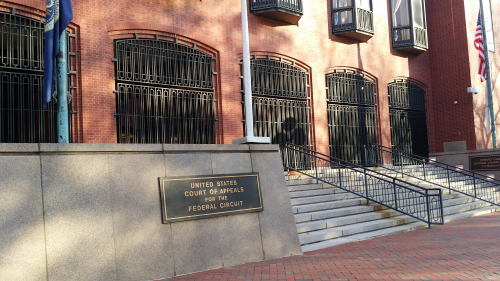
Court of Federal Claims | Federal Circuit

We’re looking forward to a good crowd at the upcoming ALI-CLE Eminent Domain and Land Valuation Litigation Conference, when we shall converge on Charleston, SC, January 25-27, 2018. We’ve received word that our main conference hotel, the Francis Marion, has sold out.

But if you haven’t reserved your space yet, don’t despair. The conference organizers have made arrangements at a hotel that is very nearby, the Marriott Courtyard, for a special conference rate. That hotel is just across the park from the Francis Marion. ALI is also making arrangements for conference room blocks in two other nearby hotels. Details on all of these alternatives are posted here.  

One more thing that we didn’t mention in our preview: there will also be a special sneak preview of the movie about Kelo v. City of New LondonLittle Pink House. If you joined us in Austin in

Continue Reading ALI-CLE Eminent Domain Conference Hotel Block Selling Out – Overflow Available
Here’s the cert petition which has just been filed in a case we’ve been following since it was instituted in the District Court, Brott v. United States.

The case presents the deceptively simple question of whether property owners who sue the federal government for a taking are entitled to both an Article III forum, and to have the issues determined by a jury.

This is a rails-to-trails case, and as followers of this blog know, these claims, when they exceed $10,000, must be raised in the Article I Court of Federal Claims, where you get the case tried by a judge, and not a jury. The jurisdiction of the CFC was conferred by Congress in the Tucker Act.

Brott is challenging that scheme (complaint here), arguing that the self-executing nature of the Fifth Amendment’s Just Compensation Clause requires both an Article III court, and a jury. 

Continue Reading New Cert Petition: Property Owners Entitled To Jury & Article III Judge In Federal Inverse Cases

We’ve been receiving a lot of visits lately from folks looking for information on inverse condemnation liability after the recent Northern California wildfires, and the flooding in Houston. In addition to the news stories (see SF Chronicle wildfire story here, and the Texas Tribune flood story here) which we’ve already posted, here are other links which may be useful:


Continue Reading More On Inverse Condemnation Liability For Fires And Floods

The complete agenda and faculty list has now been posted on the ALI-CLE website, and early registration is open! Go now and reserve your spot. 

We paid a visit to Charleston recently, the venue for our January 2018 conference, to scout it out. We can report that we’re going to have a great time, for sure. When we polled you last year, you selected Charleston as your first choice (a new city for the Conference), and it is shaping up to be a very good selection. In addition to the usual lineup of CLE programming, there are a ton of things to see and do in the area. We recorded a short video down at the “four corners of law” (the intersection of Meeting Street and Broad Street), to give you a preview (the weather was much better than in our 2016 preview video, too).

As an added

Continue Reading 2018 ALI-CLE Eminent Domain Conference – Agenda And Faculty Now Posted

This just in: the Hawaii Supreme Court has rendered a unanimous opinion in Leone v. County of Maui, No. SCAP-15-599 (Oct. 16, 2017), a case we’ve naturally been following because it involves regulatory takings (and we were involved in a similar case on a neighboring property). 

We haven’t had a chance to review the 48-page opinion in detail (once we do so, we will post a more detailed review), but the issue the court was presented with was, as we noted here, whether leaving land in its vacant state court be considered an economically beneficial use. Short story is that the court held yes, it could, thus seeming to create a lower court split (hello, cert petition) with at least one other court, the Federal Circuit in Lost Tree, concluding that economically beneficial use means more than someone might buy it down the road. 

There’s

Continue Reading Conflict Check: Hawaii Adds To Lower Court Regulatory Takings Split: Is Leaving Land Vacant On The Hope It Is Worth More In The Future “Economically Beneficial Use”?

Flooding

For obvious reasons, much of our recent traffic has come to the blog looking for information or cases about inverse condemnation and flooding. So instead of having you chase down links through a search engine or our Search page, here are some of the more popular links regarding government liability for flooding: 


Continue Reading Flooding And Inverse Condemnation Links

IMG_20170726_170437

Here are links to the cases and other materials which I mentioned today in our session at the Transportation Research Board‘s 56th Annual Workshop on Transportation Law in Salt Lake City:


Continue Reading Links And Materials From Today’s TRB Eminent Domain Session

In Brott v. United States, 959 F.3d 425 (6th Cir. May 31, 2017), a Sixth Circuit panel — after acknowledging the Fifth Amendment right to just compensation is “self-executing” — held that it really wasn’t: the federal government can take private property but the owner can only recover compensation if Congress agrees to allow them to do so. Thus, takings plaintiffs must try their cases in the Article I Court of Federal Claims, and do not merit a jury trial in an Article III court.

The property owners/plaintiffs have now sought en banc review:

After the panel issued its opinion, the Supreme Court granted certiorari in Oil States Energy Services, LLC v. Greene’s Energy Group, LLC, 639 Fed. Appx. 639 (2016), cert. granted, 2017 WL 2507340 (June 12, 2017). In Oil States the Supreme Court will decide “[w]hether inter partes review violates Article III or the Seventh Amendment

Continue Reading Property Owners (And Amici) To Sixth Circuit: En Banc Review: “Self-Executing” Compensation Clause Means Congress Doesn’t Need To Consent

SSRN

 A couple of weeks ago, we noted that the Supreme Court’s recent decision in Murr v. Wisconsin would no doubt be a boon for law review editors. To avoid shirking our duty, we’ve spent the interim doing some writing, adding a drop to the flood. First draft done, posted on SSRN here

Emphasis on “draft,” so send your comments. Continue Reading Restatement (SCOTUS) of Property: What Happened to Use in Murr v. Wisconsin?

20151205_145920

If you “get” this headline and the decision by the Federal Circuit, then congratulations, you are a super takings nerd. King of the Nerds. Off-the-charts nerd. Your takings law geek certificate is in the mail. 

In Petro-Hunt, LLC v. United States, No. 16-1981 (July 13, 2017), the U.S. Court of Appeals for the Federal Circuit considered Tohono, § 1500, takings statutes of limitations, judicial takings, Quiet Title, temporary takings, physical vs regulatory takings, Louisiana law mineral servitudes, and related contract claims. Lots of issues, and we leave it to you to read the whole thing. Well worth it. Bottom line: property owner loses. 

But even in the midst of a loss on all substantive and procedural fronts, this bright point: the Federal Circuit concluded that if the plaintiff had followed the first-to-file process, the court would have upheld the jurisdiction of the Court of Federal Claims against the government’s  § 1500

Continue Reading Federal Circuit: Property Owners, Continue To File Your CFC Takings Claims Before You File Your District Court Action