Court of Federal Claims | Federal Circuit

Wikipedia

Thanks to lawprof Josh Blackman for pointing out this Order from a federal district court dealing with the “is the government’s outlawing bump stocks a taking” question. See Blackman, District Court Finds Bump Stock Ban May Constitute a Taking, Because the Federal Government Lacks a Police Power (Volokh Conspiracy). 

We’ve delved into the issue before (“One From The Gut: Outlawing ‘Bump Stocks’ Not A Taking“), concluding that the likelihood of success on these type of claims — is the DOJ changing its mind about whether a bump stock qualifies as a banned “machine gun” — is remote. Not because there’s a jurisprudentially-consistent reason why, but just because it is.  

The court’s order denying the federal government’s motion to dismiss (without prejudice) is both cheeky (see above re Wikipedia) and an enjoyable read (“For example, state governments have determined that cocaine should be illegal because of the
Continue Reading Federal Court: “Takings law is difficult” (But Let’s Not Cross That Bridge Just Yet In Bump Stock Case)

19-1277.Opinion

The work of the courts goes on, and as long as there’s stuff to report, we’ll keep reporting as usual.

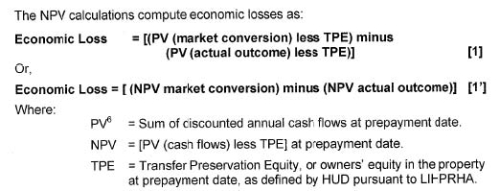
Yesterday, the U.S. Court of Appeals for the Federal Circuit issued an important takings decision in a case and issue we’ve been following for what seems like forever. In Anaheim Gardens, L.P. v. United States, No. 19-1277 (Mar. 25, 2020), the court held that a property owner in a regulatory takings case asserting a Penn Central taking may prove the “economic impact” factor by introducing evidence “by demonstrating their lost opportunity to earn market-rate rental income after prepaying their mortgages.” Slip op. at 17. The Court of Federal Claims had precluded such evidence, concluding instead that the before-the-regulation and after-the-regulation method was the only proper way. 

Here’s the short story: the feds adopted programs providing incentives to developers to build low-income housing. The programs offered below-market 40-year mortgages

Continue Reading Mi Casa Ain’t Su Casa: Proof Of Lost Opportunity Is Evidence Of Penn Central’s “Economic Impact” Factor

Missed out on the 2021 ALI-CLE Eminent Domain and Land Valuation Litigation Conference swag?

Well fear not: here’s your chance to get your high-class reminder — a kit of road warrior essentials — to save the Conference date on your calendar. We’re already underway with planning the agenda and faculty, so it’s never too soon to block it off (January 28-30, 2021, at the 4-Diamond DoubleTree Resort, Scottsdale, Arizona). 

If you were not able to get your swag in Nashville, send us a note (rht@hawaiilawyer.com) and we shall gladly drop one or two in the mail to you.

While supplies last!  Continue Reading Unboxing The 2021 (Scottsdale) ALI-CLE Eminent Domain Conference Swag: Get Yours Today!

We were all set to take a deeper dive into the Court of Federal Claims’s recent opinion in the “downstream” Harvey flooding cases (we could not do so at the time the opinion was issued last week because we were tied up doing real lawyer stuff), when our Reno, Nevada colleague Steve Silva (who most recently was on the faculty at the ALI-CLE Conference in Nashville) beat us to the punch.

On his Taking Nevada blog, Steve has posted “Major flood decision in Texas turns on Divine Intervention” —

Analyzing and comparing tort to taking is difficult. A tort is generally seen as something wrongful. A private injury committed by one person against another. A classic “taking” by exercising the power of eminent domain in direct condemnation to acquire land and pay compensation is not a wrongful act. It merely is.

Further complicating things, the clearest

Continue Reading Steve Silva (Taking Nevada) On Flood Takings, Torts, And Tortes

They’re coming so fast, we can hardly keep up.

Today, in Castillo v. United States, No. 19-1158 (Feb. 20, 2020), the U.S. Court of Appeals for the Federal Circuit resolved a common issue in rails-to-trails takings cases: when a property owner holds title and her deed describes the land as bordering on a railroad line or other easement (or the property is described as a lot in a plat that shows the lot’s “property line” as adjoining a road or railroad easement), does the owner of the adjoining fee estate own the fee interest up to the “centerline” of the right of way?

Applying Florida property law, the court held yes, there is a presumption that the owner’s title goes up to the “centerline.” The court reversed the Court of Federal Claims’s conclusion that the presumption did not apply, and that deeds describing the property as a “less

Continue Reading Federal Circuit: When Road Is The Property Boundary, Owner’s Fee Goes Up To The “Centerline”

Openthefloodgates

We’re doing lawyer things this week, so can’t do much blogging, so we’re going to just leave this here, the Court of Federal Claims’s Opinion and Order in the case seeking compensation for a taking by the “downstream” owners whose lands were flooded by the U.S. Army Corps of Engineers in the aftermath of Hurricane Harvey. 

Short story: no property, no taking. 

How does the following square with the same court’s (but a different judge’s) ruling about the “upstream” owners?

Two questions must be asked. First, what property did the government take? Second, how did the government take that property? The answers to these questions go to the heart of the Constitution’s taking clause. The waters that actually caused the invasion came from the unprecedented floodwaters from Hurricane Harvey when it stalled over Houston for four days, dumping approximately thirty-five inches of water on Harris County. See Plaintiffs’ Appendix (hereinafter

Continue Reading CFC: God Forced Corps Of Engineers To Open Floodgates

Profcorner.jpf

Please mark your calendars and join us next Tuesday, February 11, 2020 at 12:30pm ET for the free (for members of the ABA’s Real Property, Trust and Estate Section) webinar, the monthly “Professors’ Corner.”

This one will be on the aftermath of Knick v. Township of Scott, 139 S. Ct. 2162 (2019), in which the Supreme Court formally overruled the “state procedures” ripeness requirement in federal regulatory takings cases. 

We shall be speaking about the case and what’s next along with Professors Stewart Sterk and Michael Pollack (moderated by Professor Shelby D. Green). Here’s the summary of the webinar from the ABA website:

Last term, in Knick v. Township of Scott, the Supreme Court overruled the long-standing requirement that state takings claims first be litigated in state courts. The Court held that a property owner has an actionable takings claim when the government takes property without paying for

Continue Reading Tuesday Feb 11, 2020: Professors’ Corner – The Supreme Shift in Takings Litigation – Knick v. Township of Scott

EOGnEv8W4AAoKnI

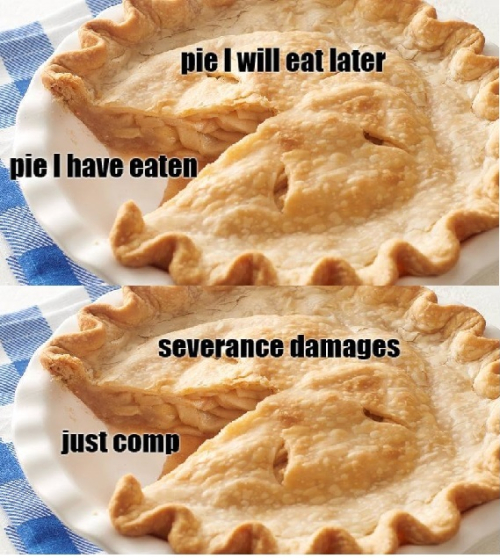
Picture 1: how normal people see pie.

Picture 2: how you see pie if you’re coming to the
ALI-CLE Eminent Domain Conference. 

If you get the above, you probably are already set to join us next week for the 37th Annual ALI-CLE Eminent Domain and Land Valuation Litigation Conference in Nashville. (If not, shame on you!).

And having just reviewed the latest registration list, I can report that we have an all-time record attendance.  But there’s still room for those of you still not committed. Register here. Don’t miss out. There will be pie. Continue Reading Record Attendance (But There’s Still Time For You Last-Minute Filers) At Nashville ALI-CLE Eminent Domain Conference

One does not simply walk to nashville

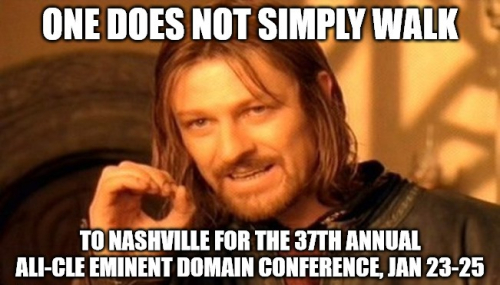
You can also fly, drive, or bike to the upcoming 37th Annual ALI-CLE Eminent Domain & Land Valuation Litigation Conference. in Nashville. Limited space still available, so don’t delay further and register now. We’re on track to record attendance, so you don’t want to miss the best nationally-focused three-day program on our area of law.

Takings, Knick, compensation, appraisals … and a bit of fun thrown in. We have many new attendees, and many new speakers, too.  Continue Reading (Nearly) Last Chance To Join Us In Nashville For ALI-CLE’s Eminent Domain Conference

20170918_171029_Richtone(HDR)

We’re seeing a lot of “end of year” and “end of decade” wrap-ups, so figured we’d better chime in.

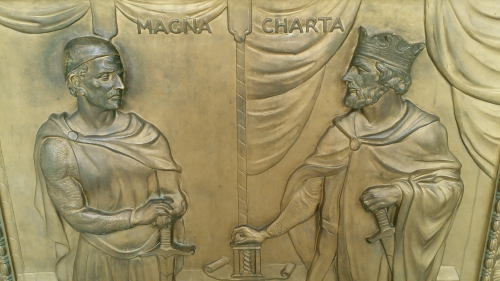
As the above graphic hints (this is detail of the doors of the U.S. Supreme Court), our biggest case of 2019 (and probably of the twenty-aughts) is Knick v. Township of Scott, 139 S. Ct. 2162 (2019). The federal courthouse doors are open again to federal takings claims. 

Yes, the U.S. Supreme Court doors were technically already open (via cert petitions from state supreme court takings cases), and Knick simply re-set the clock back to 1985, but if the two-thousand double-ohs were the decade of Kelo (a loss), will not the 2010’s be defined by Knick (a big win) even if the ruling came at the tail end of the decade?  

Compare where we are today with where in 2016 we thought we were heading

Continue Reading Biggest Case Of The Year…Or Maybe The Decade?