Court of Federal Claims | Federal Circuit

It’s been a long week, and it’s Friday with a filing coming up. So we’re not going to spend a lot of time digesting the Federal Circuit’s opinion in Alford v. United States, No 19-1678 (June 19, 2020). Plus, it is a short one (11 pages) that makes one major point.

Short story: after an unusual amount of rain, to save a levee from a predicted 95% chance of breach, the Corps of Engineers decided to raise the normal levels of Eagle Lake, causing damage to the plaintiffs’ lakefront properties. Their land was flooded for three months. The CFC agreed this was a taking, and awarded $168,000 in just compensation.

The Federal Circuit reversed (opinion by Judge Dyk, are you that surprised?). The court held that on the whole, the property owners should be grateful that the Corps flooded their lands, because the “relative benefits” doctrine. If the government

Continue Reading Federal Circuit: Be Grateful Your Property Was Flooded (It Could Have Been Worse)

Congratulations – if you understood this post’s headline, you are officially a rails-to-trails nerd. A super-nerd.

But even if not, you shouldn’t need a rails-to-trails nerd’s level of knowledge to understand and appreciate the Federal Circuit’s ruling in Caquelin v. United States, No. 19-1385 (May 29, 2020). It’s a case worth reading for all of us — nonnerds included — because it nicely gets into the weeds of takings doctrine. 

One observation before we begin. There are takings of a fee simple interest. Takings of less-than-a-fee interest, such as the taking of an easement. Partial takings where less than all of the owner’s property is taken, and there’s a remainder property. Temporal takings where the seizure is not forever (temporary takings vs permanent takings). Regulatory takings, inverse condemnations, per se (categorical) takings, physical takings and ad hoc (Penn Central) takings. And myriad combinations fo the

Continue Reading Federal Circuit: Arkansas Game Did Not Overrule Ladd (NITUs Are Categorical Takings)

Programming note: On the weekend we’ve set aside to remember our nation’s war dead, we thought we’d repost this one, about how Arlington National Cemetery came to be, and how yes, there’s a takings story there.

———————————————————

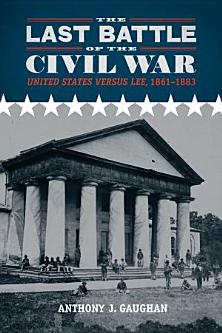
LastbattlebookYou know how we’re always saying that the provisions in the Takings Clause are “self-executing,” that even in the absence of a waiver of sovereign immunity, the Tucker Act, and section 1983, property owners would still be able to maintain a claim for compensation? Well here’s an article that explains that how that rule was first articulated, and not in a dry academic way, but with a fascinating historical story.

It’s the tale of United States v. Lee, 106 U.S. 196 (1882). We knew the land that is now Arlington National Cemetery was once owned by Robert E. Lee, but we can’t say that we gave much thought to how it became


Continue Reading Memorial Day 2020: Arlington National Cemetery And Takings

Screenshot_2020-05-12 William Mary Law Review

Looking for some property and takings scholarly reading while you cool your heels at home? Well, the William and Mary Law Review has recently published no less than three worthy pieces, all available for download.


Continue Reading Three New Property And Takings Articles From William & Mary Law Review

Professor Josh Blackman’s posts over at the Volokh Conspiracy on the bump-stock takings case (and follow ups taking a deeper dive into the takings question, see this post, this post, and this post), got us to thinking. So we wrote up our thoughts, in which we noted that we thought the “self-executing” nature of the Just Compensation Clause means that even in the absence of a Tucker Act waiver of sovereign immunity, the federal government could be sued in an Article III court for compensation (“Lawprof Josh Blackman Asks: “Is there an express cause of action under the Takings Clause?“). This is the position we took in the Brott litigation, where we thought that the Tucker Act is unconstitutional to the extent that it denies a jury trial for compensation claims. But as you know, Brott ended up with “cert denied.”

But that also got

Continue Reading Taking A New Look At Takings Remedies: What If Just Compensation Really Isn’t The Remedy For An Inverse Condemnation?

AIito-takings excerpt

(Spoiler alert: we think the answer is “yes” — see below)

Delving into the latest Supreme Court opinion related to the Affordable Care Act, lawprof Josh Blackman (who recently wrote about bump stock takings), now asks a broader question: Is there an express cause of action under the Takings Clause? More pointedly he writes about a question that takings mavens often think about (but on which there are few guideposts):

[I]s it possible to sue the federal government for an unconstitutional taking, without relying on the Tucker Act? That is, does the Takings Clause itself create an express cause of action.

What would have happened if the Congress never enacted the Tucker Act in 1887? Could the federal government take property without paying “just compensation”?

He points out that the majority opinion in the recent ACA case said no (see here, note 12 on page 25)

Continue Reading Lawprof Josh Blackman Asks: “Is there an express cause of action under the Takings Clause?”

ALICLE-tagline-250x90

There’s still time to join us tomorrow, Friday, April 24, 2020 at 2-3pm Eastern Time, they will be presenting “Strategies for Litigating Regulatory Taking Cases” in a webinar produced by ALI-CLE. Register here (multiple attendee discounts available). 

At the recent ALI-CLE Eminent Domain and Land Valuation Litigation Conference in Nashville, our colleagues, New York’s Jon Houghton and Hawaii’s Dave Day presented a very informative program on litigating regulatory takings cases. Jon is a property owner-side lawyer, while Dave is a Deputy Attorney General who represents the State of Hawaii in such cases. So it was a practical and balanced presentation. Jon and Dave are taking it to the next level. This isn’t simply a repeat of their Nashville program, but they will be exploring in more detail the practicalities of building and defending these difficult cases. 

Here’s the description of the program:

The U.S. Constitution provides that

Continue Reading Still Time To Join Us (Tomorrow): ALI-CLE Webinar – Strategies for Litigating Regulatory Taking Cases

In a case that uses terms that might reasonably lead you to think it was lifted from the script for the next stoner comedy, the U.S. Court of Appeals for the Federal Circuit, in Gadsden Indus. Park, LLC v. United States, No. 18-2132 (Apr. 22, 2020), held that an owner of land on which the byproduct of milling steel was dumped possessed a property interest in some of the “slag,” but not as much of it as the owner claimed. The court also held that the property owner did not introduce evidence of its loss of use of the “kish” or the “scrap.” 

Before we go any further, here’s your daily dose of learning:

Slag, a byproduct of steel manufacturing, is “a non-ferrous material that separates during smelting.” Gadsden Indus. Park, LLC v. United States, 138 Fed. Cl. 79, 92 (2018) (Decision). Kish is “a ferrous byproduct

Continue Reading Fed Cir Bummer: Govt Bogarted None Of Your Kish, Slag, Or Scrap

Here’s the cert petition that along with our colleague Steve Jakubowski we’re filing today in Campbell v. United States, No. 19-___, in which we ask the Court to review the Federal Circuit’s ruling that the plaintiffs in a Court of Federal Claims takings case missed the Tucker Act’s statute of limitations (28 U.S.C. § 2501).

This one focuses on the interplay between Williamson County‘s “final decision” ripeness rule and the “case and controversy” injury-in-fact standing requirement, and asks: if the government makes its final decision, but the plaintiff isn’t injured until later, has there been an actionable taking?  

Often, the date on which the government ripens a takings claim by making the final decision to apply the regulation to the plaintiff’s property, and the date on which the plaintiff’s property rights are actually affected are the same. But here, the two key events happened on different dates. The

Continue Reading New Cert Petition (Ours) Offers A Moment Of Zen: If The Government Makes The Final Decision But The Property Isn’t Yet Actually Injured, Must The Owner Sue For A Taking Now?

Today’s Federal Circuit opinion in Golden v. United States, No. 19-2134 (Apr. 10, 2020) is the latest in the post-Oil States cases involving the alleged taking of patents.

Golden asserted three theories:  

The complaint alleges the takings occurred by virtue of: (1) the government’s use, manufacture, development, and disclosure of the subject matter “outlined” in the claims and specifications of Golden’s patents; (2) the cancellation of certain patent claims during the [inter partes review] initiated by the government; and, (3) certain actions by the Claims Court and the Federal Circuit in the Lead Case.

Slip op. at 6.

The Federal Circuit rejected each of these theories.

First, the court held that an allegation that the feds infringed on Golden’s patents was a tort claim, not takings. Slip op. at 10 (citing Schillinger v. United States, 155 U.S. 163, 168-69 (1894) (infringement claim “is one sounding

Continue Reading Fed Cir: Patent Infringement Claim Is A Tort, Not A Taking (Nor Is Inter Partes Review)