


Check out the U.S. Court of Appeals for the Fourth Circuit’s opinion in Mountain Valley Pipeline, LLC v. 8.37 Acres of Land, No. 23-1532 (May 14, 2024).

The caption tells you it is a federal eminent domain case, specifically the Mountain Valley Pipeline, a very controversial and much-objected-to natural gas pipeline in the Virginias. The issue was one of the amount of compensation.

One appraiser testified to a certain use and a certain high-low range. Another appraiser testified to different uses and a different high-low range. The jury reached a just compensation verdict that wasn’t based on one appraiser’s testimony or the other’s, but on some amalgamation of the two. 

As we know, a oft-applied rule is that a jury’s just comp verdict must be “inside the range of credited testimony.” The trial judge concluded the verdict violated this rule because the jury had apparently picked-and-chosen. Slip op. at
Continue Reading CA4: Jury Is Free To Cut-And-Paste Various Just Compensation Evidence To Reach A Verdict “Within the range of credited testimony”

Here’s one we’ve been meaning to post for a while, the Ontario (Canada) Land Tribunal’s opinion in 13538 Ontario Inc. v. City of Stratford, No. OLF-22-002455 (Jan. 11, 2024), where the court resolved a dispute between the parties in an expropriation (eminent domain) case over which owed the other costs. 

Now that isn’t our area of expertise at all, but we were intrigued after our Toronto colleagues Shane Rayman and Conner Harris sent it our way.

The matter before the Tribunal was the penultimate chapter in an interminable legal battle, of nearly Dickensian proportions, relating to the expropriation by the City of Stratford (“City”) of the lands of the historic Grand Trunk Railroad Repair Shops. This tale features a hard fought legal battle over many years, a monstrous narrative with many subplots, the tragic death of the central protagonist whose vision for the Cooper site never came to fruition

Continue Reading Canadian Court Resolves A Very Un-Canadian Expropriation Beef

Our friends Kristen and Dave at the Infrastructure Junkies Podcast are doing what we hoped they would: they’ve convinced Clint Schumacher to appear as a guest and reflect on his Eminent Domain Podcast, which has produced its final episode:

The popular Eminent Domain Podcast signed off after a successful six year run. The Eminent Domain Podcast’s host, Texas attorney Clint Schumacher, joins the Infrastructure Junkies to reflect upon his show, his experiences, and all that he learned from being the pioneer podcast for the eminent domain industry. Listen in while Clint is on the business end of a rough cross examination!

It’s great to hear Clint one more time. Be sure to listen!Continue Reading A Must-Listen Infrastructure Junkies Podcast: “Curtain Call for the Eminent Domain Podcast!”

The winner takes it all
The loser’s standing small
Beside the victory
That’s her destiny

Note: this is the first of a short series of posts on the U.S. Supreme Court’s recent decision in Devillier v. Texas.

In Part II, we’ll cover the case, the procedural path that Texas dragged everyone through, only to abandon it at the Supreme  Court), and what the Court actually decided, if anything,

Three Common Questions for Lawyers

In the classroom, I often ask students to use their intuition to guess the three most common questions that lawyers almost always get from potential clients. Put yourself in a client’s shoes: what would you want to know?

The students mostly get it right. “What’s this going to cost?” Check. “How long will this take?” Check. And perhaps most obviously, “What are my chances of winning?

That last

Continue Reading In Devillier v. Texas, The Winner Takes It All (Part I)

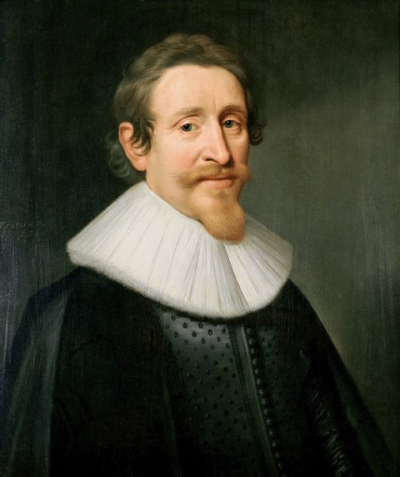
Grotius jpg (Small)
Hugo Grotius, aka Hugo de Groot,
born this day 441 years ago, April 10, 1583.

Author of the treatise “De Jure Belli et Pacis” (1625) — perhaps fittingly books about war and peace — which first used the phrase “eminent domain” to describe the sovereign power to forcibly acquire private property for public use and upon provision
of compensation:

Rights strictly taken is again of two Sorts, either private and inferior, which tends to the particular Advantage of each Individual: Or eminent and superior, such as a Community has over the Persons and Estates of all its Members for the common Benefit, and therefore it excells the former. Thus a regal Power is above that of a Father and Master; a King has a greater Right in the Goods of his Subjects for the publick Advantage, than the Proprietors themselves. And when the Exigencies of

Continue Reading Thinking Outside The Box: Happy Birthday To The Guy Who Coined “Eminent Domain,” Hugo Grotius

Here’s what we’re reading today:


Continue Reading Thursday Round Up: Pretextual Takings, Squatting, Unconstitutional Conditions

Under many (most?) state eminent domain schemes, if a property owner withdraws the condemnor’s deposit prior to the judgment of condemnation, the owner waives — or, more technically, forfeits — the ability to challenge public use and necessity. 

Vermont is no different, and under its statute, waiver is triggered by the owner’s “acceptance and use” of a payment:

Except in the case of agreed compensation, an owner’s acceptance and use of a payment under this section does not affect his or her right to contest or appeal damages under sections 511-513 of this chapter but shall bar the owner’s right to contest necessity and public purpose.

19 Vt. Stat. Ann. § 506(c).

The Vermont Agency of Transportation was doing one of those interstate interchange reconstruction projects, and needed some nearby property. After some procedural wrangling about which property owners need to be included in the case, it sent the

Continue Reading Vermont: It Doesn’t Matter If Property Owner Realizes That Cashing A Check For Estimated Compensation Waives Public Use Challenge

The New York Supreme Court Appellate Division’s opinion in HBC Victor LLC v. Town of Victor, No. 23-01347 (Mar. 22, 2024) marks the second time the issue of whether the Town can seize HBC’s property by eminent domain.

The first time out the court shot down the taking, concluding that it lacked a valid public use because the Town did not have a present plan for the property and the resolution of taking did not specify the present purpose other than “redevelopment.” And that isn’t enough.

As you know, that doesn’t mean the end of the line when it comes to eminent domain. As we often used to counsel clients when we did this stuff, beating back a taking on public use grounds just educates the condemnor about the shortcomings. Unlike other civil litigation, there’s no res judicata (sorry kids, that’s what we still call it) in eminent domain

Continue Reading NY App Div: Yes, We Previously Said This Taking Wasn’t For A Public Use, But Now The Condemnor Has A Plan

Untitled Extract Pages (Medium)

Check this out. Friend and colleague Steve Davis has authored “Eminent Domain, the Fifth Amendment Takings Clause, and the Rule of Law,” 88 Social Education J. 1 (2024).

As summarized on the Federal Takings blog:

Steve explains the rights guaranteed by the Fifth Amendment to the Constitution and focuses on its critically-important (but lesser-known and appreciated) right to compensation when the government takes its citizens’ private property for public use. The article offers a primer on eminent domain history and abuse, from the application of the Takings Clause to the states to the Kelo decision. Steve goes on to present current, real-life issues before the Supreme Court that affect every-day Americans and explains their background and importance.

The article concludes, “the Fifth Amendment’s essential constraints on the government’s extraordinary and easily-abused power of eminent domain remains as important today as it has over centuries—truly a fundamental piece

Continue Reading New Article: “Eminent Domain, the Fifth Amendment Takings Clause, and the Rule of Law” (Steve Davis, Social Education Journal)

You can spend all your time making money.
You can spend all your love making time.
If it all fell to pieces tomorrow, would you still be mine?

Count me as very surprised, and a bit saddened, when earlier this week my inbox pinged with notification that the latest episode of Clint Schumacher’s Eminent Domain Podcast had dropped. And instead of it being a session with a lawyer, legal scholar, appraiser, property owner, right of way agent, or other fascinating guest, I learned the Episode 128 was to be the final edition. Or as Clint puts it, the “Farewell Episode.”

For the past several years, I got used to twice a month receiving notification that Clint had posted a new episode. I’d click though to the bumper music and that familiar intro:

Welcome to the Eminent Domain Podcast with your host Clint Schumacher of Dawson & Sodd LLP.

Continue Reading Take It To The Limit, Eminent Domain Podcast: Fare Thee Well, Clint.