Looks like they’re at it again, a solution in search of a problem: a bill has been proposed in the Hawaii Legislature to create an “Environmental Court,” whose mission would be to handle “environmental disputes” arising under a wide range of state statutes:

…administrative proceedings and proceedings for declaratory judgment on the validity of agency rules authorized under chapter 91, arising under chapters 6D, 6E, 6K, 54, 58, 128D, 128E, 201N, 205, 205A, 220, 269, 339, 339D, 340A, 340B, 340E, 340F, 342B, 342C, 342D, 342E, 342F, 342G, 342H, 342I, 342J, 342L, 342P, 343, 508C, and 664, and Titles 11 and 12.

(And the regulations promulgated by state agencies, and ordinances and regulations promulgated by the counties, no doubt.) The bill (SB 632) would task this new court with “maintenance and improvement” of the environment and with exercising “constant vigilence” to “promote and protect Hawaii’s natural environment through consistent

Continue Reading Does Hawaii Need An “Environmental Court?” (Part II)

Looks like eminent domain and Hawaii are in the news today. Here’s what we’re reading:

Continue Reading Tuesday Round-Up: Hawaii In The Eminent Domain Spotlight

We often jokingly suggest that in eminent domain, “it’s good to be the King!” quoting that eminent eminent domain scholar Mel Brooks. We think this catchphrase aptly describes the “most awesome grant of power,” City of Oakland v. Oakland Raiders, 220 Cal. Rptr. 153, 155 (Cal. App. 1985), under which the condemnor has a very nearly unfettered ability to take property.

But in recent decision from the Missouri Court of Appeals it was good to be the landowner — the owner of a Burger King restaurant — because it had the good sense to hire Robert Denlow, our Owners’ Counsel colleague (and occasional Sunday golf partner) (that’s Bob in the above video, a 2013 interview). In City of North Kansas City v. K.C. Beaton Holding Co., No. WD76068 (Jan. 14, 2014), the Missouri Court of Appeals, Western District, held that the city, a

Continue Reading Sometimes, It’s Good To Be The (Burger) King: General Power Of Eminent Domain Does Not Include Blight Elimination

Blog-Logo

One of the perks of attending the annual ALI-CLE Eminent Domain and Land Valuation conference (this year in New Orleans) is that in addition to 2 1/2 days of high-level CLE programming involving our favorite topic, you get to meet colleagues from across the nation (and internationally – expropriation lawyers from Canada were also with us, and gave us an update on the Antrim Truck decision). 

You also find out things that, despite the seemingly infinite resource that is the internet, you didn’t know before. And that’s how we came to find out about a new law blog, covering Wisconsin issues in eminent domain and related topics, “The Preeminent Domain” (http://thepreeminentdomain.com/). As an aside, we love that URL. 

Steve Streck, a partner at Axley Brynelson leads the blogging team, and thus far, their posts look pretty interesting (underwater mortgages, rails-to-trails, and, of course, Wisconsin-centric eminent domain

Continue Reading New Eminent Domain (And Related) Law Blog

DSC_0158

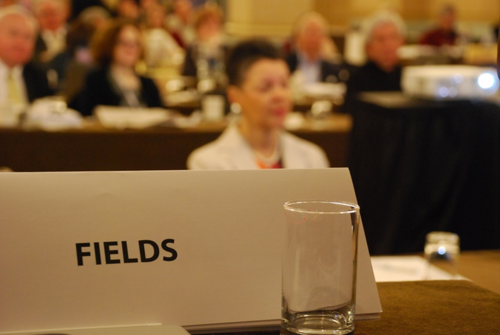
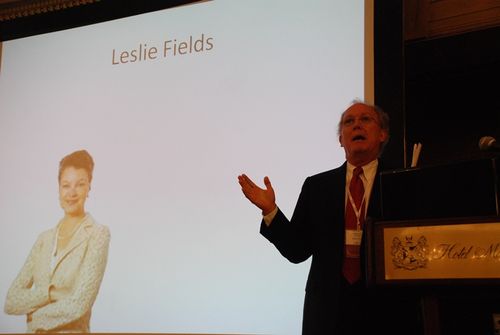
Between sessions at the annual ALI-CLE Eminent Domain and Land Valuation conference in New Orleans, planning Chair Joe Waldo took to the mic to say a few words about his co-Chair, Leslie Fields. Yesterday, Leslie announced that after 10 years, she’s retiring as Chair of the conference and that she is also retiring from the practice of law later this year. 

DSC_0138

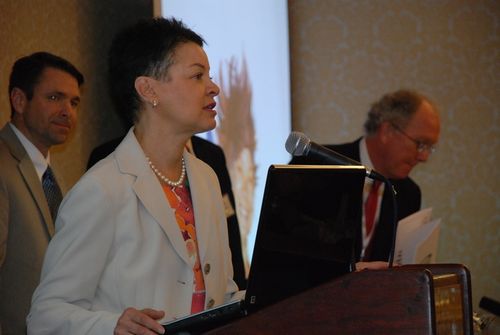
Joe expressed his thanks for Leslie’s years of leading this conference and her many more years of representing property owners across Colorado in eminent domain and related cases. In addition to planning this conference, Leslie’s represented property owners in nearly every county in Colorado, won significant cases in the Colorado Supreme Court and federal courts, and literally written the book on the practice of eminent domain in in Colorado.

DSC_0165

Joe, Leslie, and Andrew Brigham and Jack Sperber (co-Chairs of the Eminent Domain 101 program)

DSC_0173

 Leslie reminded us that

Continue Reading Thank You, Leslie Fields

DSCF1604

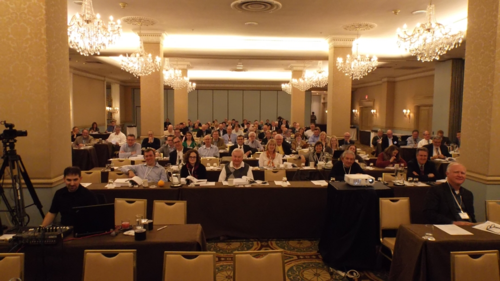
This morning, I joined my Owners’ Counsel colleagues Leslie Fields and Joe Waldo (the programming co-chairs), and more than 100 fellow eminent domain experts in New Orleans under the auspices of ALI-CLE at our annual gathering for the start of 2 1/2 days of legal education. 

Joe and Leslie asked me to join Professor James Ely to speak about “The Full and Perfect Equivalent for Just Compensation: The Historical Context and Practice.” Professor Ely led us off with a crash history of just compensation, starting with the Magna Carta and where we’ve been, and then handing it off to me for the “where we are and where we may be going” segment.

Just to prove to you all that while in New Orleans, I really did show up and not get distracted by the many (many) distractions that this city can offer, the above is a

Continue Reading A Dispatch From The ALI-CLE Eminent Domain Conference (With Links)

Next week, we’ll be in New Orleans for the 2014 edition of the ALI-CLE Eminent Domain program, now in its 31st year. 

As usual, my Owners’ Counsel colleagues Leslie Fields and Joe Waldo (the programming co-chairs) have put together a fantastic 2.5 day of programming, taught by expert faculty.  At 11:00 a.m. on the first day of the program, I will be joining Professor James Ely to speak about “The Full and Perfect Equivalent for Just Compensation: The Historical Context and Practice.” 

Should be fun. If you are not joining us in-person, ALI-CLE is producing it as a live webcast, and will make the coursebook and video and audio available for later listening or viewing. 

More details here, or download the brochure here, or below. 

31st Annual Eminent Domain and Land Valuation Litigation, ALI-CLE Program (CV023) (Jan. 23-25, 2014) New Or…

Continue Reading 31st Annual ALI-CLE Eminent Domain And Land Valuation Litigation (New Orleans)

The U.S. Supreme Court has declined to review an interesting case we’ve been following, about that big glass viewing platform over the Grand Canyon.

As we noted here, in Grand Canyon Skywalk Development, LLC v. Sa Nyu Wa, Inc., 715 F.3d 1196 (9th Cir. Apr. 26, 2013), the issues mostly involve exhaustion, but there are some eminent domain questions that made the case worth following.  

The case involved the Hualapai Tribe’s efforts to condemn the rights of the non-Indian developer of the skywalk. A dispute arose between the developer and a corporation chartered by the tribe over a revenue-sharing contract, and while the corporation and the developer were arbitrating their disagreement, the tribe instituted an eminent domain action in tribal court to condemn the developer’s contractual rights.

The Ninth Circuit held that the developer would need to exhaust tribal remedies before the federal court could

Continue Reading Interesting Cert Petition Denied: Can A Tribe Condemn Its Contract With A Nonmember?

Cover_42_3_ The Urban Lawyer, the law review produced by the ABA Section of State & Local Goverment Law has published an article which we wrote with our Damon Key colleagues Mark Murakami and Bethany AceRecent Developments in Eminent Domain: Public Use, 45 Urban Lawyer 809 (2013).

Here’s the Introduction to the article:

IN KELO V. CITY OF NEW LONDON, the United States Supreme Court held that a municipality’s exercise of eminent domain power supported only by claims that doing so would help the local economy was not a per se violation of the Public Use Clause of the Fifth Amendment. The Court’s majority—and especially Justice Anthony Kennedy’s concurring opinion, which provided the fifth vote to affirm—left open the possibility that some takings would not qualify. In the intervening time, however, the Court has not provided any guidance whatsoever about what takings it would consider unconstitutional private-to-private

Continue Reading New Article: Recent Developments in Eminent Domain: Public Use

Homes. Tiny homes. Things have come full circle. Because according to this report from The Day, New London’s daily paper (“Take the steps to pursue Fort Trumbull dreams“), the city’s mayor, in order to remove the “stain” of the l’affiare Kelo, has proposed a “tiny house neighborhood” on the leftover parts of the now-vacant land where regular-sized homes were bulldozed as a Public Use. In other words “Little Pink Houses” were taken from their owners so that even smaller homes can be built in their place:

Mayor Finizio said he would like New London to symbolically overturn Kelo by undertaking a true “public use” of the seized private properties. He offered as an example a parking garage, under discussion recently as a means of meeting the parking demands generated by Electric Boat’s offices in the former Pfizer buildings, the one major project resulting from

Continue Reading Eminent Domain’s Circle Of Life In New London: Guess What Use For The Kelo Property Is Being Proposed?