Magna_Carta_(British_Library_Cotton_MS_Augustus_II.106)

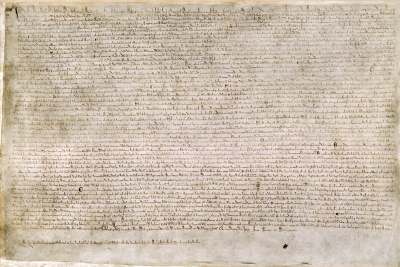
807 years ago today on a grassy plain down by the river, the barons convinced bad King John to affix his seal to Magna Carta. And boy was that guy bad even by the standards of medieval royals: when you type “bad king…” in your search engine, the first suggested search is “bad king … John.”

There’s a lot of good stuff in Magna Carta — and a lot of stuff that has been rendered irrelevant or quaint by the passage of time, and even some stuff that we’d consider cringe-worthy today (see art. 10, for example).

But we takings geeks all know and continue to appreciate article 28:

Nullus enarius aries, vel alius ballivus noster, capiat enar vel alia catalla allcujus, nisi statim inde reddat enarius, aut respectum inde habere possit de voluntate venditoris.

Magna Carta art. XXVIII (1215).

If, like us, you don’t know Latin,

Continue Reading Happy 807th Birthday, Magna Carta. We Need Just Compensation “Stat!”
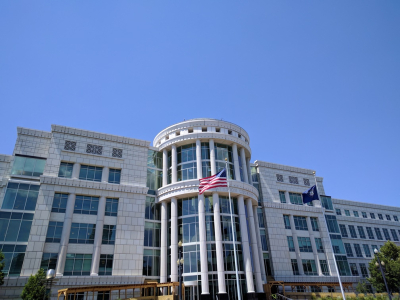
IMG_20170801_132241

Here’s the latest in a case we’ve been following.

A Utah statute requires that if a condemnor doesn’t actually use property it acquired “under a threat of condemnation,” it must try and sell it back to the (former) owner. The statute defines “threat of condemnation” as when “an official body of the state or a subdivision of the state, having the power of eminent domain, has specifically authorized the use of eminent domain to acquire the real property.” 

So what does “specifically authorized” mean? The Utah Court of Appeals held it means only when the potential condemnor takes a “final vote” and actually and finally “approves the use of eminent domain powers.”

In Cardiff Wales, LLC v. Washington County School District, No. 20210221 (May 26, 2022), however, the Utah Supreme Court disagreed, concluding it means any specific threat to take. The condemnor must do something more than indicate

Continue Reading Utah: Sale “Under Threat Of Condemnation” Means Only A “Specific Threat To Take,” Not That Govt Authorized Condemnation Lawsuit

On one hand, there’s nothing terribly surprising about the Texas Supreme Court’s opinion in Hlavinka v. HSC Pipeline Partnership, LLC, No. 20-0567 (May 27, 2022) holding that yes, “polymer-grade propylene” qualifies as an “oil product” under Texas statutes that allow a private pipeline company to take property to transport oil products, and that yes, a private pipeline counts as a public use. After all, the first sentence of the opinion sets the context for those of you who may not realize how important the energy industry is to that state:

Recognizing the important role that pipeline development plays in meeting our state’s manufacturing and energy needs, the Legislature grants common carriers the right to condemn private property for the construction of pipelines that transport certain products.

Slip op. at 1.

But on the other hand, the very last portion of the opinion gives a hint that maybe the court

Continue Reading Texas: At Least One Customer Is Served So Pipeline Is A Public Purpose, But Let’s Loosen Valuation Rules For Energy Corridors

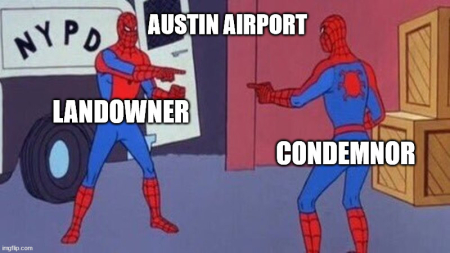
Austinairport

Here’s what we’re reading today:

Continue Reading Tuesday Round-Up: Austin Airport Taking Its Own Land?, The Right To Exclude, And More

Here’s a pretty rare one: a trial court entering summary judgment on liability in favor of the property owner in a takings case. Yes, you read that right.

And to top it off, this ruling comes in a case in which the taking alleged was a police invasion and destruction of a home for the valid public purpose of apprehending a holed-up criminal, a brand of claim that has not met with a whole lot of success. See, for example, this case from the Tenth Circuit, and this case from the Supreme Court of South Carolina.

In this order, the U.S. District Court for the Eastern District of Texas held the City of McKinney liable for a physical taking. The entire order is worth reading, but here are some of the highlights.


Continue Reading District Court: City Liable For Physical Taking For Destroying Home While Apprehending A Criminal

The Cass County Water Resource District wanted to acquire the Sauvageau property for a flood control project. That means flooding the property, removing all trees and vegetation, and taking dirt. Putting the land underwater, permanently. Cutting off the public access road. And removing the Sauvageau home.

The District offered to buy the fee interest from the Sauvageaus for $460,000, the appraised value of the fee interest. They declined. So the District offered $460,000 for a permanent easement. Also declined.

Next up, eminent domain, with the District seeking a “permanent right of way easement” by quick take. We’re taking it now, so you have a few months to get out of your home and get off the land. The Sauvageaus objected. You might be able to take our property for a flood control project, but you can’t take our property by quick take. Under the North Dakota Constitution, quick take is

Continue Reading It Isn’t An “Easement” When Condemnor Is Taking Everything, Permanently

Here’s one we’ve been meaning to post for a while. In Bd. of Comm’rs of Mill Creek Park Metro Dist. v. Less, No. 20MA0074 (Apr. 14, 2022), the Ohio Court of Appeals held that the Park District lacked the authority to condemn Less’s property for a bike path, which did not qualify under the authorizing statute as the “conservation of natural resources.”

The District adopted a resolution to build a bike path on an old railroad right of way, a portion of which had already been constructed, and a resolution to acquire a perpetual easement. Ohio statues require the condemnor to provide written notice to the owner 30 days before filing of an eminent domain case. Ohio law also limits the power of agencies such as the District to take to property for forest reserves, and “the conservation of natural resources.”

The owners objected to the taking, asserting that

Continue Reading Rational Basis, My Butt! Taking For Bike Trail Isn’t For “Conservation of Natural Resources”

Screenshot 2022-05-02 at 11-51-57 Display event - 2022 Hawaii Land Use Law Conference (LIVE)

It’s back! After a hiatus on the in-person program, the bi-annual Hawaii Land Use Conference is back in-person (see here for a sample of one of our prior presentations at this conference).

May 25 and 26, 2022, downtown Honolulu.

The full agenda and speaker list has not yet been published, but here’s a summary of the program:

Sponsored by the Hawaii State Bar Association and the Real Property and Financial Services Section. Coordinated by David Callies and Benjamin Kudo, his 2-day conference is a must attend for any attorney or professional whose practice involves land use and development. Distinguished land-use practitioners, scholars, planners, and regulators from Hawaii and the Mainland will discuss timely and relevant issues, including:

• Takings 

• Transit Oriented Development (TOD) 

• Seawalls and Shoreline Access 

• Climate Change 

• Affordable/Workforce Housing 

• Ethical Considerations for Real Property Practitioners and Other Professionals

We’ll be speaking during

Continue Reading Hawaii Land Use Law Conference, May 25-26, 2022, Honolulu – Join Us!

PXL_20220422_171653637

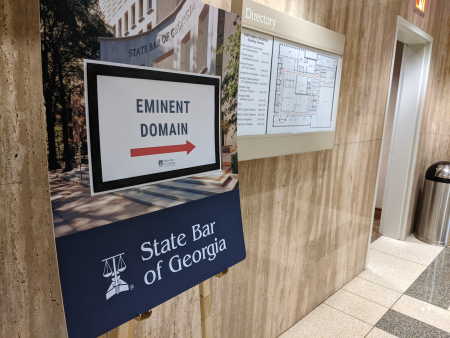
Here are the links to the cases and other materials that we talked about last Friday at the Georgia Bar Association’s annual Eminent Domain Conference. Our talk was entitled “It’s the Chief Justice’s Property World, We Just Live In It: National Trends in Takings, Property, & Eminent Domain,” and was part of the Eminent Domain Section’s (yes, the Georgia Bar has a Section entirely devoted to eminent domain!) annual conference on the topic. I was honored to have been asked to chat with this august and expert group of lawyers.


Continue Reading Links From Last Week’s Georgia Bar Association Eminent Domain Conference

Not too long ago, we posted the Fifth Circuit’s panel opinion in a case where the court held that there’s nothing a federal court can do if a local government does not pay a state-court just compensation judgment. We filed an amicus brief in that case arguing “[t]he Takings Clause does not permit the Sewerage Board to take property and hand the owner an IOU the Board might pay sometime in the future if and when it feels like it. Instead, it requires the Sewerage Board to pay the court ordered just compensation without ‘unreasonable delay.'”

Well, in the interim we’ve traded in our amicus hat for a co-counsel hat, and last week asked the Fifth Circuit to rehear the case en banc, via this en banc petition.

Since we’re now co-counsel in the case, we won’t go into further detail, but will leave it there for you to

Continue Reading Are The Federal Courts Powerless When A Condemnor Doesn’t Pay Just Compensation?