


104481738_2170057539806372_2938554143515873721_nphoto: Patricia Salkin

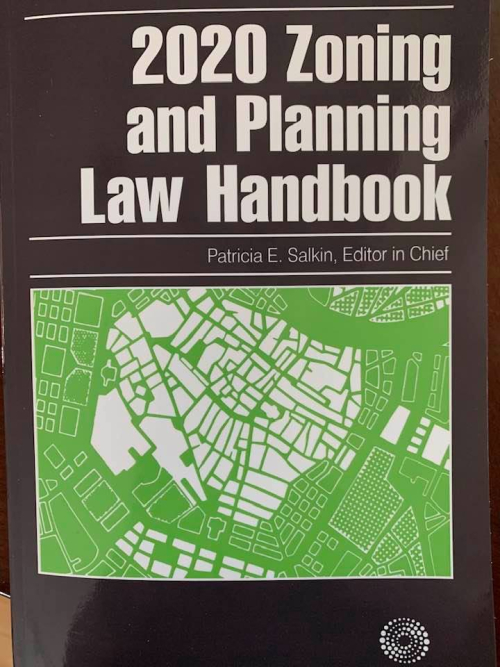
Just published: the 2020 Zoning and Planning Law Handbook (Green Book). The first section of the Summary of Contents is about Takings, and includes as the lead piece Professor Gideon Kanner and Michael Berger’s tour-de-force article, “The Nasty, Brutish, and Short Life of Agins v. City of Tiburon.” It also includes my articles on Murr, “Restatement (SCOTUS) of Property: What Happened to Use in Murr v. Wisconsin?”

Check it out. The Green Book is a one-stop shop for the best articles on land use in a given year, and this edition includes chapters on housing, agriculture, cell tower placement, RLUIPA, and (of course) zoning.

Our thanks to Dean Patty Salkin who edited the volume for including us.

Summary of Contents, 2020 Zoning and Planing Law Handbook (Green Book)

Continue Reading Available Now: 2020 Zoning and Planning Law Handbook (Green Book)
MVIMG_20191108_125325

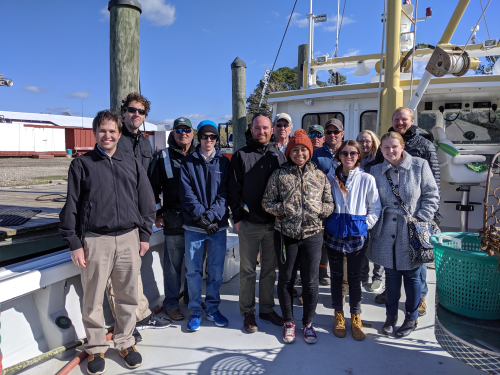
Here’s the latest in a case we’ve been following (we visited the site last November with our William and Mary class), the property owners’ Opening Brief in  a case being considered by the Virginia Supreme Court.

This is a case at the intersection of property and takings law, and environmental protection. Several Nansemond River oystermen own a lease from the state for the riverbed, which among other things, allows them to harvest some of the oysters that Virginia is so well known for. But they were forced to bring an inverse condemnation claim in state court, asserting that the City’s dumping of wastewater in the river — and prohibiting the harvesting of oysters during those times — was a taking under the Virginia Constitution’s taking or damaging clause (article I, § 11).

The trial court sustained the City’s demurrer, accepting the City’s argument that it has the right to

Continue Reading Property Owners’ Brief In Virginia Supreme Court “Oyster Takings” Case

On one hand, the Colorado Supreme Court’s opinion in Forest View Co. v. Town of Monument, No.18SC793 (June 8, 2020), concluding that a restrictive covenant is not a property interest that the government needs to pay for conflicts with the decisions on similar facts from other jurisdictions (Kansas, for example). On the other, the ruling is nothing new under Colorado law, because the court didn’t announce a new rule, but simply refused to overrule a prior case holding the same thing, Smith v. Clifton Sanitation Dist., 300 P.2d 548 (Colo. 1956).

Town wants to build a water tower. Seems like a reasonable goal. It purchased property, another reasonable thing. The property it bought, however, was subject to a covenant, running in favor of the neighboring property owners, that the owner couldn’t use the property for anything other than single-family homes. Last time we checked, single-family homes

Continue Reading Negative Easements Such As Restrictive Covenants Still Are Not Property In Colorado. tl;dr: We Can’t Afford To Consider These Things Property

We were all set to dig into the New Jersey Supreme Court’s opinion in Township of Manalapan v. Gentile, No. A-14-19 (June 2, 2020), when our colleague Joe Grather posted about it on their firm’s blog. See also this story (“Manalapan farm owner’s $4.5M eminent domain payday dumped as ‘miscarriage of justice’“) (PS – the video embedded in the story is actually from a different case, not this one). 

The short story is that the property owner’s appraiser opined that the highest and best use of the property was to divide it into smaller lots. The problem was that under its current zoning (RE – “Residential Environmental”) that wasn’t possible. It would need an upzoning to its former designation, R20. But the appraiser did not offer an opinion on whether an upzoning would have been probable, or even possible. During closing arguments, the property owners reminded

Continue Reading NJ: Before Jury Can Make Highest And Best Use Determination, Judge Has “Gatekeeping” Function

Short answer: yes, with a caveat. For why there’s an asterisk on this one, take a look at the Supreme Court’s electronic docket for PennEast Pipeline Co., LLC v. New Jersey, No. 19-1039 (cert. petition Feb. 20, 2020) (a case we’ve been following), and tell me whether you think there’s anything unusual about the list of parties, amici, and their counsel.

SCOTUS Überlawyers? Check. Big well-funded parties? Check. Heavy-hitter amici? Check.

But the one thing missing, we noticed, was the property owners’ bar. No Mike Berger, neither of the Ilyas (Somin or Shapiro), no PLF, no IJ, no Carolyn Elefant, no Chris Johns, no NFIB, none of the other individuals or groups who often weigh in on property questions on either side (and yes, no Owners’ Counsel). This might strike you as odd, in a case where the Question Presented is about eminent domain:

Whether the NGA delegates

Continue Reading Should Takings Mavens Follow The Latest Eminent Domain Case At SCOTUS?


Here’s the recording of the Federalist Society’s Environmental Law & Property Rights Practice Group teleforum we did a couple of weeks ago, “COVID-19 & Property Rights: Do Government Actions in Response to the Coronavirus Pandemic Create Compensable Takings?” Stream above, or download it here.

The issue: how should courts evaluate the claims for compensation arising out of emergency measures? This question is on the front burner at the moment (and will continue to be because the courts will likely be confronted from these type of claims as the fallout continues). For example, here are some of the complaints that have been filed in courts around the nation: see here, here, here, here and here.  

The two featured speakers (Professor Ilya Somin and Professor F.E. Guerra-Pujol), not only debated and answered questions for an hour

Continue Reading Podcast: COVID-19 & Property Rights: Do Government Actions in Response to the Coronavirus Pandemic Create Compensable Takings?”

Here’s the latest in a case we’ve been following (briefs here, and oral argument recording here).

Any eminent domain lawyer will tell you that loss of access cases can be difficult. In some jurisdictions, you have to lose all access before the court will consider you harmed. Or the courts see a difference between a loss of “direct” access versus “circuitous” access. All we know is that from an owner’s perspective, access to the property can be a key element of its value.

The big question in these cases is who gets to decide: the judge or the jury? And many courts for whatever reason (fear of jury compensation verdicts, perhaps?) cut off the inquiry with bright line no-compensation rules that seem designed more to reserve for judges the critical questions than to facilitate a searching inquiry to whether the property owner has truly suffered a loss

Continue Reading In Virginia, Where The Baffled Courts Now Compose “Major” vs. “Minor” Streets

Any eminent domain lawyer will tell you that loss of access cases can be difficult. In some jurisdictions, you have to lose all access before the court will consider you harmed. Or the courts see a difference between a loss of “direct” access versus “circuitous” access. All we know is that from an owner’s perspective, access to the property can be a key element of its value.

We thought the 2012 post-Kelo amendment to the Virginia Constitution was designed to address that. Article I, section 11 notes:

… No private property shall be damaged or taken for public use without just compensation to the owner thereof. No more private property may be taken than necessary to achieve the stated public use. Just compensation shall be no less than the value of the property taken, lost profits and lost access, and damages to the residue caused by the taking. The

Continue Reading In Virginia, Where The Courts Choose The Streets’ Names: Major Or Minor

In Natural Gas Pipeline Co. of America LLC v. Foster OK Resources LP, No. 118,185 (May 5, 2020), the Oklahoma Supreme Court upheld the necessity of a taking of an easement across private property by a private pipeline company that possessed a FERC certificate of public convenience. Nothing too surprising there. The bar for whether a taking is necessary to fulfill the stated public use is set about as low as a bar can be set in the law. Nearly total judicial deference (some might say “abdication,” but that’s a debate for another day). No different here.

But what really grabbed our attention was the court’s blithe conclusion that the private natural gas pipeline company could not contract away the federally-delegated power of eminent domain. You know this thread of argument: the government always retains its governmental power, and even where it expressly agrees to not exercise its

Continue Reading OK: Private Pipeline Company Is Like A Government: It Cannot Contract Away Its Right Of Eminent Domain

Our shut-in time has got us to thinking.

We’re all environmentalists now. This is the precautionary principle writ large. In a way, this is only part of a greater problem.

Welcome to the Twitterverse. We now have access to a vast amount of data — very often on a granular level — and this moves faster than the ability

Americans like to work

Americans are pretty wiling to give our elected leaders a lot of slack

playground Constitution has serious legs

Most don’t understand that their rights are, in normal time, highly restricted, at least in courts

takings lawyers are not really surprised as everyone else – we’re used to courts deferring to what may look like excessive and unwarranted assertions of governmental power. Unlike a lot of other litigation involving the government, representing property owners in eminent domain or takings cases

basic takings doctrine is really incoherent

we already

Continue Reading Things I’ve Learned (Am Learning) About #CoronavirusLaw