Kauaipark

A longer post to start the week because it involves an eminent domain case, a somewhat rare occurrence from the Hawaii appellate courts. The issues determined by the Hawaii Intermediate Court of Appeals are important, and because we have an old eminent domain code and don’t have a whole lot of current decisional law applying it — and we think the ICA got some critical things wrong (even though it may not matter for this case) — we’re going hit this one in some detail.    

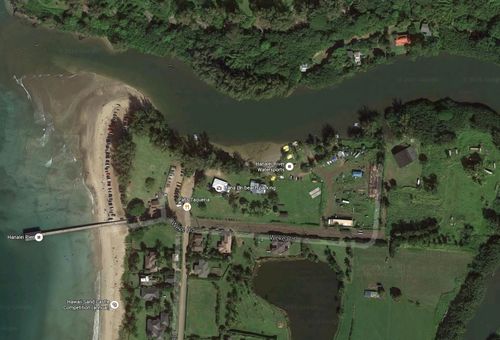
This one involves three parcels on Kauai — some of which were owned by a fellow who has been a thorn in the County’s side — which were condemned by the County for the expansion of a public beach park.  

In County of Kauai v. Hanalei River Holdings, Ltd., No. CAAP-14-0000828 (Mar. 31, 2016), the ICA addressed three issues:

  • Can a


Continue Reading Hawaii Court Of Appeals Draws A Bright Line In Eminent Domain: In Larger Parcel Analysis, Unity Of Contiguity Means Parcels Must Touch

Update: Oral argument audio posted above. 

Update:State’s High Court Hears Arguments In Mountain Water Appeal On Wide-Ranging Issues” 

Update:Montana Supreme Court Justices quiz lawyers on eminent domain, finances

++++++++++++++++++++++++++++++++

The condemnation of privately owned utilities is a thing these days. Seems like many local governments believe they can do it better than the private owners, and exercise the eminent domain power to force the acquisition. But in these cases, isn’t the property already being put to public use? Indeed, the exact same public use? 

This morning, the Montana Supreme Court is hearing oral arguments in a case we’ve been following that will address the meaning of the phrase “more necessary public use” in Montana Code Annotated § 70-30-111  and and what kind of proof is necessary to support such a claim. The city of Missoula is attempting to condemn Mountain Water Company, a private company which supplies

Continue Reading Montana Supreme Court Live Streams Arguments In “More Necessary” Public Use Case: Can A Municipality Seize The Local Water Utility?

Continuing with our posting of the amicus briefs in Murr v. Wisconsin, No. 15-214, the “parcel as a whole” case now being considered by the Supreme Court, here is the brief filed in support of the property owner by several western states, principally authored by lawprof Ilya Somin.

Rather than summarize the brief here, we point you instead to Prof Somin’s post at the Volokh blog, “Our amicus brief on behalf of nine states in an important Takings Clause property rights case.” 

More briefs coming. 

Continue Reading Another Amicus Brief In SCOTUS “Parcel As A Whole” Case: Aggregation Has “No Basis In Text, History, Or Predecent”

The amicus briefs supporting the property owners/petitioners in Murr v. Wisconsin, No. 15-214, the “parcel as a whole” case now being considered by the Supreme Court, are rolling in.

Here’s the first one, the amici brief for the Cato Institute and the Owners’ Counsel of America. [Disclosure: we represent OCA on this filing.]

Regulatory takings are about the impact of a regulation on an owner’s use of property and how it has a similar economic impact on that property as an exercise of the government’s eminent domain power. Thus, most regulatory takings claims will hinge in large part on “the extent of the interference with rights in the parcel as a whole.” Penn Central Trans. Co. v. New York City, 438 U.S. 104, 130-31 (1978). This is also known as the denominator issue, because the size of the property often dictates the severity of the regulation’s impact.

Continue Reading SCOTUS Amici Brief: In Regulatory Takings, No Aggregation Of Separate, Commonly-Owned Parcels

Guam land titles can be seriously messed up. This case, Gov’t of Guam v. 162.40 Square Meters of Land, No. CVA14-011 (Mar. 17, 2016), about which we posted earlier (when it went up to the U.S. Supreme Court and was denied review) is an example. To reconfigure irregular lot lines left over from the World War II Japanese occupation and American liberation and the resulting destruction of records, Guam adopted the “Agana Plan,” which it viewed as a redevelopment plan of sorts. Or at least that’s how it was employed, even though the Plan had until 1981, never been used to take any property.

But 1981 was different. Ilagan owned land in Agana on which he ran an apartment building. Ungacta — who was then the Mayor of Agana — owned a neighboring residentially-zoned lot. In 1981, the Ungacta property did not have access to a road. Ungacta appraised a

Continue Reading Guam SCT: Eminent Domain Statute Cannot Limit Right To Just Compensation

Here’s the property owners’ Merits Brief, filed earlier this week in the case in which the U.S. Supreme Court is considering the “parcel as a whole” doctrine in regulatory takings (also known as the “denominator” issue).  

The Wisconsin Court of Appeals held that the owners did not have their property taken because they also own the parcel next door. When measured against their use of the two parcels combined, the court concluded their loss of use of the single parcel — otherwise a Lucas “wipeout” — was not a taking.

The brief argues:

Under the facts of this case, there is no reason to deviate from Penn Central. Although the Murrs own two parcels that happen to be adjacent, those parcels were purchased at different times, for different purposes, and have never been considered as a single economic unit or jointly developed. Absent the effect of

Continue Reading Merits Brief In SCOTUS “Parcel As A Whole” Case – No Aggregation Of Lots Which Owners Treated As Separate

Charlotte

Urban property at the intersection of two main thoroughfares can be pretty valuable. It’s about location, for sure, but it’s also about visibility and the ability to be seen from four directions.

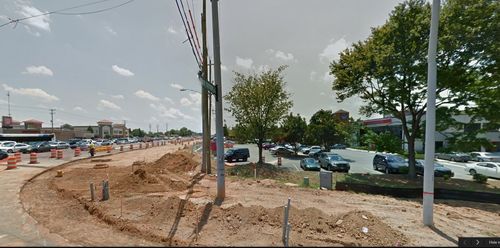
Charlotte, NC needed a part of such property for a rail line extension. The rail will be in the middle of the road, so the road needed widening, necessitating the partial taking. The rail “Bridge” will be part of that middle-of-the-road construction in an existing public right of way, but will partially block views of the owner’s remaining property (a bank branch).

But the Bridge won’t be on the condemned property, and the city asserted that means it isn’t liable for damages resulting from the loss of visibility. The trial court concluded that the jury could consider evidence of loss of visibility, and the city’s interlocutory appeal followed.

In City of Charlotte v. University Financial Properties, LLC

Continue Reading No Compensation For Bridge That Blocks View Of Taken Property, But Isn’t On Taken Property

When you raise 13 issues on appeal, you shouldn’t be surprised if the court balks at analyzing them all. That was the case in City of Gulfport v. Dedeaux Utility Co., No. 2014-CA-00556-SCT (Mar. 24, 2016), where the Mississippi Supreme Court didn’t address the majority of the points raised by the city on appeal, but narrowed down the list to five. And of those five, the court found error in only one. 

You can slog through the details in the court’s opinion, but let’s see if we can’t give you the highlights.

Most of the issues raised on appeal were the result of the city’s delay in actually taking possession of Dedeaux, a PUC-regulated utility. The city waited eight years after it filed the taking action to do so. The city filed its condemnation action in 1996, but did not physically take possession until 2004, after the eminent

Continue Reading “Interesting” Eminent Domain Opinion: No Evidence Of Jury Compromise Verdict In City’s Taking Of Utility

Early next month, the California Supreme Court will hear oral arguments in two cases which we’ve been closely following:

  • Tuesday, May 3, 2016, 9:00 amProperty Reserve, Inc. v. Superior Court, No. S217738. The court is considering whether California’s “entry statute” which allows a condemning agency to enter property for testing and inspection exempted the Department of Water Resources from adhering to the protections in the eminent domain code when the government physically invades property. We filed an amicus brief in that case arguing that “any non-trivial physical invasion of private property is a per se taking requiring just compensation and adherence to eminent domain procedures. The intrusions sought by DWR and ordered by the Superior Court cannot be dismissed as mere “entries.” This is not only a long-standing tenet of California constitutional law (see Jacobsen, supra, 192 Cal. at 329), it is a baseline Fifth Amendment principle, and


Continue Reading Big Eminent Domain Days Coming Up At The California Supreme Court

The only issue in Caffe Ribs, Inc. v. Texas, No. 14-0193 (Apr. 1, 2016) was whether the jury could hear evidence proffered by the property owner that the delay in cleaning up the land to make it marketable could have been attributable to the government. The trial court said no, and the court of appeals affirmed.

The Texas Supreme Court disagreed: “We hold that the trial court’s exclusion was an abuse of discretion, and further hold that the exclusion was harmful because it allowed the government to use an eight-year holding period to reduce the property’s value without allowing the jury to consider the role the government played in creating that holding period.” slip op. at 2.

The court’s opinion is a quick read and we recommend you digest the entire thing. But here’s the short version. Caffe purchased the property, which was already contaminated, and began its voluntary remediation efforts

Continue Reading Government’s Role In Delay In Cleanup Of Contaminated Property Admissible In Eminent Domain Case