
Another neighborhood gone, more lives scattered by eminent domain. Watch or listen.
More on the film and the background of the situation in St. Louis here. Continue Reading Docfilm “Exodus” – The Stories Of Those Being Displaced By Eminent Domain


Another neighborhood gone, more lives scattered by eminent domain. Watch or listen.
More on the film and the background of the situation in St. Louis here. Continue Reading Docfilm “Exodus” – The Stories Of Those Being Displaced By Eminent Domain
The issue determined by the Texas Supreme Court in In re Lazy W District No. 1, No. 15-0117 (May 27, 2016), was whether — in a case where one governmental entity is trying to condemn another governmental entity’s property — the trial court must resolve the power to take issue before or after the special commissioners determine value. This was, apparently, an issue in Texas.
Here is the court’s description of the case:
The Water District offered the Lazy W $169,218 for the easement, and when the offer was rejected, petitioned for condemnation in the district court. The day after the petition was filed, without notice to the Lazy W, the district court appointed three special commissioners to determine the value of the proposed easement. When the Lazy W learned of the order, and before the commissioners’ hearing, it filed a plea to the jurisdiction, asserting its immunity
Programming note: On the day we remember our nation’s war dead, we thought we’d repost this one, about how Arlington National Cemetery came to be, and how yes, there’s a takings story there.
———————————————————
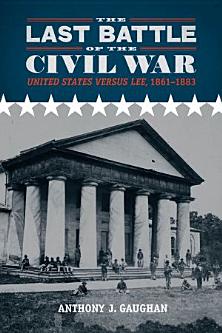 You know how we’re always saying that the provisions in the Takings Clause are “self-executing,” that even in the absence of a waiver of sovereign immunity, the Tucker Act, and section 1983, property owners would still be able to maintain a claim for compensation? Well here’s an article that explains that how that rule was first articulated, and not in a dry academic way, but with a fascinating historical story.
It’s the tale of United States v. Lee, 106 U.S. 196 (1882). We knew the land that is now Arlington National Cemetery was once owned by Robert E. Lee, but we can’t say that we gave much thought to how it became public property. We
Continue Reading Memorial Day, Arlington National Cemetery, And Takings
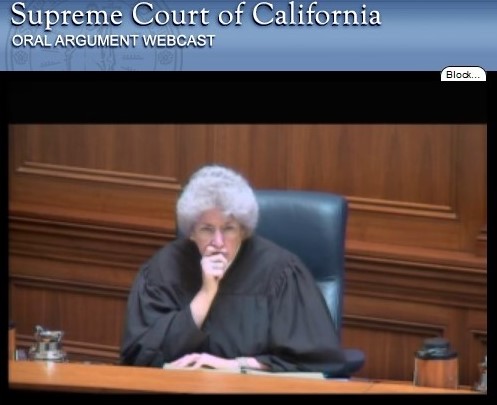
The dramatic moment of the day during last Thursday’s California Supreme Court oral arguments in City of Perris v. Stamper, No. S213468 (which we previewed here: “Cal Supreme Court Oral Argument Preview: In Just Comp Trial, Does Jury Determine Reasonable Probability Of Exaction?“), occurred during the rebuttal arguments by the city’s lawyer. The case involves whether the city can avoid paying just compensation by showing that it would, in the future, exact from the owners the very same property which the city is condemning. The only way the city wouldn’t require dedication of this property is if the owner continued to use it for agricultural purposes.
Counsel for the city had opened her initial argument time with this:
May it please the court…The project effect doctrine, Your Honors, categorically does not apply to dedication. The city can validly get a piece of land for free because it is roughly proportional
A short one from the Maine Supreme Judicial Court. In Pinkham v. Dep’t of Transportation, No. 2016 ME 74 (May 19, 2016), the court held that portions of the DOT’s appraiser’s report which appraised other properties being taken as part of the same project were not confidential or privileged under the state’s public records laws.
The DOT was taking the property of Pinkham and others. It generated an appraisal report which included Pinkham’s property, and that of others. The DOT produced those parts of the report applicable to Pinkham, but claimed the parts about the other properties were “confidential” and subject to privilege, relying on a statute which provides that certain DOT records are confidential and “may not be disclosed.” The trial court agreed.
The Supreme Court reversed. Confidentiality under the state’s public records laws is not discovery in an eminent domain case. This is the “closed universe of litigation”
Continue Reading Maine FOIA Doesn’t Make Parts Of DOT’s Appraisal Reports Confidential
Update: Here’s the syllabus and reading list.
Most of us who practice condemnation law probably didn’t start off in law school thinking “gee, I’d sure like to be an eminent domain lawyer.”
Even if we did, the law school curriculum wasn’t set up to accommodate any such wishes, and the topic of eminent domain was maybe a single day in the first year Real Property course, if it was covered at all.
And the place of property rights in the larger scheme of things? Again, not much in the law school agenda there, unless it was to downplay the role. At least in our experience.
So check this out. Two law schools are, or will be, teaching classes on eminent domain and property rights, according to this media release (“Law Schools at UT-Austin and University of Houston Offer First Courses on Eminent Domain Law“):
HOUSTON and AUSTIN
Continue Reading Law School Courses On Eminent Domain And Property Rights
In Ransom v. Village of Cross Plains, No. 2015AP1556 (Apr. 28, 2016), the Village took a part of Ransom’s property, 703 square feet to be precise. The parties actually agreed on the amount of just compensation for the 703 square feet. But Ransom asserted that the Village also took a temporary easement after the case was initiated, and that he should be compensated for that as part of the eminent domain case.
The Village acknowledged that it might owe him compensation for taking the temporary easement, but argued that it shouldn’t be part of the eminent domain case. Ransom’s remedy, it argued, was to sue the Village for inverse condemnation.
The Wisconsin Court of Appeals agreed with the Village. The court rejected Ransom’s arguments that it was unfair and made little sense to force him to bring a separate inverse claim, when the Village knew at the outset that
A quick one from the U.S. Court of Appeals for the Sixth Circuit, in a federal condemnation, United States ex rel TVA v. 1.73 Acres of Land, No. 15-5530 (May 5, 2016).
The Tennessee Valley Authority condemned an easement on a strip of Mr. Thomas’ undeveloped land (zoned for agricultural/residential uses) for utility lines. The owner said he had plans to develop a hotel on the site to take advantage of the views from the nearby interstate highway. The case was heading to a jury trial on the issue of just compensation.
The district court, however, refused to let the jury consider the owner’s expert witness report. The expert was going to testify about the feasibility of the site for a hotel, and how power lines killed those plans. Lacking an expert witness, the owner testified at trial about the value of his land.At the close of the evidence
Continue Reading 6th Cir: Going To War With The Army You Have Isn’t Good Enough To Get To The Jury
California Associate Justice Goodwin Liu — often mentioned on short lists of potential future nominees to the U.S. Supreme Court even after the Republican-led Senate stymied his nomination by President Obama to the Ninth Circuit — just saw his chances for a promotion go up today, if ever so slightly. No, we’re not talking about Donald Trump’s Indiana primary victory, even though that might play into it. Rather, we’re talking about an eminent domain case that was argued earlier this morning in the California Supreme Court.
Yes, you read that right: an eminent domain case might be instrumental in a future SCOTUS appointment.
Live From San Francisco!
We weren’t able to be present in the San Francisco courtroom for today’s arguments in Property Reserve v. Superior Court. But for the first time, the court beamed arguments live on the web for all the world to see, so we
Is the forced acquisition of property by the government’s power of eminent domain a “purchase?” To the Virginia Supreme Court, the answer to that question is yes. Why, we’re not really sure, because the court doesn’t tell us why.
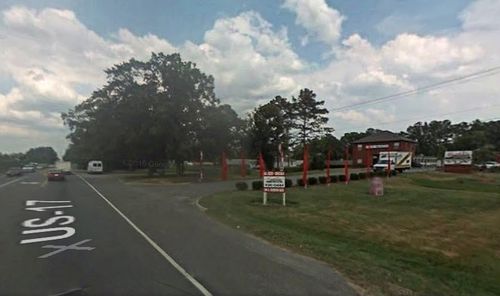
In City of Chesapeake v. Dominion SecurityPlus Self Storage, LLC, No. 150328 (Apr. 29, 2016), the court held that the use of the word in a subdivision plat in which the owner agreed that it “reserve for future purchase by the City” a part of its property with no compensation for any improvements on that land, meant that the owner also agreed to let the city condemn the land without paying for the improvements.
This case involved a highway widening and elevation project in southern Virginia. The current owner of the property, which operates a self-storage facility on the parcel, purchased it from the prior owners who had subdivided it