If you have plans to be in Wisconsin or environs in June, the Wisconsin chapter of the Appraisal Institute is putting on its 12th annual Condemnation Appraisal Symposium at the Marquette Law School on Wednesday, June 3, 2015.

One of the featured speakers is Mike Berger on “Current National Eminent Domain Issues,” and there will also be presentations about power to take challenges, and thorny appraisal issues, among others.

Here’s the description from the event flyer:

The Condemnation Appraisal Symposium is the go-to event of the year for those real estate and legal professionals who are currently engaged, or who wish to be more involved, in eminent domain matters. This high-level program provides the latest information and open debate on condemnation case law, appraisal techniques and other timely topics presented by attorneys, appraisers, educators, and government officials, while again offering valuable networking opportunities with those practitioners active in this specialty

Continue Reading Upcoming Wisconsin Appraisal And Eminent Domain Law Conference
We were all ready to write up the California Court of Appeal’s latest opinion about our favorite subtopic — the recovery of attorneys’ fees in eminent domain actions — when our colleagues at the California Eminent Domain Report beat us to it (“Court Clarifies Rules for Recovery of Attorneys’ Fees in Eminent Domain Actions“).

The case is about fee shifting when the condemnor’s conduct is judged based on its final offer made 20 days before trial. But what about if there are multiple offers, and the trial date moves?

To find out what the court thought about this, read the opinion (People ex rel. California Dep’t of Transportation v. Hansen’s Truck Stop, Inc., No. A133252 (Apr. 24, 2015)), read the post, and enjoy the remainder of your day. 

People ex rel. California Dep’t of Transportation v. Hansen’s Truck Stop, Inc. No. A133252 (Cal….


Continue Reading Cal App On Attorneys’ Fees In Eminent Domain

We’re at a conference with the ABA Section of State and Local Government Law in Philadelphia (talking about eminent domain, public use, just comp, and Horne, inter alia), so we haven’t had the time to read this opinion — issued just a few minutes ago — in detail. But it’s a case we’ve been following keenly, and not just because we filed an amici brief in the case in support of the property owner.

The Texas Supreme Court has issued an opinion in State of Texas v. Clear Channel Outdoor, Inc., No. 13-0053 (Apr. 24, 2015), a case which involves the issue of whether the state DOT took a billboard when it ordered it removed during a road widening project, and if so, how it should be valued. Here’s the bottom line:

Consistent with that case, we conclude that a billboard may be a fixture to be valued

Continue Reading Texas Supreme Court Clarifies Just Compensation For Billboards

Wright_home_place

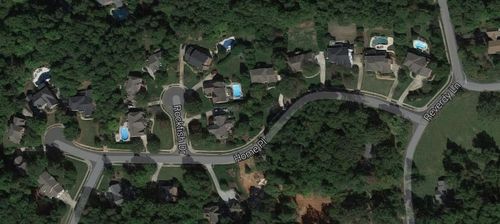
In Town of Matthews v. Wright, No. COA14-943 (Apr. 21, 2015), the North Carolina Court of Appeals invalidated a taking, the stated purpose of which was to make a portion of a private road into a public street. 

A taking to open a private road to the public? That sure does sound like a public use or purpose, no? And had the court of appeals stopped there and not delved deeper, and had the case not had the history which it did, the result might have been different. 

The facts which led the court to that conclusion are worth reading for yourself, but here’s the summary: the homes of the Wrights and five neighbors are located on a dead-end street, Home Place, which connects to the public street system at Revedery Lane. Home Place was originally a private street, but the Town believed there was an implied dedication, and treated

Continue Reading NC App: No Public Use Or Benefit When Town, Fueled By Improper Motive, Condemned Private Street To Make It Public

Compare these two reports, filed just over a month apart, about California’s “high speed” rail system, now underway in the Central Valley:

And here’s a report on an aging mass transit system, BART (there are lessons here for HART, Honolulu’s fledgling municipal rail transit authority):

Continue Reading Rail, Eminent Domain, And Who’s Going To Pay

The first sign that the opinion wasn’t going the way of the Golden State Water Company — a private utility that provides water to the City of Ojai, California — was right there in the first paragraphs, which contain the one-two punch of labeling the company both a monopolist, and one that price gouges about California’s most sensitive subject these days, water.

The opinion is infused with the flavor that Golden State positively deserved to have its property taken by eminent domain:

Monopolists have long been unpopular in this country. When King George III’s choke hold on government led to intolerable levels of taxation, he was forced to divest his holdings. At the end of the nineteenth century, Congress passed the Sherman Antitrust Act with only a single dissenting vote. (26 Stat. 209, as amended, 15 U.S.C. §§ 1-7.) Introducing his landmark bill, Senator Sherman summed up the prevailing sentiment:

Continue Reading Cal App: Municipality Free To Form Community Facilities District To Take Over Water Utility

Here’s a couple of editorials about the Ramsey case, recently decided by the Virginia Supreme Court. [Disclosure: we filed an amicus brief in support of the Ramseys in that case.]

  • In “Sandbagging, exposed,” the Richmond Times-Dispatch editorial board writes: “Around the country, states that want to take people’s land will sometimes pull an underhanded stunt: If the owners don’t accept the state’s first offer, then the state will produce a second appraisal that claims the property is worth much less.

    That’s exactly what the Virginia Department of Transportation did to James and Janet Ramsey when it exercised eminent domain to take part of their land for an off-ramp. The first appraiser pegged the value of the land at more than $246,000. The Ramseys declined. After the first appraiser retired, VDOT brought in another who said the property was worth only $92,127.”

  • In “High court: VDOT’s


Continue Reading Virginia Papers On The Ramsey Case: VDOT “Bullying” And “Sandbagging” Revealed

The Virginia Supreme Court today came back with an opinion in Ramsey v. Commissioner of Highways, No, 140929 (Apr. 16, 2015), a eminent domain case in which we filed an amicus brief in support of the property owner. 

Under Virginia’s condemnation procedures, as a prerequisite to a court exercising jurisdiction over an eminent domain action, a state condemning agency must as an initial step present to the property owner a statement of “the amount which [the condemnor] believes to be just compensation,” and must include an appraisal if an appraisal is required:

The state agency concerned shall provide the owner of real property to be acquired with a written statement of, and summary of the basis for, the amount it established as just compensation, and, if an appraisal is required or obtained, such written statement and summary shall include a complete copy of all appraisals of the real property

Continue Reading Virginia: Jury Gets To Hear About Appraisal Bait-And-Switch

Here’s the property owners’ brief in opposition to the DOT’s request for the North Carolina Supreme Court to review the court of appeals’ opinion in Kirby v. N.C. Dep’t of Transportation, No. OA14-184 (Feb. 17, 2015).

The court concluded that the Map Act — which gives the DOT the ability to designate hundreds of parcels for future highway use and prevent their development in the meantime for the avowed purpose of keeping the future acquisition price low — effected a taking. The court remanded the case for a calculation of the compensation owed to each property owner.    

The DOT’s brief argues the Map Act is just a police power regulation, and to force it to actually buy the properties now would make it, you know, just too expensive to build highways. The property owners’ brief responds:

While the NCDOT certainly has police powers to regulate its right of way

Continue Reading Property Owners’ Brief In NC “Map Act” Takings Case: Depressing Acquisition Price Precondemnation Is An Exercise Of The Eminent Domain Power

Grasping_hand

To put on your to-buy, to-read list: lawprof Ilya Somin‘s forthcoming book about the Kelo case and the aftermath, available on June 5, 2015. (We’re in the process of organizing some book talk events with Prof Somin in the fall, and if you have suggestions for venues or want to host one, let us know.) 

Pre-order from Amazon here. The reviews are very good:

“Somin’s thorough rebuttal of the constitutional reasoning and philosophical implications of the Supreme Court’s Kelo decision demonstrates why that ruling was a constructive disaster: It was so dreadful it has provoked robust defenses of the role of private property in sustaining Americans’ liberty.”
 

(George F. Will, journalist and Pulitzer Prize winner)

“By dint of his uncommon thoroughness, Ilya Somin has become the leading and most persuasive critic of the Supreme Court’s ill-fated 2005 Kelo decision.  His close examination of the case’s factual backdrop

Continue Reading New Book Forthcoming: “The Grasping Hand: Kelo v. City of New London & The Limits Of Eminent Domain” by Ilya Somin