Here’s what we’re reading today:


Continue Reading Tuesday Round-Up: Inversely Condemning Flint, “Well Nigh Conclusive?,” Parcel-As-A-Whole

20160114_125445

Here’s the latest on a takings case that is winding its way through the U.S. District Court in Honolulu. Yes, you read that right: a takings case being litigated in federal court.

Intrigued? Read on. 

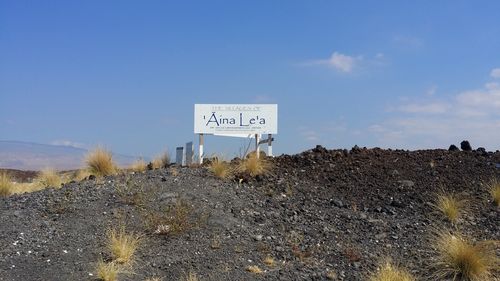
We’ve covered this case and the related state court litigation several times here before, so this isn’t entirely unfamiliar ground. This is a case in which a property owner (the developer of the Aina Lea project on the Big Island, just north of the Waikoloa beach area) filed a case in Hawaii state court seeking, among other things, just compensation for the temporary taking of its right to develop its property. The case ended up in federal court because the State of Hawaii Land Use Commission waived the State’s 11th Amendment immunity and removed the case from state court under federal question jurisdiction. 

The litigation began as two lawsuits originating in state court in the

Continue Reading Latest On The Latest Hawaii Takings Case: Unconstitutional Conditions, Statutes Of Limitations, And Vested Rights

Are you a lawyer and need something to do for the next 6-12 months? Want to make a recommendation to the Department of Land and Natural Resources about whether it should issue a Conservation District Use Permit to the Thirty Meter Telescope project on the top of the Big Island’s Mauna Kea? Want your decision gone over with a fine-tooth comb by the DLNR, the Circuit Court, and the Hawaii Supreme Court? Are you a glutton for punishment? If so, you are in luck: the DNLR is looking for someone to serve as the Hearing Officer for the contested case (administrative trial) about the TMT.

This is the remand from the Hawaii Supreme Court, which invalidated the DLNR’s earlier issuance of a CDUP to build the telescope. Here are the official qualifications for the job:

  • Being an attorney licensed to practice law in the State of Hawaiʻi and in good


Continue Reading State Looking For A TMT Hearing Officer – You Know You Want To Do This

We’ve posted a lot lately reporting on the 2016 ALI-CLE Eminent Domain and Land Valuation Litigation Conference, recently held in Austin. We have a couple of more posts for you before we turn to other things. Here is the first, a run-down of the blogs of faculty members, and others we were in the audience. If your blog is missing from this list, email me the link and I will update the post to include it.


Continue Reading The Blog Lineup From The 2016 ALI-CLE Eminent Domain Conference

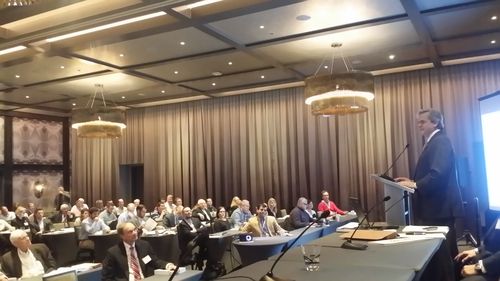
20160129_091552

The second day of the 2016 ALI-CLE Eminent Domain and Land Valuation conference went as well as the first. Here are some highlights:

  • Austin Mayor Steve Adler (pictured above), who is (was?) also an eminent domain lawyer, welcomed us to his city. 
  • We moderated a discussion between Andy Gowder and Dana Berliner about “First Amendment for Fifth Amendment Lawyers: Free Speech, Signs, Defamation, FOIA, and RLUIPA Claims,” how takings lawyers deal with these issues when they crop up in their cases. 
  • One update from that session: at nearly the same time that we were talking about Central Radio, the case about the Norfolk, Virginia “anti-eminent domain” sign, the Fourth Circuit issued its opinion on remand from the U.S. Supreme Court. We’ll have more in a full post soon, but here’s the bottom line for now: no, the City can’t ban the sign (“we hold that the sign


Continue Reading 2016 ALI-CLE Eminent Domain Conference, Austin: Second Day

20160126_164326

Austin, Texas, is where we’re at for the next few days, for the 2016 edition of the American Law Institute-CLE Eminent Domain and Land Valuation conference, now in its 33d year. First time we’re in Austin, however, and our registration numbers are looking very good, and we haven’t had this big a turnout in years.

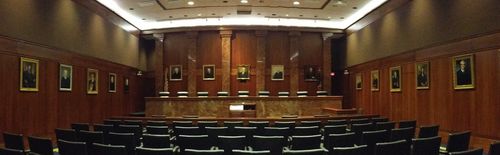
We haven’t been back to Austin in a few years ourselves, so we did what law nerds sometimes do when we go to new towns: visit the local courtroom to check out the scene. So we dropped by the Supreme Court of Texas to take a look. Turns out it was an off-day for the court and it was not in session and the courtroom was locked. But Security suggested that if we asked the Clerk nicely, she might retrieve the key and let us take a look around. And you know what? She did.

Continue Reading ALI-CLE 2016 Eminent Domain Conference: Austin Scouting Report

We know inverse condemnation liability can be triggered by intentional government action. But what about when government doesn’t act?

That was the issue before the Court of Appeals of Maryland in Litz v. Maryland Dep’t of the Environment, No. 23 (Jan. 22, 2016). And when the opinion starts this way, you just know where this is going to end up:

“The nine most terrifying words in the English language are, ‘I’m from the government and I’m here to help.’”

-Ronald Reagan, 40th President of the United States, News Conference (12 August 1986).

Petitioner, Gail B. Litz, might have welcomed hearing those nine words spoken to her, but, according to her Third Amended Complaint, they were not forthcoming.

Slip op. at 1.

The case involved “human sewage” flooding onto Ms. Litz’s once-popular campground from nearby septic fields, which, quite naturally resulted in a dearth of people who wanted to camp

Continue Reading “We’re Here From The Government, And We’re Here To … Do Nothing” – Gov’t Inaction Gives Rise To Inverse Condemnation

A longer one from the California Court of Appeal, but unfortunately, we don’t have the time to digest it in detail. But you really should read Pacific Shores Property Onwers Ass’n v. Dep’t of Fish and Wildlife, No. C070301 (Jan. 20, 2016), in which the court upheld a ruling that the Department of Fish and Wildlife inversely condemned the plaintiffs’ property by a physical taking, when it allowed their land to be flooded.

The interesting part of this decision is the Department’s purpose in allowing the flooding, environmental protection. Local government had historically provided some flood protection to these properties by “breaching” a sandbar when the water reached a certain level. When the Department took over that function, it decreased the level of protection, and although it required the water to reach a higher level before breaching, it didn’t eliminate it completely. The Department argued that it could not

Continue Reading Cal App: Intentionally Flooding Land To Protect The Environment Is A Physical Taking

In a segment called “Are the Courts Crazy?,” (their title, not ours!), Kelii Akina and I chat about the recent decisions in the Thirty Meter Telescope case, the pig hunting as a traditional and customary native Hawaiian practice case, Hawaii’s new Environmental Court, and the challenge to the Hawaiians-only election which is currently being considered by the U.S. Supreme Court (the one in which Dr. Akina is the lead plaintiff). 

And rest assured: we concluded that no, the courts are not crazy. 

Continue Reading Lawtalk: Thirty Meter Telescope, Putting The “Puaa” Back In Ahupuaa, And Oprah Elections

Space. The final frontier. These are the voyages of the telescope Thirty Meter. Its five year continuing mission: to explore strange new worlds. To seek out a Conservation District Use Permit from the Board of Land and Natural Resources, and navigate the treacherous waters of Hawaii administrative law. To boldly go where twelve other telescopes have gone before

The “the cart before the horse,” is what the majority opinion authored by Chief Justice Recktenwald which invalidated the CDUP held the BLNR did when it “issued the permit before the contested case hearing was resolved and the hearing was held.” But the same might be said about the court’s procedural due process reasoning, because it could have reached the same result by employing a much narrower — and in our view, a much less opaque — statute-based rationale.

Dead Man Walking

Ironically — given the huge public interest in the

Continue Reading Carts Before Horses, And Pearls Before Swine: The Hawaii Supreme Court’s Fractured Rationale For Invalidating The TMT Permit