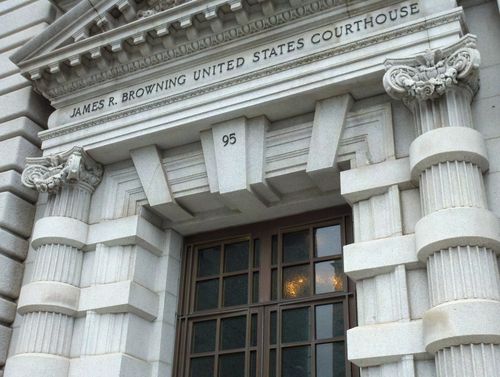
Our friend Paul Schwind has been keeping us up to date on the progress, vel non, of the legal challenge to the Honolulu rail project in the United States District Court for the District of Hawaii. We last reported on the status of this litigation on February 18, 2014, when the Ninth Circuit issued its opinion dismissing plaintiffs’ appeal of the judgment and partial injunction in Honolulutraffic.com v. Federal Transit Administration, No. 11-0307 (D. Haw. Dec. 27, 2012).

To our mild surprise, the Ninth Circuit concluded it had appelalte jurisdiction, even though there was a colorable argument that the judgment and partial injunction entered by the District Court was not an appealable order, since at the time of the appeal (May 2013) and oral argument (August 2013), the defendants still had not yet reported their compliance with the judgment, the plaintiffs had not, as a consequence, had time to

Continue Reading Guest Post: District Court’s Rail Compliance Order in Honolulu Rail Case – A Slam Dunk

As noted on the LegalPlanet blog, law professor Joseph L. Sax has died (“In Memoriam: Joseph L. Sax, Gentleman, Scholar, Giant of Environmental Law“). Although we came at the issues from utterly different positions, there’s no question that he will be missed.

I recently had the opportunity to give a presentation on the takings issue with Professor Sax, and he was never less than engaging, staying on after our panel concluded to discuss our differences (and where we agreed). More on Professor Sax here. See also this post from Pace Law School with more, and this post from the Volokh Conspiracy. Continue Reading Lawprof Joseph Sax Passes

Here’s another one we’ve been meaning to post for a while. In Ex parte Alabama Dep’t of Transportation, No.1101439 (Dec. 6, 2013), the Alabama Supreme Court concluded that inverse condemnation is the right cause of action when the government causes contaminated water to enter an owner’s property, resulting in (alleged) damage. 

The plaintiff alleged that ALDOT used a chemical solvent or degreaser that was poured into sewers and eventually found its way into the groundwater which it pumped onto the plaintiff’s property. It sued ALDOT and Cooper (ALDOT’s director) for trespass and inverse condemnation, and later added a claim for fraud and bad faith. The owner asserted that if ALDOT wanted to use its property as a storage for its contaminated water, it should have condemned a drainage easement first. The defendants asserted they were immune, and when the trial court refused to dismiss the case, they sought a writ

Continue Reading Alabama: Recovering Compensation When The Govt Floods Your Land With Contaminated Water Is Just What Inverse Condemnation Is For

Zipler Since this is the season for self-congratulatory industry awards, we can’t overlook one of our industry’s highest honors, the Zoning and Planning Law Report Land Use Decision Awards (aka the “ZiPLeRs”). For those of you who do not subscribe to the Zoning and Planning Law Report, the “strangest, or at least more dramatic” land use cases each year are eligible for nomination for a ZiPLeR. 

Our Owners’ Counsel and ABA colleage Dwight Merriam recently announced the 2013 Awards in the December 2013 issue of ZPLR, but before he got to his tongue-in-cheek detailing of such winners as the “You Can’t Pigeonhole These Pets As An Accessory Use Award,” the “Don’t Be An Ass Award,” and “The Grinch Who Stole The Treehouse Award,” he started off with “The Koontz Corner,” a few pages on the goings-on surrounding one our favorite decisions last year, Koontz v. St. Johns Water Management District

Continue Reading Paging Dr. Merriam, Stat: One Case Of “Koontz Catatonia”

Our Owners’ Counsel of America colleague William Blake, a partner in the Lincoln  office of Nebraska law firm Baylor Evnen, has put up a guest post on OCA’s Eminent Domain Law Blog about the TransCanada Keystone XL pipeline that recently saw a Nebraska trial court invalidating a state statute as unconstitutional. 

Bill writes:

The recent Keystone XL decision by Lancaster County District Judge Stephanie Stacy (a former partner of this author), is being cast in that mold, but in the process, the litigation is somewhat misunderstood. The ruling is 50 pages long with almost 250 footnotes, and is written in the style of a law review article. The misunderstanding is probably excusable, but it is not an eminent domain case. Eminent domain is only a side effect, and really not much of a side effect. The driving issue has always been the environment, whether the pipeline is going

Continue Reading TransCanada XL In Nebraska: “Not An Eminent Domain Case”

Looks like they’re at it again, a solution in search of a problem: a bill has been proposed in the Hawaii Legislature to create an “Environmental Court,” whose mission would be to handle “environmental disputes” arising under a wide range of state statutes:

…administrative proceedings and proceedings for declaratory judgment on the validity of agency rules authorized under chapter 91, arising under chapters 6D, 6E, 6K, 54, 58, 128D, 128E, 201N, 205, 205A, 220, 269, 339, 339D, 340A, 340B, 340E, 340F, 342B, 342C, 342D, 342E, 342F, 342G, 342H, 342I, 342J, 342L, 342P, 343, 508C, and 664, and Titles 11 and 12.

(And the regulations promulgated by state agencies, and ordinances and regulations promulgated by the counties, no doubt.) The bill (SB 632) would task this new court with “maintenance and improvement” of the environment and with exercising “constant vigilence” to “promote and protect Hawaii’s natural environment through consistent

Continue Reading Does Hawaii Need An “Environmental Court?” (Part II)

Photo

On Tuesday, February 18, 2014, Hawaii Governor Neil Abercrombie named Judge Michael D. Wilson as his nomination for associate justice to the Supreme Court of the State of Hawaii to fill the upcoming vacancy when Associate Justice Simeon Acoba retires in March, having reached the mandatory retirement age. See Rebecca Copeland’s post on Record on Appeal for more details here.

Our Damon Key colleague Bethany C.K. Ace, currently the Chair of the Hawaii State Bar Association’s Section of Appellate Law, has authored for us the following guest post, with some background on Judge Wilson, and the few written opinions he has produced while on the trial bench (Hawaii state circuit judges may be called upon from time to time to sit on the court of appeals or the supreme court, if a Justice is disqualified or recuses him or her self.)

——————————————————————

Hawaii Supreme Court Associate Justice

Continue Reading HAWSCT Nominee Wilson’s Written Opinions

Ninth_circuit

Update 2/19/14: the Honolulu Star-Advertiser has this report (“The appellate court decision was an ‘overwhelming victory for the city from an ideologically diverse panel, said Robert Thomas, a Hono­lulu-and San Francisco-based attorney who attended the hearing in August. The panel comprised Judges Stephen Rein­hardt, Mary Schroe­der and Andrew Hur­witz. ‘All three of them agreed. They made pretty short work of the challengers’ arguments on the merits’ while spending much of the decision on the panel’s jurisdiction concerns, Thomas said.”). The Star-Advertiser also reported that the one issue remaining before the District Court was also (coincidentially) resolved yesterday against the challengers. Here is the court’s order (we will have a report on that issue shortly). 

++++++++++++++++++++++++++++

Okay, we’ve got the obligatory “rail” pun out of the way with the title. On to the opinion, which we posted earlier today, which we’ve now had a chance to review it in more

Continue Reading 9th Cir: Honolulu Rail Project On Track

Update: a deeper review of the opinion here.

The Ninth Circuit has affirmed the District Court’s decision upholding for the most part the environmental review of the Honolulu rail project. Here’s the summary from the court: 

The panel affirmed the district court’s dismissal of plaintiffs’ claims under the National Environmental Policy Act and Section 4(f) of the Department of Transportation Act arising from litigation challenging the construction of a highspeed rail project in Honolulu, Hawaii.

The panel held that it had appellate jurisdiction under either 28 U.S.C. § 1292(a)(1), as an appeal from the grant or refusal of injunctive relief, or 28 U.S.C. § 1291, as an appeal of a final judgment. The panel also held that the Environmental Impact Statement’s identification of the project objectives, and analysis of alternatives, satisfied the National Environmental Policy Act’s requirements. The panel further held the defendants did not violate Section 4(f) of the Department of Transportation Act where the defendants did not adopt a Managed

Continue Reading 9th Cir OK’s Environmental Review Of Honolulu Rail Project

fracknow

Here’s the Verified Petition and Complaint, filed last week, in which a coalition of New York landowners sued the governor, claiming that the state is dragging its heels in its environmental review of fracking. We’re interested because a bad on fracking may lead to takings problems, although this lawsuit does not raise such issues, but seeks an order forcing the state to stop delaying and allow drilling to go forward. Here’s the Memorandum of Law supporting the petition, which details the legal basis for the claims.

According to the plaintiffs’ press release, the lawsuit seeks the following:

  • An order compelling the New York state Department of Environmental Conservation to finalize the “Supplemental Generic Environmental Impact Statement.” 
  • A determination that the DEC referral of the SGEIS to the Department of Health was arbitrary and capricious, an abuse of discretion and an improper delegation of the DEC’s Lead Agency


Continue Reading Frack Now: NY Property Owners Sue To Halt Delays