


Congratulations: if you understood that headline (much less are eager to read this post), you are officially a takings geek.

As we noted earlier, after the Supreme Court issued its decision in Arkansas Game and Fish Comm’n v. United States, No. 11-597 (Dec. 4, 2012), the Court of Federal Claimsin Big Oak Farms, Inc. v. United States said it would reconsider its dismissal of that case (which was based on the now-vacated Federal Circuit decision in Arkansas Game), and asked the parties to brief the effect of the Supreme Court’s opinion.

The property owner in Big Oak Farms is seeking compensation for the 2011 flooding of its  land after the U.S. Army Corps of Engineers blew up a levee on the Mississippi River in order to, in the plaintiff’s words, “sacrifice Plaintiffs’ land to superimposed water, sand, and gravel in order to benefit the public diverting high

Continue Reading One Free Flood: CFC Declines To Reconsider Dismissal Of Takings Case After Arkansas Game

Hat tip to ABA State and Local Government Law colleague (and fellow U.H. Law School alum) Julie Tappendorf for the lead on a newly-published article: John M. Baker and Katherine M. Swenson, Koontz v. St. Johns River Water Management District: Trudging Through a Florida Wetland with Nine U.S. Supreme Court Justices, in the latest issue of the Zoning and Planning Law Report. Julie writes:

In the May 13, 2013 issue of West’s Zoning & Planning Law Report, John Baker and Katherine Swenson provide a compelling argument, or should I say six compelling arguments, for how the U.S. Supreme Court might decide the Koontz v. St. Johns River Water Management District case involving the denial of a wetlands permit.  For those of you who have been waiting 20 years for the Court to weigh in on another land use condition takings case (post Nollan-Dolan), or have been waiting since January

Continue Reading Predicting The Koontz Case: Six Possible Outcomes

What we’re reading today:

  • Battle of the Beach” – about the choices facing Jersey Shore towns in the aftermath of Sandy: “Offer ‘blighted’ areas to big developers or risk a slow decline. Residents worry about losing their homes.” Via the Wall St. Journal.

Continue Reading Monday Round-Up: Casinos, Sandy Aftermath, Mortgage Seizure

Drakes_bay_11

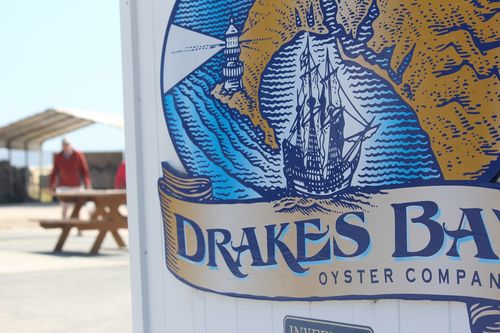
When we originally posted about Drake’s Bay Oyster Co. v. Salazar, No. 13-15227, an appeal now awaiting the Ninth Circuit’s ruling (oral argument video here, key briefs here), we knew further research on the issue was in order, perhaps by making a site visit. Yesterday, we had the opportunity to do just that, and ascertain for ourselves whether there’s room in the environmental community for what appears to be a pretty “green” business. As some of you know, I’ve been waylaid for the past few weeks, and it was the first day in many that I felt up to taking a field trip.

So off to Drake’s Bay it was. Following are some photos, as well as a short video showing the processing line, and a longer video with background on the issues. 

Here is our initial post on the case with the complaint, and our follow

Continue Reading A Visit To Drake’s Bay Oyster Farm, Epicenter Of A California Food Fight

Here are the latest (and last, presumably) briefs in the Arkansas Game & Fish Commission v. United States case, now in the Federal Circuit after remand by the U.S. Supreme Court. The Court earlier reversed the Federal Circuit’s conclusion that government-induced flooding could not be a taking unless it was “permanent,” and remanded the case to the Federal Circuit for more.

The Federal Circuit ordered supplemental briefing, with each party filing a brief simultaneously (initial briefs posted here), and now these, their respective briefs responding to the initial briefs:

We’ll bring you more when and if the court schedules arguments, or when it issues a decision.

Response Brief on Remand of Plaintiff-Cross Appellant Arkansas Game & Fish Commission, Arkansas Game an...

Supplemental Response Brief of the United States, Arkansas Game and Fish Comm’n v. United States, No. 2009-…Continue Reading Final Briefs In Arkansas Game Remand (Flooding As A Taking)

Here’s the video of today’s Ninth Circuit oral arguments in Drake’s Bay Oyster Co. v. Jewell, the case about an oyster farm in Marin County’s Point Reyes National Seashore, and Interior Secretary Ken Salazar’s decision to not renew its license. The Ninth Circuit has posted the briefs of the parties and amici here.

Here’s our initial post on the case, and here’s our follow up (about one of the amicus briefs).

Here’s a plain language preview of the issues and the arguments. 

Predictions? It seems to us that two of the judges are skeptical of the farm’s arguments, and one may be inclined to agree, but there was nothing we saw on the video that would lead us to think the outcome is obvious. Continue Reading Oral Argument Video In Ninth Circuit Oyster Beef

Here’s the latest decision from the Hawaii Supreme Court applying the “private attorney general” doctrine, which allows a prevailing party to recover fees and costs in certain limited circumstances. In Kaleikini v. Yoshioka, No. SCAP-11-0000611 (May 2, 2013), the court awarded attorneys’ fees and costs incurred on appeal to the plaintiffs who prevailed in the case challenging the archaeological review for the $4+ billion Honolulu rail project. In its earlier opinion, the court held that the review could not be segmented, and that the city should not have started construction on any part of the project until archaeological review for the entire project had been completed.

Highlights:

  • Ask the appellate court only for those fees and costs you incur in that court; if you want fees incurred in the trial court, seek them there.
  • The going rate for highly skilled and experienced attorneys in Honolulu is darned reasonable


Continue Reading HAWSCT’s Latest On The “Private Attorney General” Fee-Shifting Doctrine

Cle-logoFor those of you attending the Virginia Eminent Domain Conference, here’s the expanded papers on “Tough Takings Questions: Regulatory Takings, Zoning Issues and Judicial Takings” and Public Use issues.

Use the password provided at the conference to open the pdf’s. It’s the same p/w for both. If you forgot the password, email me.

For those who did not attend, sorry folks, there are some benefits to coming to a conference! Y’all are going to have to wait for a bit — after a decent interval to allow the attendees to get their money’s worth, we’ll remove the password.

For more about the cases and books we discussed yesterday during my presentation on “Virginia’s Place in National Eminent Domain Trends, check these out:

  • Lingle v. Chevron, U.S.A., Inc., 544 U.S. 528 (2005) (gas station rent control, and the demise of the “substantially advance” test as a takings test).

     
    Continue Reading Materials From Today’s Virginia Eminent Domain Conference

    Earlier today, the Supreme Court considered whether to grant review in City of Tombstone v. United States, No. 12-1069 (cert. petition filed Feb. 27, 2013).

    The City of Tombstone‘s cert petition asks whether the city “is likely to succeed on the merits of the claim that the Forest Service violated the Tenth Amendment by … [impeding] restoration of essential municipal infrastructure during a State of Emergency.”

    • Here’s the amici brief we filed in support of the city.
    • Here’s the amicus brief by a coalition of Arizona/New Mexico counties. 

    While we await next week’s order announcing whether the Court will hear the case, here’s the Federalist Society’s podcast of a recent debate on the issues in the case:

    Tombstone, Arizona, calls itself “the town too tough to die,” but it’s gone to court to challenge the federal government’s restriction on access to nearby national forest land that the city

    Continue Reading Podcast On The Tombstone Federal Lands Access Case

    Yesterday, we posted our thoughts on a recent article in Hawaii Business magazine about land use, environmental law, and the Hawaii Supreme Court.

    In “‘Let ‘Em Eat Cake’ Comes to Hawaii, Professor Gideon Kanner has added his thought on the article. He comments on the article’s conclusion that “[i]f we don’t like the [environmental] laws anymore, we can elect officials to change them.” by writing:

    Hawaii Business magazine have never heard about the principle that statutes have to be constitutional? Would they make the same argument in the case of overreaching criminal laws? Racial segregation laws? Laws impairing the exercise of the First Amendment?

    Moreover, under the “reasoning” of these idiots, no law need be constitutional because if the legislature disregards a provision of the Bill of Rights, we can tell the complaining citizens to be better electors next time and to elect more constitutionally sensitive representatives.

    Lord in heaven! Is there no limit to these guys’ stupidity? Evidently not.

    Read his entire commentary here. By the way, before you are tempted to dismiss Professor Kanner as an outlander (yes, Justice Scalia really did call out-of-staters “outlanders” in a recent oral argument), his ties to Hawaii and his knowledge of our ways go way, way back.
    Continue Reading Strong Letter To Follow…