On Friday, February 18, 2011 from noon to 1:00 p.m., my Damon Key colleague Greg Kugle will be speaking to the Hawaii State Bar Association’s Real Property and Financial Services Section on Shoreline Issues. Greg chairs our firm’s real estate and construction law practice group, and has been representing property owners on shorelines issues across the State of Hawaii for many years.

The presentation is free for HSBA members and will take place at the HSBA Confrerence Room, 1100 Alakea Street, Suite 1000. HSBA members from the neighbor islands can call in to a toll-free conference line (contact us for the instructions). Continue Reading Greg Kugle To Speak To HSBA On Shoreline Issues (2/18/2011)
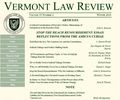
VTLREV_coverAs we noted here (when we posted our article), the latest issue of the Vermont Law Review deals with the U.S. Supreme Court’s “judicial takings” case, Stop the Beach Renourishment, Inc. v. Florida Dep’t of Environmental Protection, 130 S.Ct. 2592 (June 17, 2010). 

In eight essays, the authors of several of the many amicus briefs add their post-opinion thoughts. Authors include Ilya Shapiro (Cato Institute), Professor John D. Echeverria (Vermont Law), and Julia Wyman (Marine Affairs Institute). The groundwork is laid in the first article, by Professor L. Kevin Wroth:

If hard cases make bad law, bizarre cases may make no law at all. The recent Supreme Court decision, Stop the Beach Renourishment, Inc. v. Florida Department of Environmental Protection is a case in point. In the Essays that follow, the Vermont Law Review has brought together the reflections of seven lawyers, or teams of lawyers, for amici curiae

Continue Reading Vermont Law Review: Essay Reflections From The Amicus Curiae In The Judicial Takings Case

An opinion today from the U.S. Court of Appeals for the Ninth Circuit in Association of Irritated Residents v. Envt’l Protection Agency, No. 09-71414 (Feb. 2, 2011)

The case involves whether the EPA properly approved revisions to California’s State Implementation Plan for meeting air quality standards for ozone under the Clean Air Act. The court granted the petition and remanded the case to the EPA for further consideration. 

But what really grabbed us was the plaintiff: “Association of Irritated Residents.” Oh, we get it: AIR. How cheeky. Reminds me of those catchy names plaintiff’s groups often use (see, e.g., United States v. SCRAP (Students Challenging Regulatory Agency Procedures), 412 U.S. 669 (1972)), and the acronyms that float around the land use arena to describe motivation (e.g., NIMBY, BANANA), which we discussed in this post.

But I think “Association of Irritated Residents” Continue Reading Best Plaintiff Group Name: Association of Irritated Residents

U. Hawaii law student Stewart A. Yerton has published a comment in the most recent issue of the Asian-Pacific Law and Policy Journal, “Procedural Standing and the Hawaii Superferry Decision” How a Surfer, a Paddler, and an Orchid Farmer Aligned Hawaii’s Standing Doctrine with Federal Principles.”

From the Introduction:

This paper will examine the background law and the procedures, strategies, and arguments the Superferry plaintiffs employed in order to attain standing, as well as the arguments the defendants used in an attempt to keep the plaintiffs out of court. Part II will outline federal and state environmental standing doctrine, paying specific attention to cases most relevant to Superferry. The section will conclude with a brief statement of Superferry’s factual background. Part III will analyze four subjects: (1) how the plaintiffs’ lawyers convinced the court to navigate precedent and firmly establish procedural standing in Hawaii, (2) the

Continue Reading Worth Reading: Law Review Comment On Hawaii’s “Procedural Standing” Theory And The Superferry Case

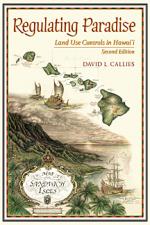
Regulatingparadise For those of you who do not yet have your copy of University of Hawaii lawprof David L. Callies‘ recent book Regulating Paradise – Land Use Controls In Hawaii, here’s your chance to get it signed by the author himself.

This Saturday, January 29, 2011 from 2:00 to 3:00 p.m., Professor Callies will be selling and signing at the Barnes & Noble at Ala Moana Center.

As we wrote in our initial review of the book, it’s a must-have for every dirt lawyer’s bookshelf. It is the one essential book if you want to understand Hawaii land use law, so it also belongs on the shelf of every Hawaii landowner, government regulator, environmentalist, and politician. At $22, it is a real bargain. Continue Reading Book Signing: Regulating Paradise – Land Use Controls In Hawaii (2d ed. 2010)

To all of you who attended the first day of the Hawaii Land Use Conference today, thank you. As promised, here are the items I discussed during my two sessions:

  • United States v. Milner, 583 F.3d 1174 (9th Cir. 2009) – the case in which the Ninth Circuit affirmed a finding of common law trespass for the building of a wall on fast land, because the shoreline eventually eroded up to it. Both parties had “vested rights” to an ambulatory littoral boundary. The U.S. Supreme Court denied review, as noted here.


Continue Reading Cases And Links From Today’s Hawaii Land Use Conference Sessions On Coastal Issues And Water Law

11.LULHI This Thursday (January 13, 2011) I’ll be leading two sessions at the fifth Hawaii Land Use Law conference at the Ala Moana Hotel in Honolulu. This conference takes place biannually, so this is your last chance until 2013 to get updated on the hottest topics, by a stellar faculty.

My sessions will cover Coastal Issues (which includes shoreline boundary, takings, and the U.S. Supreme Court’s Stop the Beach Renourishment case), and Water Issues (which will cover instream flow standards, public trust and private rights, and the Maui Water cases). The conference continues on Friday. Download the brochure here for a complete agenda.

The planning chairs, U. Hawaii Law Professor David Callies (U. Hawaii Law) and Ben Kudo (Imanaka, Kudo and Fujimoto), have assembled a talented and interesting faculty. The keynote speaker will be Professor Gideon Kanner, who will present “Taking a Critical Look at 30 Years of the Supreme Court’s

Continue Reading There’s Still Time To Register And Attend The Fifth Hawaii Land Use Conference

What we’re reading today:


Continue Reading Friday Round-Up: Takings Ripeness, Defining “Hawaiian” Cultural Practices, Penn Central, and Judicial Takings

The Vermont Law Review has published an article authored by me and my Damon Key colleagues (and fellow law bloggers) Mark M. Murakami and Tred Eyerly. The article is an essay with our thoughts about the U.S. Supreme Court’s decision in Stop the Beach Renourishment, Inc. v. Florida Dep’t of Environmental Protection, No. 08-11 (June 17, 2010).

That’s the “judicial takings” case involving accretion rights and Florida’s “renourished” beaches. Disclosure: we filed an amicus brief supporting the property owners in the case. We argue in the article that despite eight Justices concluding the Florida Supreme Court’s decision in the case was not a judicial taking, the doctrine remains viable. The article suggests a roadmap for how future cases can be analyzed.

Download the pdf here, or get it below.

Of Woodchucks and Prune Yards: A View of Judicial Takings From the Trenches, 35 Vt. L. Rev.

Continue Reading New Article – Of Woodchucks and Prune Yards: A View of Judicial Takings From the Trenches

troubleinparadise

(Click on the image to enlarge)

A colleague pointed out Dave Swann’s Trouble in Paradise strip from the Sunday Star-Advertiser that puts a comic twist on what Professor Paul Boudreaux has called “drawbridge protectionism.”

There’s more than a touch of reality in Swann’s strip, because having a bumper sticker on your car that you are down with the cause is just short of what you need to get standing to bring an environmental lawsuit in Hawaii’s courts. A bumper sticker alone might not be enough, but it’s close.Continue Reading “I Got Mine” Fits On A Bumper Sticker