Read the allegations in the complaint that the Illinois Appellate Court recounted in Strauss v. City of Chicago, No. 1-19-1977 (Mar. 5, 2021), and they will make your hair curl in horror.

In short: a family rented the ground floor of its mixed residential-commercial building in Chicago to Double Door Liquors (a live music venue). The local alderman “had a personal and financial relationship with the Double Door’s owners.” Slip op. at 3. He “told defendant that only Double Door would be allowed in the building.” Id. (It’s good to have friends, no?) But Double Door was not an ideal tenant, and the noise, drug and alcohol use, and property damage by patrons were a problem to the owners and neighbors. So the owners evicted the club. 

So, according to the family’s complaint, the alderman struck back. Read pages 3- 6 for the details. If true, the allegations are
Continue Reading Complaint Alleged That Chicago Pol Zoned The Chicago Way – But Still No Taking Because Family Owners Only Lost $1 Million

DSCF1327

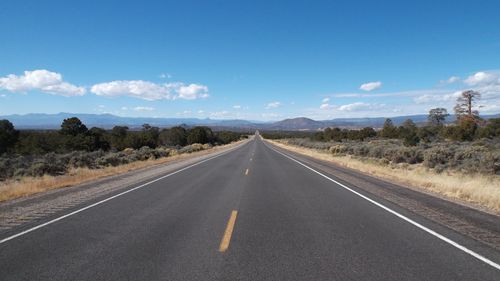
When we think “New Mexico,” we imagine scenes like this. Endless sky, seemingly infinite open roads, high desert … you know, “the West.”

But after reading the New Mexico Supreme Court’s opinion in City of Albuquerque v. SMP Properties, LLC, No. S-1-SC-37343 (Feb. 25, 2021), we’re going to think “inverse condemnation.” (Yeah, that may be sad, but come on, remember the title of this blog!)

The case: the city did a partial taking of SMP’s property for a road project. Just a thirty foot wide strip of SMP’s nearly 10 acres. But prior to the taking, the city told one of SMP’s tenants, “hey, we’re going to be taking this strip and doing a road project.” As a result, SMP’s inverse condemnation claim alleged, the tenant decided to not renew its lease. See slip op. at 11 (“SMP alleges that its claim for inverse condemnation arose prior to the

Continue Reading Enchanted: Inverse Condemnation For Damaging Is A Fact Thing – City Could Be Liable For Chasing Away Tenant

6a00d83451707369e20240a51cc266200b-800wi

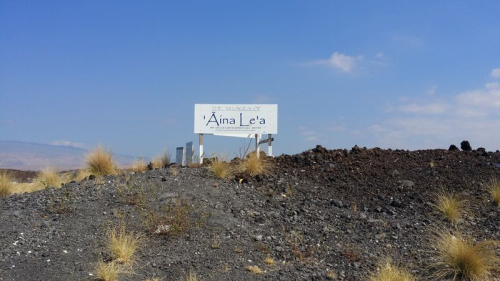
We were hoping for better news in a case we’ve been following in its various forms for what seems like forever. But today, the U.S. Supreme Court in this order declined to issue a writ of certiorari to review the Ninth Circuit’s decision in Bridge Aina Lea, LLC v. Hawaii Land Use Comm’n, No. 20-54, a case in which a federal court jury concluded the property owner suffered both a Lucas and Penn Central taking, but the Ninth Circuit reversed, concluding that no reasonable jury could have found a taking.

We’ve always been told that bright lines are not appropriate in takings. That there are myriad ways in which government can affect property interests and property rights. That the courts should defer to the government’s exercise of regulatory power. That per se rules such as Lucas and Loretto are not generally applicable. Instead, we’re told, go prove a taking

Continue Reading Thomas, J., Dissenting From Denial Of Cert In Penn Central And Lucas Takings Case: “If there is no such thing as a regulatory taking, we should say so. And if there is, we should make clear when one occurs.”

The situation in Hamen v. Hamlin County, No. 28671 (Feb. 10, 2021), a recent opinion by the South Dakota Supreme Court seems pretty bad, but a road we’ve gone down before. Believing that a suspect was inside, the local SWAT team (along with the county Special Response Team — drone and two armored vehicles included) damaged the mobile home belonging to the suspect’s parents:

To create the communication portholes for the Hamens’ trailer, an armored vehicle pulled away the front stairs and deck, which were not attached to the mobile home or secured in the ground, and pushed in the front door with a ram. The second armored vehicle opened three portholes on the opposite side of the mobile home by breaking through windows and a sliding patio door, causing significant damage to the walls and the septic system.

Well, it turns out the suspect wasn’t there. “Shortly after

Continue Reading The “Or Damaged” Part Of South Dakota’s Constitution Doesn’t Really Add Much: Damages From Police Actions Are Neither Takings, Nor Damagings

When we hear “Pennsylvania” and “coal,” our ears perk up and we naturally think of this case and regulatory takings.

But the Pennsylvania Supreme Court (Western District)’s opinion in DPBS Coals, Inc. v. Penn. Dep’t of Transportation, No. 41 WAP 2019 (Jan. 20, 2021) isn’t a regulatory takings case, but dealt with more traditional inverse condemnation. We’ve been meaning to post about the case for some time, but in the interim a colleague has written it up on his blog, so our own post shall be short. Check it out: “Coal Companies in Pennsylvania Fail to Make Out Inverse Condemnation Claim” by Matt Hull. (PS – don’t feel bad if you are sometimes a procrastinator; delay can be rewarding and could save you some work.)

Matt’s post summarized the facts:

The companies held the mineral rights to a large tract in southwestern Pennsylvania. A portion of the

Continue Reading A Pennsylvania Coal Takings Case (No, Not That One)

A landowner in Afghanistan sued the United States for taking land he allegedly owned for use as a combat base.

Prove you own this land, the Government responded. The first step to doing that is to attach to the complaint documents that make out a prima facie case of ownership. Otherwise, dismissal for failure to state a takings claim (no plausible allegation that the plaintiff owned “property”). 

The plaintiff complied with the Court of Federal Claims’ order for more definite statement and attached to his complaint documents he said showed he owned the property which the U.S. Army used to build Combat Outpost Millett. The CFC concluded these were not good enough under Afghanistan law (specifically, something called the “Law of Land Management Affairs,” which the court noted was “revised by the Taliban in 2000 and by the Afghan government in 2008[.]” This law looks for formal registration, which none

Continue Reading Fed Cir: No Taking Because Plaintiff Can’t Prove Ownership Of Afghanistan Property Army Used For Combat Base

UrbanLawyer.v.50.1 articles

The latest issue of The Urban Lawyer, the scholarly law journal of the ABA’s Section of State and Local Government Law (our Section) has been published. Takings mavens are going to like this one:

  • William W. Wade, Love Terminal: A Tale of Two Theoriesour friend and colleague Bill’s final work.
  • Kenneth Stahl, Home Rule & State Preemption of Local Land Use Control – land users and muni lawyers: read this.
  • Eric Lynch, Fifth Amendment on Fifth Avenue: New York City Taxicab Medallions App-Dispatch Services & Just Compensation in Regulatory Takings – a former student of ours and now colleague, on sharing economy takings; this article began life as his final paper for our class.
  • Robert Freilich, et al., The California Coastal Commission & Beach Access: The Necessity for Overriding City & County Ordinances Banning the Use of Short-Term Vacation Rentals in the Coastal Zone


Continue Reading Latest Issue Of The Urban Lawyer: Two Takings Theories, Home Rule, Rideshare Takings, And Vacation Rentals In The Coastal Zone

Goofus-gallant

Yes, it starts tomorrow, Thursday, January 28, 2021, but we’re “remote” this year, so it is not too late to register to join us for the 38th Annual ALI-CLE Eminent Domain & Land Valuation Litigation Conference. This is the “big one” where the nation’s best practitioners, scholars, jurists, and other industry professionals gather to talk shop about the subjects we know and love.

Details here (ALI-CLE’s page with faculty, agenda, and times), or here (a recent episode of Clint Schumacher’s Eminent Domain Podcast, where we preview the Conference). Here’s your chance to be a part of what is the best conference on these topics.

We have set it up to take advantage of the remote format, and tuition has been reduced (thank you to ALI-CLE for recognizing this, and for our sponsors for being so generous). We’re seeing a lot of first-time registrations, and this is a great opportunity

Continue Reading Still Time To Join Us: ALI-CLE Eminent Domain & Land Valuation Litigation Conference (Online!) This Thursday & Friday. Tuition Deals! #EminentDomain2021

No surprises in the latest in a case we’ve been following.

After the Hawaii Supreme Court’s decision concluding that the statute of limitations for Hawaii-law takings claims is six years (not the shorter limitations period argued by the State), the Ninth Circuit, as expected, today concluded in this short (3-page) unpublished memorandum opinion that the plaintiff’s Hawaii-law takings claim was not raised too late, and also that the corresponding federal takings claim is also timely.

The court concluded that “there is no federal statute of limitations for federal takings claims against a state,” but that the “analogous cause of action would be an inverse condemnation action under state law.” That, as noted above, is six years.

In short, both the state and federal law takings claims were timely filed. The district court’s judgment is reversed, case remanded for the merits.

DW Aina Lea Dev., LLC v. State of Hawaii Land

Continue Reading CA9: Property Owner’s Hawaii-And-Federal-Law Takings Claims Are Timely

Here’s the latest complaint in a long train of complaints alleging that a COVID-related shutdown or moratorium is a taking or damaging of private property for public use.

This time, it’s from Northern California wine country (Napa County Superior Court, to be specific), and the taking claims (skip to page 19 if you want to cut to the takings chase) only seeks relief under the California Constitution (“Private property may be taken or damaged for public use and only when just compensation, ascertained by a jury unless waived, has first been paid to, or into court for, the owner.”).

The complaint alleges:

91.    Coalition members have property interests in their respective outdoor-service restaurants, wineries, and related businesses. Prohibiting them from reopening for outdoor service while allowing similarly-situated businesses to reopen for indoor customer service, and without recourse or protection from arbitrary enforcement, constitutes a taking of their property under the California

Continue Reading New Complaint: Shutdown Is A (California) Taking Or Damaging Of Wine Country Restaurants