We can’t pretend that we understand everything that is going on in the Supreme Court of India’s recent opinion in Hari Krishna Mandir Trust v. State of Maharashtra, No. 2013-6156 (Aug. 7, 2020) (but when has that ever stopped us before?), but after reviewing the decision, we thought we would post it because of the court’s holding:

96. The right to property may not be a fundamental right any longer, but it is still a constitutional right under Article 300A and a human right as observed by this Court in Vimlaben Ajitbhai Patel v. Vatslaben Ashokbhai Patel and Others. In view of the mandate of Article 300A of the Constitution of India, no person is to be deprived of his property save by the authority of law. The appellant trust cannot be deprived of its property save in accordance with law.

97. Article 300A of the Constitution of
Continue Reading Supreme Court Of India Channels Magna Carta: Although Compensation Is Not Expressly Required By Constitution, When Govt Takes Property, It Has Obligation To Pay

Title

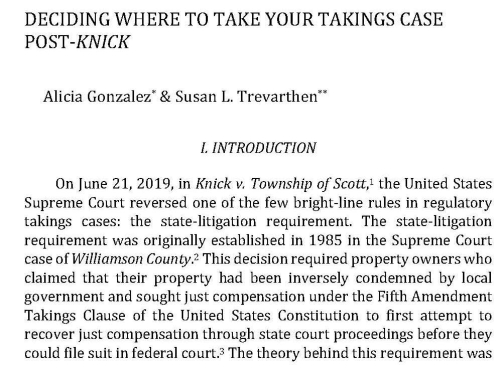
Check this out, a newly-published article on takings by two eminent Florida takings practitioners, Alicia Gonzalez & Susan L. Trevarthen, Deciding Where to Take Your Takings Case Post-Knick, 49 Stetson L. Rev. 539 (2020).

If the title isn’t enough to grab your interest, here’s the description in the Introduction,

Post-Knick,both plaintiffs and defendants have an option available to them that was previously unavailable. This Article will discuss the options that litigants on either side now have in federal takings cases and evaluate which options are desirable depending on the objectives of a particular litigant. Part II will discuss the history of the state-litigation requirement and the theoretical underpinnings of the Williamson County decision in which the state-litigation requirement was imposed. Part III will discuss Knick and the Supreme Court’s reasoning for reversing its own precedent in Williamson County. Part IV will discuss the new options

Continue Reading New Law Review Article: “Deciding Where to Take Your Takings Case Post-Knick

California law has decriminalized weed. Local governments, however, may regulate the use, sale, possession, and other things (like it can regulate other perfectly legal things). You know, police power kind of regulation.

Under that latter authority, the County of Santa Cruz adopted an ordinance that prohibits a medical weed facility from growing more than 99 plants. A dispensary was growing way more than 99 plants: more like 2,200 to be precise. This is Santa Cruz, man. 

Well, the Sheriff’s Department didn’t quite see it the same way. Under the authority of the ordinance, they seized the weed, and issued a notice of violation of the law. The dispensary sued for a taking (and other causes of action), and among the remedies sought was a return of the plants. The trial court demurred (without leave to amend, for all you California practitioners), on the basis that it isn’t a taking for

Continue Reading Is It A Taking When Five-O Bogarts Your (Legal) Weed?

The Louisiana Court of Appeal’s opinion in Lowenburg v. Sewerage & Water Board of New Orleans, No. 2019-CA-0524 (July 29, 2020) is long (54 pages) and detailed. But for those of you interested in inverse condemnation liability stemming from the impacts on property owners from public construction projects, this is your case.

This consolidated appeal involves a group of homeowners, Plaintiffs-
Appellees (“Lowenburg Appellees”) and a non-profit church with a daycare center Plaintiff-Appellee, Watson Memorial Spiritual Temple of Christ d/b/a Watson Memorial Teaching Ministries, (“Watson Appellee”) who claim that they, along with their properties, sustained various types of damages as a result of the construction of the Southeast Louisiana Urban Drainage Project (SELA Project). This federally sponsored and funded project involved the construction of multiple drainage canals and was carried out by the United States Army Corps of Engineers (“USACE”) and Defendant-Appellant, Sewerage and Water Board (“Appellant”).

Slip op.

Continue Reading Construction Impacts From Public Project Are Not “Quality Of Life” General Damages, But Takings Requiring Compensation

There’s a lot going on in the Michigan Supreme Court’s opinion in Mays v. Governor, No. 157335 (July 29, 2020). After all, the case involves claims for personal and property damages resulting from the Flint (Michigan) water crisis. That’s an issue we’ve been following that has also grabbed national headlines.

But if you takings mavens don’t want to take a deep dive into the non-takings parts of the opinions (that resulted in an “affirmed by an equally divided court” situation on the plaintiffs’ bodily injury claims and Bivens-type damage remedy), here are the takings highlights. We thought the most interesting part of the opinion is at pages 11 through 15, where the three-Justice plurality/majority concluded that the plaintiffs alleged property damage and injuries different from the public, and alleged enough to avoid the government’s motion for summary judgment.

The class action complaint in Mays alleged:

Plaintiffs brought

Continue Reading Michigan SCT: Flint Takings Plaintiffs Alleged Unique Property Injuries, And That’s Enough To Survive Summary Judgment

Here’s the cert petition that we’ve been waiting to drop in a case we’ve been following. Last we checked in, the Ninth Circuit (with concurral) had denied en banc review, over a dissental.

In Cedar Point Nursery v. Shiroma, 923 F.3d 524 (May 8, 2019), a 2-1 panel of the Ninth Circuit affirmed the dismissal of a complaint for failure to plausibly state a takings claim under Twombly/Iqbal.  At issue was a regulation adopted by California’s Agricultural Labor Relations Board which requires agricultural employees to open their land to labor union organizers. The regulation is framed as protecting the rights of ag employees to “access by union organizers to the premises of an agricultural employer for the purpose of meeting and talking with employees and soliciting their support.”

The panel majority viewed the complaint as alleging a Loretto physical invasion taking, and held the

Continue Reading New Cert Petition: Does A Physical Invasion Taking Require 24/7 Occupation?

This is a case about trees. The County highway maintenance department entered the plaintiffs’ rural undeveloped land (with permission) to cut and remove certain trees, but then went to the wrong place and cut the wrong trees.

The plaintiffs wanted compensation for the trees, measured as the cost to replace the trees. The County offered compensation only for the loss of use or damage to the land, $200. But you really didn’t take or damage the land (other than to remove the trees), you took or damaged the trees argued the owners. The trial court agreed with the County, as did the court of appeals.

In this post (Apparently, Trees Are Not Property In Nebraska“) we expressed our dissatisfaction with the court of appeals’ ruling and rationale. The court held this wasn’t a permanent taking, so no recovery. In our view, the court also wrongly focused on

Continue Reading Apparently, Trees Still Aren’t Quite “Property” In Nebraska

Callies_book
by David Lee Callies

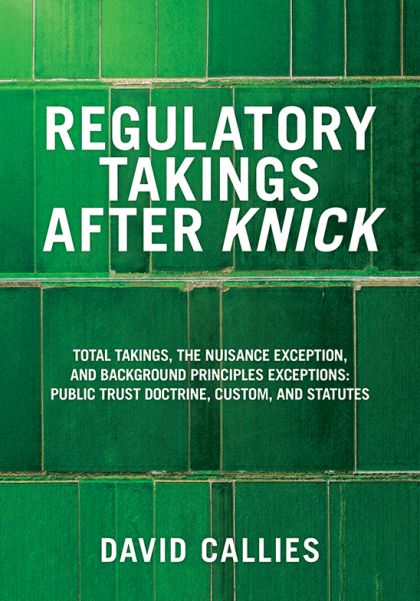
Coming soon (August), a new book from lawprof David Callies on what might be our favorite subject, regulatory takings.

We had a chance to review the proofs, and we highly recommend this one for your bookshelf. We’ll bring you more once published. But for now, you can reserve your copy here.

Here’s the description:

Regulatory Takings after Knick summarizes the Supreme Court’s recent decision in Knick v. Township of Scott which does away with the state action prong of the Court’s former ripeness test and what it means for the law of regulatory taking of property. It emphasizes total takings after Lucas v. South Carolina Coastal Commission and the exceptions which permit government to so strictly regulate property as to permit no economically beneficial use of it.

The Supreme Court’s recent decision in Knick v. Township of Scott has been aptly described by some commentators


Continue Reading New Book Coming In August: Regulatory Takings After Knick by David Callies

Our Louisiana friends have a great word — lagniappe — that we’re not sure we understand precisely, but to us has always meant that little something extra. As Mark Twain wrote, “[i]t is the equivalent of the thirteenth roll in a ‘baker’s dozen.’ It is something thrown in, gratis, for good measure.” As far as we can tell, however, it’s meant to be something you give to others, not a little something extra you keep for yourself.

Maybe that message didn’t make its way up to Michigan, because until the Michigan Supreme Court’s ruling in Rafaelli, LLC v. Oakland, County, No. 156849 (July 17, 2020), local governments apparently were free to treat themselves to a little something extra when they foreclosed on property for the owner’s failure to keep up with their property tax payments. They would sell the property, pay themselves the taxes owed, and then pocket anything

Continue Reading Michigan: Gov’t Keeping The Change From Tax Delinquency Sale Is A Taking

20160114_125445

Here’s the latest in a case we’ve been following for what seems like forever. This is also a fact situation that has resulted in litigation in a variety of different fora, and at times has seemed like the final exam question in a Federal Courts law school class. We wrote about this latest phase — the issues raised by the Ninth Circuit’s opinion — in this article, even.

We won’t go into the background of the case, but if you are interested, you can find out more at this post (“What Constitutes a Loss“). The property owner has also summarized the situation thusly:

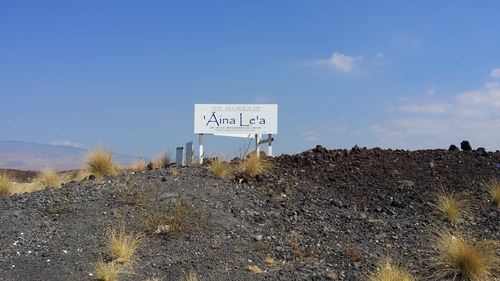
The State of Hawaii zoned for agricultural use land that it knew was not viable or appropriate for such use. At the property owner’s request, it rezoned it for urban use but, after Plaintiff Bridge Aina Le‘a began developing it, the State

Continue Reading New (Mike Berger) Cert Petition: “This case is the proverbial ‘Exhibit A’ of much that is wrong [with takings law].”