


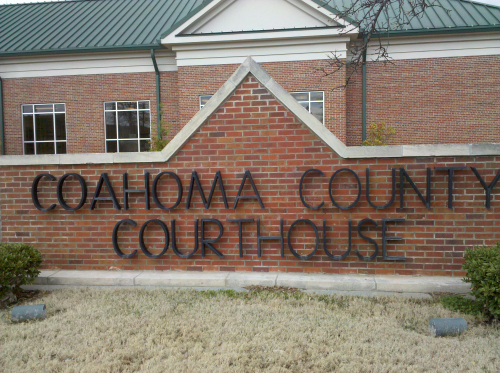
2010-03-25 16.27.57

The plaintiff owned property down in the land of the Delta Blues. The intersection of Highways 61 and 361 in Coahoma County, Mississippi. That’s a pic of the courthouse, taken a few years ago, by the way (yeah, we went there). 

The owner tried several businesses there, first a blues club, then another club known as “Showtime,” and later a restaurant. Between Showtime and the restaurant, the County’s public works department struck and damaged the water utility’s supply lines that run along Highway 316, including the line that supplies water to the property. The damaged line is on land on which the County has a right-of-way, and is about 1/2 mile away from the plaintiff’s land. 

Instead of repairing the line, it made more sense for the County and the water company to simply paid each property owner who was then currently receiving water service the cost to repair
Continue Reading Miss App: Takings Statute Of Limitations Didn’t Expire Because There Was No Taking (And Even If There Was One, The Claim Is Too Late)

What place do you think of when you hear the word “earthquake? Most likely California, we’re betting.

And it’s also very likely that you didn’t think “Ohio.”

Well, that’s probably what everyone involved in the Ohio Supreme Court case State ex rel. AWMS Water Solutions, LLC v. Mertz, No. 2019-0493 (Sep. 23, 2020) thought too. Until AWMS sought salt-water injection well permits from the State of Ohio, and “[t]he next day, a 2.7-magnitude earthquake was recorded in Youngstown, Ohio, about seven miles from AWMS’s Weathersfield Township site and about one mile from an injection well known as “Northstar #1” that was not related to AWMS’s wells.” Slip op. at 3. Earthquakes? In Ohio?

A week later, the State determined that Northstar #1 should be taken out of operation, and the very next day, a 4.0 earthquake “was recorded within one mile of Northstar #1. Slip op. at 3. [That

Continue Reading Earthquake In Ohio: The Jury Should Decide Lucas And Penn Central Takings After State Shut Down Injection Wells For Causing Earthquakes

A very quick one today from the North Dakota Supreme Court. In Cass County Joint Water Resource District v. Aaland, No. 20200272 (Sep. 15, 2020), the court rejected a property owner’s request for a stay pending appeal of a trial court’s order allowing the district to enter the owner’s property “to conduct examinations, surveys, and mapping, including geomorphic examinations requiring installation of survey monuments.” The District had tried to negotiate an easement, but the owner didn’t want to play.

The Supreme Court rejected the request, concluding that the owner didn’t show irreparable injury because he could always bring an after-the-fact inverse condemnation claim to remedy whatever injuries the entries caused. The court also concluded that a stay would harm the District, because it would delay the project, even though actual construction of the project has already been enjoined by a federal court. While the district might not be able

Continue Reading No Injunction To Halt Precondemnation Entry, Since Owner Can Sue Later For Inverse

The District Court’s bottom line in Lukes Catering Service, LLC v. Cuomo, No. 20-CV-1086 (Sep. 10, 2020)? The New York governor’s emergency orders aimed at coronavirus “imposing quarantines, mandating workforce reductions, closing schools, requiring face-coverings, and restricting activities of all types,” are not takings of the businesses of event, banquet, and catering services that have been shut down as a result. The specific emergency measure challenged was the order limiting gatherings to no more than 50 people.

The controlling authority? You guessed it, Jacobson v. Massachusetts, 197 U.S. 11 (1905). That’s the case in which the Court defined “real liberty,” and which has been most prominently applied in emergency order cases to reject due process challenges. But if you want the court’s takings analysis, jump to page 24. The court rejected the categorical (Lucas) claim:

Plaintiffs allege a categorical regulatory taking in their complaint. (Complaint, ¶¶

Continue Reading NY Fed Ct: “When faced with a society-threatening epidemic, state officials are empowered to … infringe federal constitutional rights. They may generally do so at their sole discretion and for so long as is necessary.”

In Hawaii we employ a phrase, “how can?” as a shorthand response when you’re wondering how something can be. It’s easy, short, and more efficient than saying “I’m sorry, I don’t understand how you think you can accomplish this.”

Thus, “how can?” was our first response when the U.S. Department of Health and Human Services’ recently-released agency order establishing a covid response nationwide residential eviction moratorium crossed our desk yesterday. By what authority does the federal government purport to dictate (yes, we’re going to use that word) whether state and local governments (and state courts) allow evictions for not paying rent? We thought that property law was one of those local things?

Just as we were about to dive in, our friend and colleague Tony Della Pelle produced an analysis more cogent than “how can?” In “COVID Eviction Freezes – Who Is Supposed To Pay?,” Tony asks, “Did

Continue Reading How Can? U.S. DHS: National Eviction Moratorium (Roscoe Filburn Could Not Be Reached For Comment)

News just in: we’ve just received confirmation that the Conference will not be in-person in Scottsdale in January 2021, and we’re going online.

Not a big surprise, but still a bit disappointing, and it’s a shame that the circumstances won’t allow us to meet in-person to talk shop and to renew our friendships like we do every year. 

But rest assured we’re making lemonade out of these lemons, and we’d appreciate everyone holding the dates on your calendars to join your colleagues from across the nation for the online Conference. And no, we’re not going to do two-and-a-half-days remotely, we’re paring down the agenda and will be focusing on hot topics, and great presenters. The remote format has some advantages, and we’re taking advantage of the circumstances to plan a conference more interactive and a bit different than usual.

This will also be a great program for first-time Conference participants.

Continue Reading Breaking: News About The 2021 ALI-CLE Eminent Domain & Land Valuation Litigation Conference (Jan. 28-29, 2021)

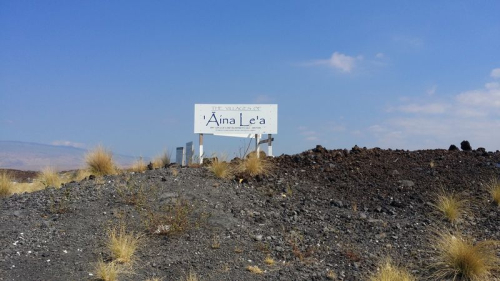
Ainalea

A short while ago, we featured the cert petition in a case from the Big Island that we’ve been following as various pieces of it went up and down through both the state and federal court systems. See “New (Mike Berger) Cert Petition: ‘This case is the proverbial ‘Exhibit A’ of much that is wrong [with takings law].

Now, after the State of Hawaii waived its right to file a BIO, five briefs of amici curiae (including one in which we played a small part) have been filed in support of the petition, urging the Court to review the Ninth Circuit’s opinion. We wrote about the case in a recent issue of the American Planning Association’s magazine. The short story is that a federal jury concluded that the State of Hawaii Land Use Commission took the owner’s property under both a Lucas and a

Continue Reading No Shortage Of Amicus Support For Takings Cert Petition (Lucas and Penn Central!)

Property owners sued the State of Ohio Department of Transportation’s Director (in his official capacity) in federal court after ODOT’s highway project resulted in flooding of their land. They raised two claims: the first, a taking under the Fifth (and Fourteenth) Amendments, and the second a claim under 42 U.S.C. § 1983. The relief sought: a declaration that this is a taking along with just compensation, and damages for the section 1983 violation.

If you are thinking “what about the Eleventh Amendment?,” you would be thinking like the U.S. Court of Appeals for the Sixth Circuit. In Ladd v. Marchbanks, No. 19-4136 (Aug. 20, 2020), the appeals court affirmed the district court’s dismissal of the complaint. No federal court lawsuits against a state is the general rule. There are exceptions, of course, most notably when Congress abrogates the states’ immunity, but the Supreme Court has held that section 1983

Continue Reading Sixth Circuit: You Still Can’t Sue States In Federal Court For Takings, Even After Knick

We know you are really busy, takings mavens, you don’t have to read all 47 pages of the California Court of Appeal’s opinion in Martis Camp Community Ass’n v. County of Placer, No. C087759 (Aug. 17, 2020). Instead, you can jump to page 44 for the good stuff.

Short story: the court held that the plaintiff — a community association for a residential subdivision — did not state a valid claim for inverse condemnation for a taking of access rights because it did not own property actually abutting a public road. The court acknowledged that abutting landowners have a property right to access the streets, a “property right in the nature of a private easement in the street upon which the property abuts.” Slip op. at 44.

But the Association did not actually own any of the parcels abutting the street in question. Instead, the Association alleged that it

Continue Reading Cal App: In Order To Have Standing To Raise An Inverse Claim For Loss Of Street Access, The Plaintiff Must Actually Own Property Abutting The Street

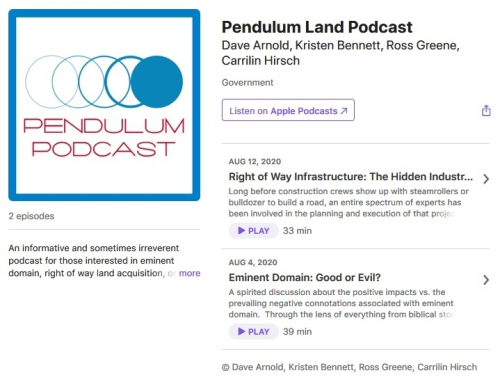
PENDULUMPODCAST

Check this out, a new podcast for your dirt lawyer types to follow, Pendulum Podcast. As it describes itself:

An informative and sometimes irreverent podcast for those interested in eminent domain, right of way land acquisition, or infrastructure development. Topics for discussion frequently include condemnation of real property for public use, just compensation, the Uniform Relocation Act, as well as your hosts’ hot takes on popular culture.

Uniform Relocation Act? Right of way and eminent domain? Be still our hearts.

Two eps are posted so far, “Eminent Domain: Good or Evil?” (embedded above), and “Right of Way Infrastructure: The Hidden Industry. From the Uniform Relocation Act to Eminent Domain.” We’ve listened to the first one, and will soon do so with the second.

Count us as subscribers. Highly recommended you become one as well. Continue Reading New Property/Eminent Domainey Podcast: Pendulum Land Podcast