Join us next Tuesday, April 14, 2020, at 12 noon Hawaii Time (3pm PDT, 6pm EDT) for a free webinar sponsored by the Grassroot Institute of Hawaii, “Safety vs. Freedom: Are There Limits to Lockdowns?” Register here

Here’s the description of the program:

Governments at every level in Hawaii have responded to the coronavirus pandemic by implementing lockdown measures never before seen in the United States during peacetime. We have been forced to give up many of our freedoms, but by what authority can our governor and mayors shutter our businesses, declare vast swaths of our communities “non-essential” and make us stay home? Are there any legal limits to these shutdowns?

Joining us for a free webinar at noon, Tuesday, April 14, to help answer these questions will be Grassroot Scholar Robert Thomas, a widely published attorney who is a director with the law firm

Continue Reading Safety Dance: Are There Limits To Lockdowns? Free Webinar April 14
We were all set to digest the California Court of Appeal’s opinion in Ruiz v. County of San Diego, No. D074654 (Apr. 7, 2020), when we realized that the opinion was not issued today, but merely ordered published today, and that the opinion was issued last month as an unpublished. So we checked with the California Eminent Domain Law Report, and sure enough, Brad Kuhn had written up the case back when it was issued. Thus, we won’t be diving into the case in too much detail, but instead offer a couple of thoughts to supplement Brad’s

Short story: Ruiz’s property suffered a flood after a storm drain installed by the property’s developer overflowed. Installed 50 years ago, the drain eventually rusted. The drain was privately owned. The developer had offered to dedicate the drain to the County, but the County had not accepted the dedication.The

Continue Reading Cal Ct App: Storage Of Publicly-Owned Water On Private Property Isn’t A Taking

Suppose you’re walking your pooch “Kaiser” in the local dog park. Another owner is walking his dog “Odin” in the same park. Off-leash Odin attacks you and Kaiser, unfortunately killing Kaiser.

Those bastards took Kaiser, my property! A total wipeout Lucas taking (after all, you plainly have been 100% deprived of both the use and value of poor Kaiser, who is no more). 

So you sue. But who do you sue? The owner of the miscreant Odin? Nope, not a state actor, no power of eminent domain. So not liable for a taking. How about Odin himself? After all, courts are entertaining lawsuits by ape plaintiffs, so why not dogs as defendants? Nope, besides the standing problem, like his master, Odin isn’t a state actor and does not have the power of eminent domain.

How about the animal shelter, because it is operated by the county? Genius!

Thus, your

Continue Reading CA4: No, Your Dog Being Killed By Adopted Violent Shelter Dog Isn’t A Taking

20160114_125445

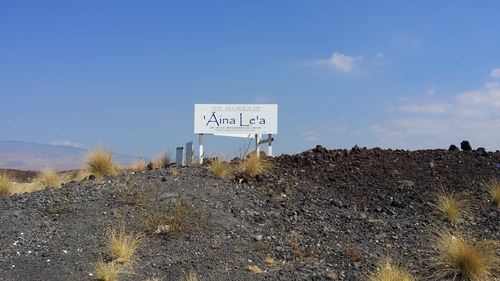
Here’s an article, just published in the American Planning Association’s monthly magazine, Planning (read the entire April issue here), summarizing the Ninth Circuit’s latest foray into regulatory takings, Bridge Aina Lea, LLC v. State of Hawaii Land Use Comm’n, No. 18-15738 (9th Cir. Feb. 19, 2020).

In Legal Lessons – What Constitutes Loss? we write about the decision and the court’s conclusion that losses short of 100% do not qualify for a per se Lucas taking, and are not enough to tip the scales for a Penn Central taking either. The opinion also adds to the growing confusion about whether the regulatory takings doctrine deals with use or value.  

Our thanks to the APA for asking us to contribute, for making the editing process so easy, and for allowing reprinting of the piece here. Check it out. 

Legal Lessons – What Constitutes a Loss? Planning Magazine (Apr. Continue Reading New Article: Ninth Circuit’s Latest Foray Into Lucas And Penn Central Takings

Here’s the latest in a case we’ve been following. We even visited the site with our class last year. 

Today, the Virginia Supreme Court heard argument on the petition for appeal (streaming above from the webstream, or download the mp3 here) in what we call the oyster case because it involves the property rights of Nansemond River oystermen, whose oyster beds were polluted by sewage from the City of Suffolk.

Bottom line from today’s argument: no decision yet. These arguments are short (10 minutes), only the petitioner is allowed to argue, and today’s argument did not elicit any questions from the three-Justice panel. So we wait. 

Some background, since this is a case at the intersection of property and takings law, and environmental protection. The oystermen own a lease from the state for the riverbed, which among other things, allows them to harvest some of the oysters that Virginia

Continue Reading SCOVA Oral Argument: Does A City Have The Right To Pollute Chesapeake Bay?

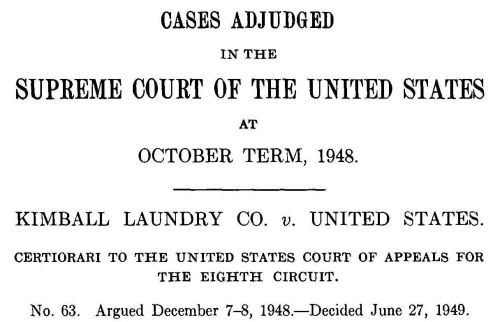
Kimball_page

It’s tough with all that’s swirling around all of us to keep focused on non-virus related things. But because we think that’s one way to keep calm and carry on, we shall continue to endeavor to do so. But come on, being takings and dirt lawyers we also can’t help viewing current events through that lens, no? Consequently, we shall also continue from time-to-time to post about issues that have cropped up in practice that are related to the thing that is on everyone’s mind these days.

In that vein, here’s the latest on-topic things we’ve been reading: 

  • History: Fire and Blood(worth) – Steve Silva, Taking Nevada blog (“Many argue, with great merit, that when a person’s property is sacrificed to preserve the public health, that the person is entitled to compensation. But the law has not yet reached that conclusion, … [and] there is no legal mandate


Continue Reading Latest Readings: On Emergency Takings, Compensation For Commandeered Property

19-1277.Opinion

The work of the courts goes on, and as long as there’s stuff to report, we’ll keep reporting as usual.

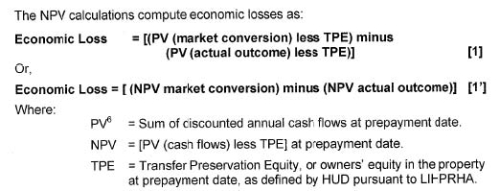
Yesterday, the U.S. Court of Appeals for the Federal Circuit issued an important takings decision in a case and issue we’ve been following for what seems like forever. In Anaheim Gardens, L.P. v. United States, No. 19-1277 (Mar. 25, 2020), the court held that a property owner in a regulatory takings case asserting a Penn Central taking may prove the “economic impact” factor by introducing evidence “by demonstrating their lost opportunity to earn market-rate rental income after prepaying their mortgages.” Slip op. at 17. The Court of Federal Claims had precluded such evidence, concluding instead that the before-the-regulation and after-the-regulation method was the only proper way. 

Here’s the short story: the feds adopted programs providing incentives to developers to build low-income housing. The programs offered below-market 40-year mortgages

Continue Reading Mi Casa Ain’t Su Casa: Proof Of Lost Opportunity Is Evidence Of Penn Central’s “Economic Impact” Factor

As long-time readers know, we often kvetch about the way many courts ignore the Palazzolo rule that simply because someone obtains property subject to preexisting restrictions on use does not preclude them automatically from raising takings claims. See here, here, here, and here, for example. More about the Palazzolo case here, including video.

But not all courts get it wrong, however. Now you can add to the plus-column the Florida District Court of Appeal (Second District)’s decision in Jamieson v. Town of Fort Myers Beach, No. 2D19-238 (Mar. 25, 2020).

The court held that a property owner who purchased land that earlier had been designated as 100% “wetlands” on the Town’s land use map was not prohibited from pursuing takings (and since this is Florida, Bert Harris Act) claims. The case is a two-fer, because the court also concluded that the claims were ripe

Continue Reading Talkin’ ‘Bout My Palazzolo: Takings Claim Not Precluded Because Owner Purchased Land Already Subject To Wetlands Regs

Front page

Here’s one for our Hawaii folks, in case you all are curious about the origins of the analytical framework which courts use to review the legality of measures taken by the authorities in the name of “public health” that have an impact on the uses of private property.  

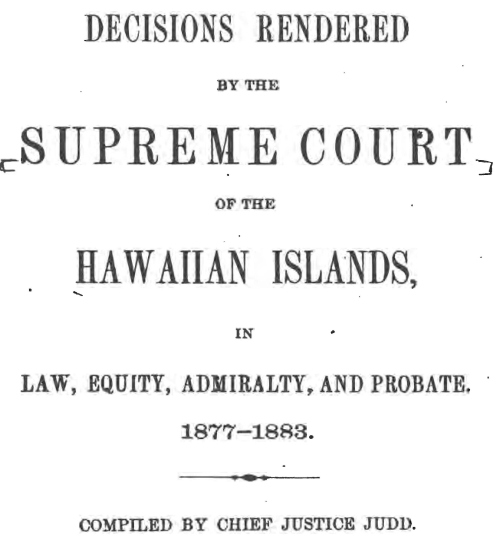
As far as we can tell, The King v Tong Lee, 4 Haw. 335 (Kingdom 1880) (in banco), is the first Hawaii case which uses the term “police power,” and which upheld the broad – and nearly unreviewable – authority of the government to limit the uses of property, as long as there’s a colorable argument that the property’s use is contrary to the public health.

There, the Kingdom’s legislature (one of the joys of practicing law in Hawaii is that you get to deal with cases involving the Kingdom; things like Privy Council, the royal prerogative, and the like) prohibited

Continue Reading The Royal Origins Of “Police Power” Hawaii-Style: The King v. Tong Lee (1880)

IMG_20170727_105403

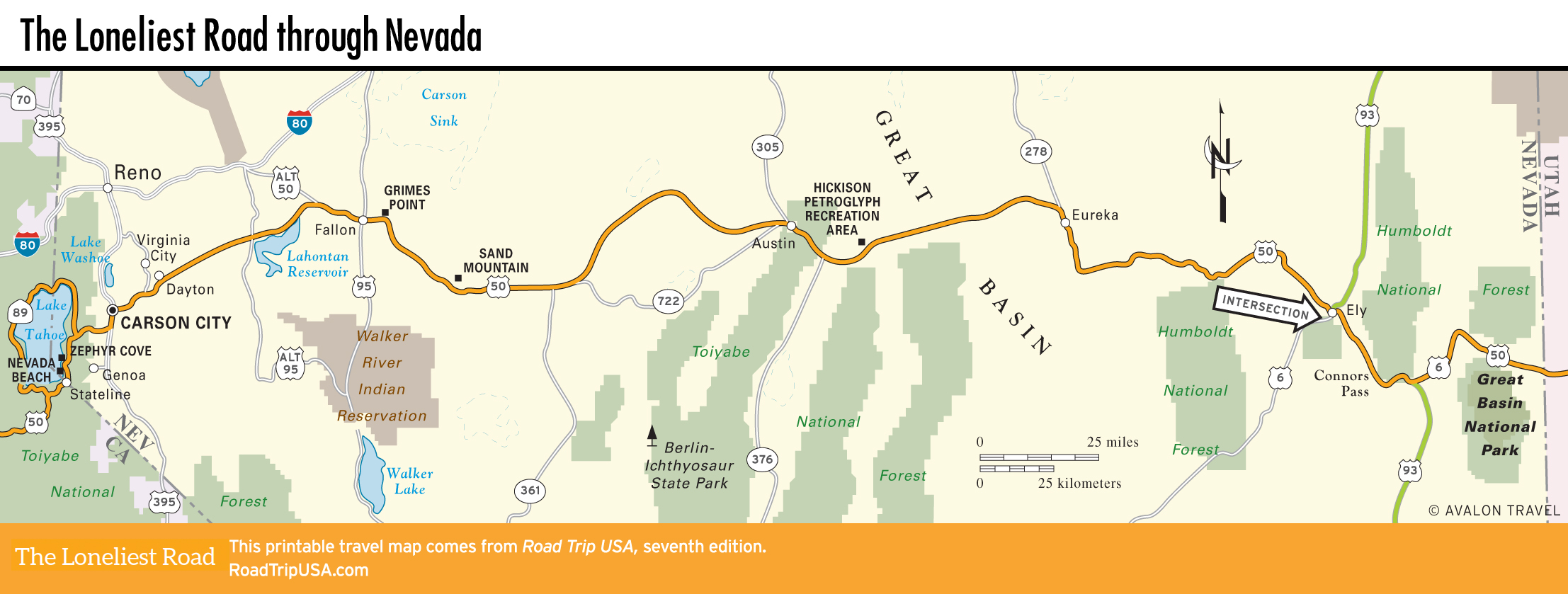
US 50 in Nevada – the “Loneliest Road”

Here’s the cert petition which we and our Nevada colleague Luke Busby filed today, asking the U.S. Supreme Court to review this Question Presented:

Conflicting with Loretto v. Teleprompter Manhattan CATV Corp., 458 U.S. 419 (1982), the Supreme Court of Nevada concluded that to prevail on a physical takings claim a property owner must show that a flood “effectually destroy[ed] or impair[ed] [the property’s] usefulness.”

The question presented is:

To constitute a taking under the Fifth and Fourteenth Amendments, must a physical invasion also destroy or substantially impair an owner’s economically beneficial uses of property?

Rather than summarize the case and the issues, here’s the Introduction: 

Physical occupations—as distinctly invasive public uses of private property—are treated by this Court differently than regulatory takings. Although the Court has consistently avoided adopting categorical rules in most takings cases, it has also long-recognized that

Continue Reading New Cert Petition (Ours): Must An Owner Whose Land Is Flooded Also Prove “Substantial” Loss Of Use?