The current headlines — and a couple of inquiries from colleagues and clients — got us to thinking about government power in times of crisis and the tension between that power and property and other individual rights. 

On one hand, court decisions going back over the centuries have told us that courts are reluctant to interfere with government power that the government asserts further the public “health, safety, and welfare” (what we in the U.S. call the “police power”). But at what point do such exercises of government power require compensation to a property owner who as a consequence of the limitation on their rights suffers a loss?

So we dusted off our law books and assembled a primer of what we thought were some of the more interesting and important decisions over the centuries on the question. This is not a comprehensive list, of course, and if you think

Continue Reading Emergencies, Police Power, Commandeering, And Compensation: Essential Readings
Here’s the cert petition we’ve been eagerly awaiting in a case we’ve been following about Seattle’s rewriting of the traditional lessor-lessee relationship.

The petition arose out of facial takings and due process challenges to Seattle’s “first in time” rule for residential leasing. The city adopted an ordinance requiring owners to rent to the first tenant who applies that meets the owner’s screening criteria.

The Washington Supreme Court tossed aside a long line of its own cases which held that the Washington Constitution’s takings clause is not interpreted by the same analysis the U.S. Supreme Court employs for the Fifth Amendment. Not so the Washington court held, we might in the future decide that the Washington Takings Clause provides greater protection, but for the time being we conclude that federal takings doctrine is so clear that we simply adopt it wholesale. (The court based this conclusion on Tahoe-Sierra. Really! Of

Continue Reading New Cert Petition: Seattle’s “First In Time” Tenant Rule Is A Taking And Due Processey

Missed out on the 2021 ALI-CLE Eminent Domain and Land Valuation Litigation Conference swag?

Well fear not: here’s your chance to get your high-class reminder — a kit of road warrior essentials — to save the Conference date on your calendar. We’re already underway with planning the agenda and faculty, so it’s never too soon to block it off (January 28-30, 2021, at the 4-Diamond DoubleTree Resort, Scottsdale, Arizona). 

If you were not able to get your swag in Nashville, send us a note (rht@hawaiilawyer.com) and we shall gladly drop one or two in the mail to you.

While supplies last!  Continue Reading Unboxing The 2021 (Scottsdale) ALI-CLE Eminent Domain Conference Swag: Get Yours Today!

Here’s the latest in a case we’ve been following that involves a local government prohibiting, via a zoning ordinance, the mining of silica (used as “frac sand”). Kind of like how Pennsylvania barred certain coal mining in our old friend, Pennsylvania Coal Co. v. Mahon, 260 U.S. 393 (1922). 

In Minnesota (where our story takes place) the right to subsurface minerals is separate from the rest of the land. Kind of like how Pennsylvania law recognized subsurface rights as a separate “stick” in Mahon. Here, the plaintiff owned several leases which allow it to mine silica. Sounds like a property interest, no? 

Well, no. At least not to a majority of the Minnesota Supreme Court, which held in Minnesota Sands, LLC v. County of Winona, No. A18-0090 (Mar. 11, 2020) (affirming the court of appeals) that the right to mine silica was a property right, but

Continue Reading Pennsylvania Coal Revisited: Outlawing Silica Mining Isn’t A Taking, Even Though Mining Rights Are “Property” Under State Law

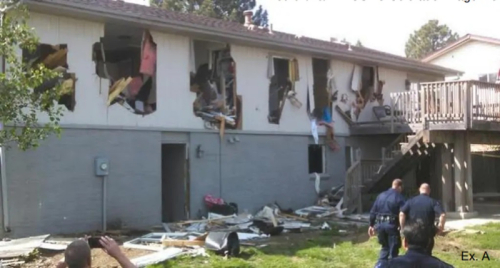
EX A

Here’s the cert petition that we’ve been eagerly waiting to drop in a case we’ve been following (and which gathered a lot of public — and academic — attention and outrage). 

Yes, this is the case where the Village police pretty much destroyed a family home in the course of their efforts to dislodge a shoplifter who had taken refuge there while fleeing. Homeowner sought compensation for a taking. The Tenth Circuit, however, concluded “no taking” because the police were exercising the police power. And you can’t have a taking where the government is exercising the police power.

We were not terribly surprised by the ruling as grossly unfair as it is, because it is pretty typical: customs agents inspect and seize your laptop at the border to check it out but destroy the data on the hard drive? no taking; DEA holds your legal prescription drugs as evidence against

Continue Reading New IJ Cert Petition: Purposely Destroying Your House Could Be A Taking, Even If Govt Was Exercising Its Police Power

Here’s the video of the OA held this morning (March 10, 2020) in a case we’ve been following, about the statute of limitations governing inverse claims. Maryland Reclamation Association filed an regulatory takings claim in 2013, and eventually the jury awarded a whopping $45 million in just compensation and interest. Hartford County asserted the claim was barred by the three-year statute of limitations, and the claim accrued in 2007 when the Board of Appeals administratively denied MRA’s variance request. 

The Maryland Court of Special Appeals concluded that “An inverse condemnation claim ‘accrues when the affected party knew or should have known of the unlawful action and its probable effect.'” Okay, the County responded, MRA discovered the County’s conduct in 2007 when the Board denied the variances. In response, MRA asserted that the taking must become “permanent or stabilized,” and that didn’t occur until the court of appeals affirmed the

Continue Reading Maryland Court Of Appeals Considers Statutes Of Limitations In Inverse Condemnation: Do Appeals Toll Time?

Here are the final cert-stage briefs in a case we’ve been following for what seems to be a long time.

We say that because we represented the property owner the last time it was up before SCOTUS, when we came tantalizingly close to making the cut

After the Court denied review, the property owner sued the Commission in federal court, asserting that being undercompensated in state court was itself a violation of the U.S. Constitution.

The district court dismissed the case, followed by the Fifth Circuit affirming in Bay Point Properties, Inc. v. Mississippi Trans. Comm’n, 937 F.3d 454 (5th Cir. 2019). The Fifth Circuit held that a property owner who asserted that it was not fully compensated in state court inverse condemnation case, could not then sue the state DOT in federal court for the difference. The reason wasn’t based on the substance of the allegations

Continue Reading Final Cert-Stage Briefs In Case Asking: Does The Self-Executing Just Compensation Clause Abrogate A State’s 11th Amendment Immunity?

ALICLE-tagline-250x90

At the recent ALI-CLE Eminent Domain and Land Valuation Litigation Conference in Nashville, our colleagues, New York’s Jon Houghton and Hawaii’s Dave Day presented a very informative program on litigating regulatory takings cases. Jon is a property owner-side lawyer, while Dave is a Deputy Attorney General who represents the State of Hawaii in such cases. So it was a practical and balanced presentation.

Well, Jon and Dave are taking (pun intended) it to the next level. On Friday, April 24, 2020 at 2-3pm Eastern Time, they will be presenting “Strategies for Litigating Regulatory Taking Cases” in a webinar produced by ALI-CLE. This isn’t simply a repeat of their Nashville program, but they will be exploring in more detail the practicalities of building and defending these difficult cases. 

Here’s the description of the program:

The U.S. Constitution provides that private property may not be taken for public use


Continue Reading Mark Your Calendars (Friday, Apr 24, 2020): ALI-CLE Webinar – Strategies for Litigating Regulatory Taking Cases

You recall that a short while ago, in Oil States Energy Servs., LLC v. Greene’s Energy Group, LLC, 138 S. Ct. 1365 (2018), the Supreme Court held that patents are a form of “public property” (more like a government-created entitlement), and thus Congress can withhold the usual Article III tribunal and a jury when the validity of that property is challenged. The majority held that “inter partes review,” under which the Patent and Trademark Office administratively reconsiders (and may cancel) previously-issued patents, does not run afoul of the Constitution because a patent is a “public right,” and therefore more like a grant of a franchise than classic common law property.

Although the Court validated inter partes review, it left open the question of whether a patent owner who has her patent (in thousands of cases, these patents were issued before inter partes review was adopted) invalidated via

Continue Reading New Cert Petition: Are Patents “Property” Protected By The Takings Clause (Is Inter Partes Review A Taking)?

The local government does stuff that local governments do. Things like improve nearby roads. In doing so, they often interfere with the ingress and egress that nearby landowners enjoy. 

In Clark v. City of Pembroke Pines, No. 4D18-3549 (Feb. 26, 2020), the city had many reasons for erecting concrete barriers (among them the closure of nearby roads). But the end result was that access to Clark’s parcel (which happened to be over the city line, in an adjacent town) was partially (but not totally) cut off:

Before the City’s road construction, Clark had unrestricted access to SW 54th Place in front of his home. Afterwards, he said the barriers significantly impeded his travel because with them in place, Old SW 54th Place effectively became a “one-way, ten-foot-wide road” with no room for vehicles to turn around. Additionally, Clark’s only direct means of east and southbound travel—via SW 199th Ave—was

Continue Reading Substantial Loss Of Access — Even If Not Total — Is A Taking