


Here’s the amici brief we filed earlier today in a case we’ve been following closely since its inception (and in which we filed an amicus brief when it was in the Sixth Circuit).

This is Brott v. United States, No. 17-712 (cert. petition filed Nov. 6, 2017), the case which asks whether Congress can require property owners asserting inverse condemnation or regulatory takings cases seeking just compensation against the federal government to sue in the Article I Court of Federal Claims. The Question Presented which the petition presents is straightforward:

Can the federal government take private property and deny the owner the ability to vindicate his constitutional right to be justly compensated in an Article III Court with trial by jury?

Rather than go into detail about our brief’s argument, we’ll just post the Summary of Argument:

The government does not enjoy its usual sovereign immunity when it takes property, either affirmatively or inversely, and this Court has repeatedly confirmed that the Just Compensation Clause is “self-executing.” First English Evangelical Lutheran Church of Glendale v. County of Los Angeles, 482 U.S. 304, 315 (1987) (“We have recognized that a landowner is entitled to bring an action in inverse condemnation as a result of ‘the self-executing character of the constitutional provision with respect to compensation.”).

But what does this mean, exactly? Even as the Sixth Circuit recognized that property owners have a right to compensation that springs from the Constitution itself and the right to sue does not depend upon a waiver of sovereign immunity, it held that Congress is not compelled to provide an Article III forum to vindicate that right. Or indeed, any forum at all. Thus, even if the forum Congress created―the Article I non-jury Court of Federal Claims (CFC)―is not constitutionally adequate, well, that’s good enough. In the words of the Sixth Circuit, “[t]he Fifth Amendment details a broad right to compensation, but does not provide a means to enforce that right. Courts must look to other sources (such as the Tucker Act and the Little Tucker Act) to determine how the right to compensation is to be enforced.” Brott v. United States, 858 F.3d 425, 432-33 (6th Cir. 2017). That is sovereign immunity by another name.

However, we think this Court said it best in United States v. Lee, 106 U.S. 196 (1882), the takings lawsuit over what today is Arlington National Cemetery, when it held that courts (referring to Article III courts, and not what is, in essence, a Congressional forum), must be available for those whose property has been taken:

The [government’s argument it cannot be sued] is also inconsistent with the principle involved in the last two clauses of article 5 of the amendments to the constitution of the United States, whose language is: ‘That no person * * * shall be deprived of life, liberty, or property without due process of law, nor shall private property be taken for public use without just compensation.’ . . . Undoubtedly those provisions of the constitution are of that character which it is intended the courts shall enforce, when cases involving their operation and effect are brought before them.

Id. at 218-19.

The story of how the private estate of General Robert E. Lee’s family became Arlington National Cemetery is at the center of this case: the Court held that Lee’s heir was entitled—after a jury trial in an Article III court—to ownership of the property. The Court affirmed that in our system, unlike those in which monarchs rule over their subjects, the federal government could be sued in its own courts, and that the government had violated Lee’s due process rights and had taken Arlington without compensation. Lee may have been rendered 135 years ago, but the principles which the Court enunciated on sovereign immunity, the independent federal judiciary, and the Fifth Amendment, are still highly relevant today.

Others have filed amicus briefs in support, and we’ll post those shortly. Or, you can now go to the Court’s docket entry for the case and download them directly yourself.

Stay tuned, as always.

Brief of Amici Curiae National Association of Reversionary Property Owners, Owner’s Counsel of America, The… 

Continue Reading New Amici Brief: In Our System, Unlike Those In Which Monarchs Rule Over Their Subjects, The Federal Government Can Be Sued In Its Own Courts
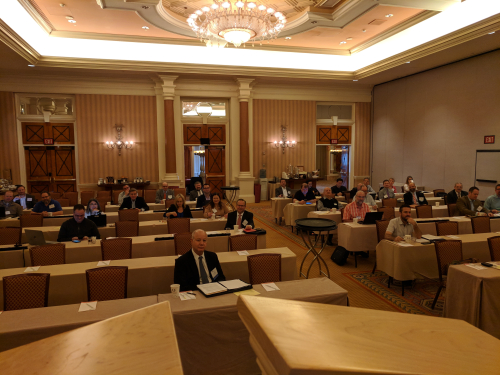
IMG_20171211_090714This photo of the view from the lectern at the start of the day
proves we really
were in the room and not distracted by all the distractions
possible in Las Vegas

Here are the materials and cases which I spoke about earlier today at the CLE International Eminent Domain Conference in Las Vegas. I had the lead off session on updates, and my talk focused on cases that I didn’t cover in the written materials:


Continue Reading Links And Materials From Today’s Las Vegas Eminent Domain Conference

 A short one, an unpublished and unsigned opinion from the U.S. Court of Appeals for the Eleventh Circuit, Warner v. City of Marathon, No. 16-10086 (Dec. 8, 2017).

As the title of this post indicates, the claims made by the plaintiff included a regulatory takings claim. The facts and details of their claims are in the opinion if you want to read them, but for our purposes today, they aren’t really important. It’s enough to note that the plaintiffs brought their takings claim in Florida state court. A prudent move, given Williamson County requires a property owner to first seek and be denied compensation through available state court procedures before the federal takings claim becomes ripe. 

The City of Marathon removed the case to federal court, as it can do under City of Chicago v. International College of Surgeons, 522 U.S. 156 (1997). That case gives the governmental

Continue Reading Williamson County Farce: 11th Circuit Bounces Case Removed From State Court, Because Plaintiff Didn’t Seek Compensation In State Court

It’s a shame that we have to be posting this again, but we noticed the hits going up on the posts we did earlier on inverse condemnation liability for damage caused by wildfires out west:

Continue Reading Inverse Condemnation And Wildfires

Remember Brott v. United States, the case we last posted about here (“New Cert Petition: Property Owners Entitled To Jury & Article III Judge In Federal Inverse Cases“)? The Question Presented in that case is whether “the federal government take private property and deny the owner the ability to vindicate his constitutional right to be justly compensated in an Article III Court with trial by jury?” 

Well, here’s another, recently-filed cert petition which asks at least one of the same questions: 

1. Whether the Takings Clause of the Fifth Amendment is a self-executing waiver of sovereign immunity, therefore vesting review of federal takings suits in Article III courts.

2. Whether Congress violates Article III of the Constitution to the extent Congress forces plaintiffs with federal takings suits over $10,000 to litigate these suits before the Article I judges of the United States Court of Federal Claims.

Sammons

Continue Reading (Another) Cert Petition: Property Owners Entitled To Article III Court In Federal Inverse Cases

20170918_171435_Richtone(HDR)

If case you were thinking you might have missed a big property case that made its way to the Supreme Court, fear not. All of the above issues were raised in the course of yesterday’s arguments in a patent case.

As the transcript in Oil States Energy Services, LLC v. Greene’s Energy Group, LLC, reveals, the issue in that case is whether the Patent and Trademark Office’s Patent Trial and Appeal Board is unconstitutional because it can deprive a patent holder of its rights without the benefit of adjudication in an Article III court. A patent is property (yes, it is a creature of statute, and not a common law right, but it is property), and the owners of patents can’t be deprived of their property except in an Article III court. Or so the Petitioner’s argument goes.

If that issue sounds familiar, it is. In Brott v. United

Continue Reading Supremes Consider Unconstitutional Conditions, Vested Rights, And Property … In A Patent Case

According to this story (“Scott Walker signs bill inspired by western Wisconsin cabin-owners’ court fight“), Wisconsin’s governor has signed into law a new bill which remedies the problem the Murr family faced after the U.S. Supreme Court ruling in Murr v. Wisconsin, 137 S. Ct. 1933 (2017).

In that case, as you recall, the Court’s majority concluded that the Murrs’ two adjacent parcels had — for the purposes of evaluating their regulatory takings claim — been effectively merged into a single parcel. Thus, both parcels together were the “denominator” against which the regulation’s economic impact was measured. The parcels were not actually or formally merged, and the Court’s ruling only meant that Wisconsin’s regulations which prohibited the Murrs from separately developing their second lot, or selling it to an unrelated party, was not a taking.

The new law would allow the Murrs to sell their undeveloped, “substandard”

Continue Reading Murrs Offered Succor; Owners In Other 49 States … Not So Much

In Long v. Liquor Control Comm’n, No. 16-069125-CC (Nov. 16, 2017), the Michigan Court of Appeals addressed an issue that we’ve been following — takings claims arising from government issued licenses or regulated industries. We wrote about these claims in sharing economy cases recently. See “Property” and Investment-Backed Expectations in Ridesharing Regulatory Takings Cases, 39 U. Haw. L. Rev. 301 (2017). These type of cases typically arise where the holder of a government license or permit claims that the government’s failure to require competitors similarly situated to obtain the same license or permit, or granting an additional license, is a taking. This case is among the latter.

Long possessed a liquor license entitling him to sell alcohol for off-premises consumption. But the Commission later issued a similar license to a nearby supermarket, and did so without abiding by the quota and distance restrictions which usually apply in these

Continue Reading Liquor License Isn’t A Right To Be Free From Competition

An interesting read from the South Dakota Supreme Court, on the often fine line between tort liability and inverse condemnation claims.

A big rain, just weeks after the State completed a highway improvement project which included drainage culverts originally installed in 1949, which could not adequately drain an 8-year rain event. Nearby private property flooded. And you know what that means: inverse condemnation, against both the State, and the City of Sioux Falls. The City eventually settled, and the State cross-claimed against the City seeking indemnity if the City was deemed liable to the property owners.

The trial court bifurcated liability and damages, and eventually concluded the State was liable in inverse condemnation for the flooding. The court also dismissed the cross claim against the City, concluding that the City’s permitting nearby development did not contribute to the run-off which flooded the plaintiffs’ land. The jury got the damage issue, and

Continue Reading The Difference Between Tort And Inverse Condemnation

The latest in the “Map Act” inverse cases out of North Carolina. This is a longer post, but you really will want to read the summary, or just pick up the opinion and read it.

These are the cases in which the N.C. Department of Transportation, under the power of the state’s Map Act, for decades has designated private property for future acquisition for highway corridors, which prevented present use and development, but hasn’t bothered to actually take the properties.

Hundreds of property owners sued in inverse condemnation (the North Carolina Supreme Court denied class action status). More on the issue and the N.C. Supreme Court’s landmark opinion in Kirby v. N.C. DOT, which concluded the properties’ designation was a taking, here. The cases were remanded for trials for what should have been compensation and damages calculations, but the DOT instead sought to reboot the cases, and

Continue Reading NC App: State Does Not Have Sovereign Immunity From Takings: “sovereign immunity must be juxtaposed with the contrary sovereignty of the individual, whose natural rights preceded government and were enumerated in the federal Bill of Rights”