Under Colorado law, a property owner has an inverse condemnation claim when “a governmental or public entity with the power of eminent domain takes action that ‘substantially depriv[es] the property owner of the use and enjoyment of the property, but the [entity] has not formally brought condemnation proceedings.'” Kobobel v. Colo. Dep’t of Nat. Res., 249 P.3d 1127, 1133 (Colo. 2011).
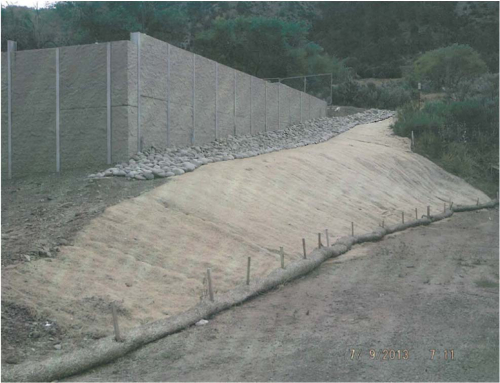
In Sos v. Roaring Fork Transportation Authority, No. 16CA1198 (Nov. 16, 2017), the Colorado Court of Appeals concluded the RFTA possesses the power of eminent domain (and thus could be liable for inverse condemnation), and, more interestingly, that the RFTA relying on Mr. Sos’s property for lateral support for RFTA’s retaining wall was a “damaging.”
Sos has a tire business, and there is a dirt embankment on the portion of his lot adjacent to RFTA’s property, where Sos stored tires and stuff. RFTA built a new bus station