HSBA 2017 Land Use Conference

To supplement your written materials for the 2017 Hawaii Land Use Conference, here are the decisions and other materials which we spoke about this morning at the 2017 Hawaii Land Use Conference:  


Continue Reading Notes And Links From Today’s Hawaii Land Use Conference Session On Reg Takings
The Sixth Circuit’s opinion in Lilly Investments v. City of Rochester, No. 15-2289 (Jan. 5, 2017) is not slated for publication, but its worth a read anyhow because it involves Williamson County ripeness, and the “final decision” rule. Here’s how the court summarized the case:

This case concerns Louis Leonor’s efforts to open a dental clinic in Rochester, Michigan. The clinic stands nearly complete, but in May 2013 Rochester issued a stop-work order preventing Leonor from finishing and operating the clinic, prompted by an expert’s finding that the clinic does not comply with the conditions of a city permit. That same expert found compliance a few months later after Leonor made corrective changes. Nonetheless, Rochester refused to lift the stop-work order or take an up-down vote on the project unless Leonor waived any legal claims and paid a $40,000 fee. Unwilling to comply with those conditions, Leonor filed a complaint

Continue Reading 6th Circuit: City’s “War Of Attrition” Meant Regulatory Takings Claim Ripe For Federal Review

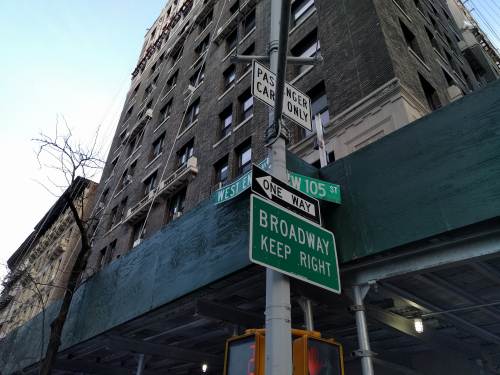
You take the uptown subway, the 1 train, destination the Bronx — the IRT for those of you who still refer to New York City’s subway lines that way — and exit at the 103rd Street Station, just before you cross the unofficial border to Harlem. Walking north on Broadway for a couple of blocks, turning on West 105th Street west towards the Hudson, crossing West End Avenue. 

IMG_20170109_152104 (1)

This is the formerly rural part of the city now known as the Upper West Side, then known as Bloomingdale. The Dutch, who originally named it that back when this was all New Amsterdam, didn’t spell it that way, of course. They wrote Bloemendael, because it reminded them of a flower growing area in Holland. Not too many flowers to be found here these days, unless you continue on towards Riverside Park. 

A quarter of a block down on your right

Continue Reading Takings Pilgrimage, Upper West Side Edition

There have been a lot of takings and takings-related decisions coming out of the Court of Federal Claims lately, and we’ve held off on posting them individually. So to start off your New Year, here is a pop quiz.

Your task: guess whether the CFC held there was a taking, or no taking (answers below):

Case 1: Sheikh Djibouti 

  • Global Freight was a subcontractor providing services to a Navy base in Djibouti. The Navy ordered it to move its vehicles from the Navy base into Djiboutian territory, after which the Djiboutians seized the vehicles. Taking or no taking? 
  • Taking. Or at least not “no taking.” In Global Freight Systems, Co. v. United States, No. 15-378C (Fed. Cl. Dec. 29, 2016), the CFC denied the government’s motion to dismiss for failure to state a claim (which argued that it was the Djiboutians and not the U.S. which took the


Continue Reading Court Of Federal Claims Pop Quiz: Taking Or No Taking?

Following up on our post earlier this week with our amicus brief, here are the remainder of the briefs filed in the Federal Circuit in a case in which the government is asking the court to bypass panel hearing and go straight to en banc review of a Court of Federal Claims opinion which held that the owners of a railroad easement which was converted to a recreational path are owed $900 in just compensation, plus EAJA fees. 

Why all this sturm und drang (as the Federal Circuit once characterized rails-to-trails cases) over 900 bucks?

As we wrote in our earlier post, this is the government’s attempt to wipe out established regulatory takings doctrine and get the Federal Circuit to effectively overrule its prior decisions holding the government liable for physical takings when it prevents reversion of the railroad easement to private owners when those easements are no longer

Continue Reading More Briefs In En Banc “Hail Mary” Asking Fed Cir To Abandon Decades Of Rails-To-Trails Rulings

You rails-to-trails and takings mavens all know the drill in those cases: rail easement stops being used for rail, bikers and runners want a recreational path, the federal Surface Transportation Board issues a Notice of Interim Trail Use (they say “interim” because of the fiction that they are just “railbanking” and someday when we want the iron horse to rule again, the bike path may be converted back into a rail line), which under the U.S. Supreme Court’s ruling in Preseault v. Interstate Commerce Comm’n, 494 U.S. 1 (1990), triggers the obligation of the federal government to pay just compensation for the taking of the property owner’s “reversionary” interest.

In other words, the owners across whose land the railroad easements are located were supposed to get that land back if those easements stopped being used for railroads. When they get converted instead into public recreational trails, there’s a taking. Now

Continue Reading Fed Cir Amicus Brief: Regulatory v. Physical Takes In Rails-To-Trails – No En Banc Review To Overturn Settled Precedent

Heads up for a case to watch being argued next week in the Hawaii Supreme Court.

This is a regulatory takings case that’s been up to the Hawaii appellate courts before (see here). In that opinion, the court of appeals correctly held that a property owner raising a regulatory takings case has no obligation to change the law to ripen her claims. [Note: we filed an amicus brief in that appeal in support of the property owner.] The court vacated the trial court’s dismissal, and remanded the case for trial.

The backstory to that case is long and complex.It involves beachfront property, the relationship between planning and zoning, and what exactly “economically beneficial use” means under the U.S. Supreme Court’s Lucas test for wipeout takings, especially in the context of what instructions that juries are given. [Another note: we represented a neighboring property owner in a similar case that

Continue Reading HAWSCT Considering Wipeout Regulatory Takings: What Is An Economically Beneficial Use?

Siouxfalls

Schliem v. South Dakota, No. 27557 (Dec. 7, 2016) is the third in a series of condemnation cases issued earlier this month by the South Dakota Supreme Court. The first, South Dakota v. Miller, involved impairment of access resulting from a highway project suffered by an owner whose property was taken for the project. The second considered the effect of a quick take. 

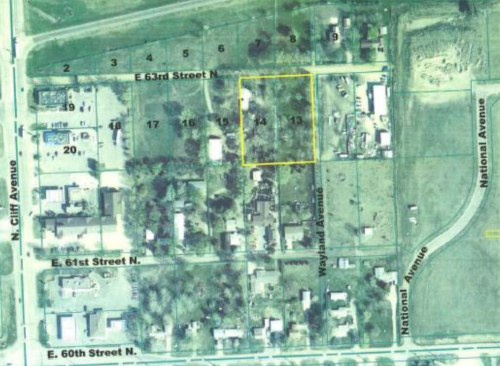
Schliem came after the jury’s verdict in Miller, the first case. The difference here was that the property owners did not have any part of their land taken by the DOT for the project, yet their parcels (13 and 14 above), had, they claimed, lost access from Cliff Avenue. They filed an inverse condemnation claim for the alleged decrease in value of approximately $300,000 due to the changed access. The trial court granted the State summary judgment, concluding that the owners still had alternative

Continue Reading South Dakota Takings Trilogy, Part III: Landowners’ Claim That Nearby Highway Project Impaired Access Was, Like, Their Opinion, Man

HSBA 2017 Land Use Conference

Registration is now open for the 2017 Hawaii Land Use Conference, presented by the Hawaii State Bar Association and the University of Hawaii Law School, at the downtown Honolulu YWCA’s Fuller Hall on January 19-20, 2017. “This 2 day conference is a must attend for any attorney or professional whose practice involves land use and development,” as the registration web site says (we agree).  

Topics include the latest in Transit-Oriented Development, the Thirty Meter Telescope, GMO (including the recent rulings from the Ninth Circuit), and the topic we’ll be presenting, “Takings: Regulatory and Physical.”

The final agenda has not yet been released, but if experience is any guide, Planning Chair Professor David Callies will put together two days of timely topics, presented by distinguished faculty. 

And the cost can’t be beat: $200 for members of the Real Property and Financial Services Section and government lawyers, $300

Continue Reading 2017 Hawaii Land Use Law Conference, January 19-20, 2017