Montana

In Deschner v. State of Montana Dep’t of Highways, No. DA 15-693 (Feb. 28, 2017) the Montana Supreme Court agreed with the plaintiffs, who argued on appeal that the trial court had improperly instructed the jury about the requirements of inverse condemnation law. But the court affirmed the jury’s verdict of no inverse liability, because the jury had concluded that the Department wasn’t negligent, and hadn’t caused the damage to the home.  

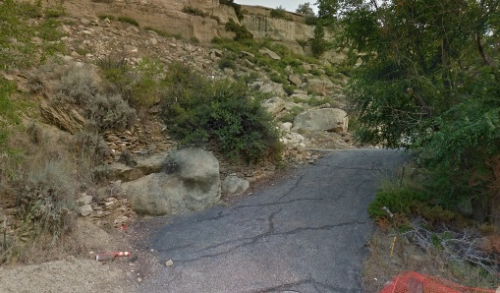
The Department maintained a highway on a bluff that apparently is some kind of attraction. Deschner’s home was at the bottom of the bluff, and one day, a two million pound sandstone slab crashed down on the home and destroyed it. As the photo above shows, the home was a total loss. The owners brought suit, alleging both inverse condemnation and negligence. The jury eventually ruled for the Department on both claims.

The homeowners

Continue Reading Montana: Inverse Condemnation Jury Instructions Were Bad, But No-Harm, No-Foul
West Virginia Dep’t of  Transportation v. Newton, No. 16-0325 (Mar. 7, 2017) was the second time that case had come before the West Virginia Supreme Court. As we noted here (“DOT Should Not Have Mined Privately Owned Limestone Without Owner’s Permission“), the court held that the the Department of Highways should have instituted eminent domain proceedings before it started removing Ms. Newton’s limestone from her land. After she prevailed in her mandamus action, WVDOH did so. 

As a result of the condemnation action, Newton was awarded nearly $1 million in compensation, and $250k in attorneys’ fees for the mandamus and condemnation actions under the Uniform Relocation Act, which is incorporated into West Virginia law. The URA provides for fee shifting when an owner is forced to initiate a claim for compensation.

WVDOH appealed, arguing that hey, we condemned Newton’s property (after she won her mandamus action), so

Continue Reading W Va: Relocation Act Attorneys’ Fees Required Where Owner Sues To Compel Condemnation

Scopellitti’s properties were apparently falling apart, as they were subject to a list of code violations, so the city issued citations, and went through the proscribed nuisance abatement procedures. Scopellitti, it seems, pretty much ignored the violations and eventually the city demolished the properties, an action upheld by the city’s administrative process. Next step, an inverse condemnation action in U.S. District Court. 

These cases are hard enough when you have good facts to back you up, and even harder when you’ve got facts like these. So it shouldn’t be a surprise, should it, that the District Court eventually granted summary judgment, and in Scopellitti v. City of Tampa, No. 15-15394 (Jan. 24, 2017), the Eleventh Circuit affirmed? The dismissal and affirmation wasn’t on substantive grounds, but an application of Williamson County‘s state compensation requirement, since Scopellitti had not sought compensation through a Florida state court inverse condemnation action. 

Scopellitti

Continue Reading 11th Cir: Junky Inverse Condemnation Case Not Ripe

The Sixth Circuit’s majority opinion in Wayside Church v. Van Buren County, No. 15-2463 (Feb. 10, 2017) isn’t all that exciting — after all, it was a takings case brought in federal court, and you know what that means: Williamson County — but do give it a read. The facts are somewhat unusual, even if the court’s ultimate conclusion is not.

It involved the intricacies of Michigan’s General Property Tax Act, a statute which allows municipalities to the foreclose on properties that are delinquent in paying property taxes. The municipalities are allowed to auction off the properties and keep the money, even if the auction proceeds exceed the delinquent taxes. That’s what happened here.

Wayside didn’t pay its property taxes, the County foreclosed, obtained fee simple title, and auctioned the property. The sales price of $206,000 exceeded the minimum bid price, which had been calculated by adding up the back

Continue Reading 6th Circuit: Michigan Statute Allows Recovery Of Money, So Takings Claim Not Ripe For Federal Court

Here’s an article, recently published by the Urban Lawyer (the law review produced by our ABA section, the Section of State and Local Government Law), with our take on the most interesting and important eminent domain and takings rulings from the past year. 

Many of the cases discussed will be familiar to regular readers, but here it is in one place, and in print. 

Recent Developments in Eminent Domain, 48 Urb. Lawyer 939 (2016)

Continue Reading New Article: Recent Developments In Eminent Domain

20151204_140514

We’ve spent a good portion of the last two weeks at conferences discussing the regulatory takings case now pending at the U.S. Supreme Court, Murr v. Wisconsin, No. 15-214.

The biggest question most had was why the Court had not scheduled oral arguments. There was a lot of speculation and gossip about the Chief Justice perhaps holding off on OA because the Court was one Justice short. Recall that cert was granted, but shortly thereafter Justice Scalia died, leading to speculation that there was not a clear five-Justice consensus for how to analyze the issues on the eight-Justice Court. But no concrete answers.  

Well, maybe they heard all the chatter over at 1 First Street NE, because on Friday, the Court issued this argument calendar, and lo and behold, look what’s on calendar for Monday, March 20, 2017.

The questions remain unanswered: Will the Court have

Continue Reading Supreme Court (Finally) Sets Arguments In Reg Takings Denominator Case (Murr v. Wisconsin)

Bush’s trees had leafy spurge. “Hey,” said the Weed and Pest Control District, “we’ve got this herbicide stuff. How about we spray your trees free of charge? That will get rid of the leafy spurge.”

“Sure,” responded Bush.

Problem was the herbicide not only killed the leafy spurge. It (allegedly) killed some of the trees. The District’s investigation determined the spraying wasn’t negligent, but that the District hadn’t followed the herbicide label warnings. 

Bush filed a claim with the District, but received no response. Tired of waiting, it filed an inverse condemnation action in state court. 

The Wyoming Supreme Court agreed with the trial court that the inverse case wasn’t ripe.

In Bush Land Dev. Co. v. Crook County Weed & Pest Control Dist., No. S-16-0149 (Feb. 3, 2017), the court concluded Bush had an obligation to exhaust administrative remedies. A Wyoming statute, you see, provides that

Continue Reading Wyoming: Property Owner Claiming Inverse Condemnation For Spraying/Killing His Trees Must Exhaust Admin Remedy First

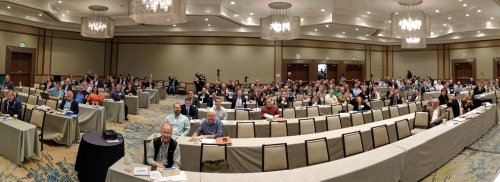
When we previewed the 2017 ALI-CLE Eminent Domain & Land Valuation Litigation Conference while we were getting buried in the snow a couple of weeks ago, we promised there would be better weather in San Diego than much of the country was then experiencing. As you can see, we delivered.

We — and by “we” I mean the faculty, the ALI-CLE staff, and the record number of attendees who came to San Diego — also delivered on a really great conference. See our posts on several of the presentations here, here, here, and here for a flavor.

We also announced that the date and location for the 2018 Conference has been set, and the hotel and site have been booked:

2018 ALI-CLE
Eminent Domain & Land Valuation Litigation Conference

Francis Marion Hotel
Charleston, South Carolina
January 25-27, 2018

Stay tuned for details. Send your ideas for

Continue Reading 2017 ALI-CLE Eminent Domain Conference Wrap, 2018 Venue Announcement

IMG_20170127_092611 - IMG_20170127_092616

Today, in addition to listening to sessions on Ethics, jury presentations, and expert witnesses, we presented (along with Dave Breemer of Pacific Legal Foundation) a session on “Takings and the Police Power.” Here are the links to the cases and articles I discussed in my portion of the presentation: 


Continue Reading Links & Materials From Day 2 Of ALI-CLE Eminent Domain And Land Valuation Litigation Conference, San Diego

IMG_20170126_133958

Here are the links and references to the cases we spoke about today at our opening session on the national trends in eminent domain law at the 2017 ALI-CLE Eminent Domain and Land Valuation Litigation Conference in San Diego. 

We again have a record attendance, and a good number of new attendees. If you aren’t here now, we’re sorry you didn’t make it. But fear not: ALI-CLE has already set the date and location for the 2018 Conference: save the date on your calendars now — January 25-27, 2018, Charleston, South Carolina, at the Francis Marion Hotel. 


Continue Reading Day 1, 2017 ALI-CLE Eminent Domain And Land Valuation Litigation Conference, San Diego