All seemed to be going well for the property owners in a Florida takings case. They obtained a satisfactory compensation judgment for the taking of their healthy citrus trees (yes, this is that case). And because Florida’s Constitution requires “full” compensation, they were also entitled to attorneys’ fees and costs. $13 million in compensation, nearly $1 million in fees. Took a while, but so far, so good.

That’s when the Florida Department of Agriculture really dug its heels in. It acknowledged it was obligated to pay compensation, but it simply refused to do so. It didn’t make a request to the legislature to appropriate money to satisfy the judgment, and claimed it has no obligation to do so. The legal equivalent of a middle finger at both the courts and Florida citizens:

Here, as discussed previously, the Department takes the position that it will make no payment of the
Continue Reading Florida Dep’t of Ag’s Middle Finger To The Courts And Property Owners: We Were Ordered To Pay Full Compensation…But We’re Not Going To

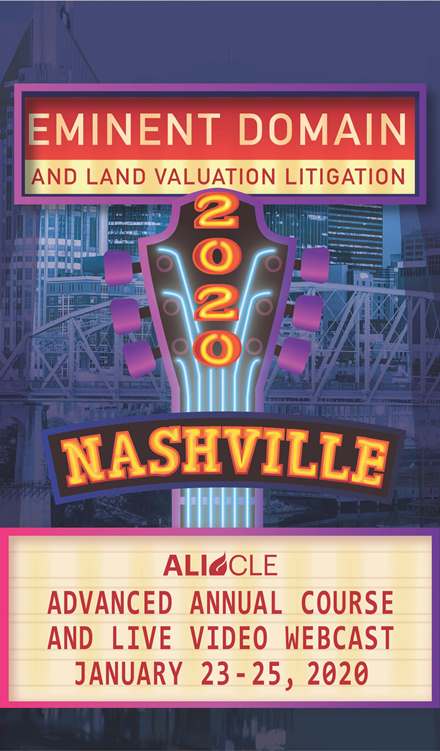
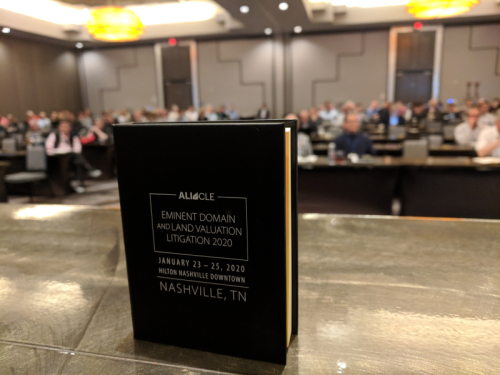
Registration underway, so come join us! Agenda full of hot topics in takings and appraisal law! The best national faculty! Renew friendships, and make new colleagues! And Nashville! 

Download the brochure and make your plans for January. (Don’t wait, we’ve sold out the past three years.)Continue Reading Register Now! ALI-CLE Eminent Domain And Land Valuation Litigation Conference (Nashville, Jan 23-25, 2020)

We read the Nebraska Court of Appeals’ opinion in Russell v. Franklin County, No. A-18-827 (Oct. 15, 2019), twice, just to be sure we were understanding the holding and rationale correctly. Apparently we were: the court held that when the State (inadvertently) takes property — here, the County highway maintenance department entered the plaintiffs’ rural undeveloped land with permission to cut and remove certain trees, but then went to the wrong place and cut the wrong trees — the only way to measure damages for the taking of the trees is to value the land with the trees, and the land without the trees. In this case, a grand total of $200. 

This case wasn’t a fight about whether the County had taken property. It had, and it admitted its inverse condemnation liability for just compensation. The County’s appraiser used this method:

In his analysis, Gerdes used comparable market

Continue Reading Apparently, Trees Are Not Property In Nebraska

6a00d83451707369e2022ad3b86fce200d-800wi

You overwhelmingly asked for Nashville, and we’re bringing it to you!

Get ready, and hold your place now: here’s the list of programs and speakers for the 36th Annual ALI-CLE Eminent Domain and Land Valuation Litigation Conference, to be held at the Downtown Nashville Hilton, January 23,- 25, 2020. Two-and-a-half days with top-notch national faculty (lawyers from both sides, judges, legal scholars, appraisers, relocation experts, and others).  

Early registration and group rates are available now

Here are just some of the programs:

  • Featured Presentation: Property Rights as Civil Rights: Seeking Justice Though the Fourth and Fifth Amendments. Hon. Jonathan Apgar, Jamila Johnson, Alan Ackerman. Moderator: Leslie Fields.
  • Making Sense of the New Rules After Knick v. Township of Scott: Where Do I Go, What Do I Do? David Breemer, Smitha Chintamaneni, Professor Bethany Berger. Moderator: Professor Steven Eagle.
  • When A River Runs Thought It: Water Rights and


Continue Reading Here’s The Agenda And Faculty For The 2020 ALI-CLE Eminent Domain And Land Valuation Litigation Conference, Nashville, Jan 23-25, 2020

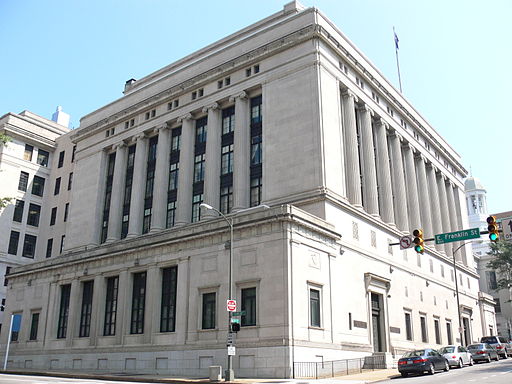
SupremeCourtofVirginiaBuilding

We sometimes assume that everyone gets that the point of an eminent domain valuation trial is to try to establish the price the real-world market of buyers and sellers would have arrived on for the property being taken had the transaction been voluntary. We know it is all hypothetical because this market didn’t actually exist, and the taking itself isn’t a market transaction. In fact, a taking is pretty much the opposite of a market transaction. In other words, you’re trying to recreate a market that did not in fact exist. 

To do so, you try to step into the shoes of a potential buyer of the property. What would they look at when trying to come up with a price? Would they limit themselves to the property’s present use? Maybe. But depending on the circumstances, they also might think its worth paying more than the present use for the

Continue Reading Virginia SCT: Reasonable Probability Of Rezoning Is Something The Jury Should Consider

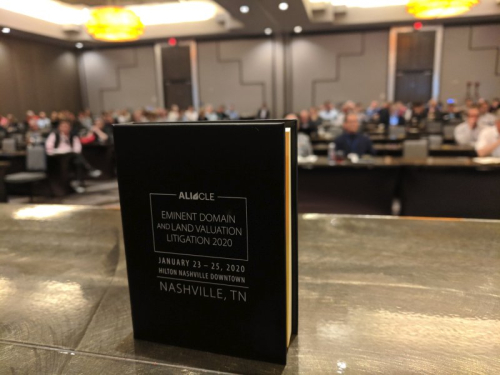
ALI Nashville 2020

The final agenda and faculty list will soon be officially published, but we wanted to give you a preview of what is in store at the ALI-CLE Eminent Domain and Land Valuation Litigation Conference, January 23-25, 2020, at the Nashville Hilton (downtown, just a few steps away from everything that Nashville has to offer). 

Don’t miss out: in recent years, we’ve been at-or-near capacity, and the conference hotel has even sold out a couple of times. Visit the ALI-CLE website to register and hold your space

Here are some of the things we’ll be discussing: 

  • Making Sense of the New Rules After Knick v. Township of Scott: Where Do I Go, What Do I Do?
  • The Missing Link in Valuing Fixtures
  • When a River Runs Through it: Water Rights and Takings
  • Responding to Project Changes: Valuation When Government Action is Ongoing
  • Property Rights as Civil Rights: Seeking Justice Through


Continue Reading Get Ready: The 2020 ALI-CLE Eminent Domain And Land Valuation Litigation Conference Agenda Coming Soon

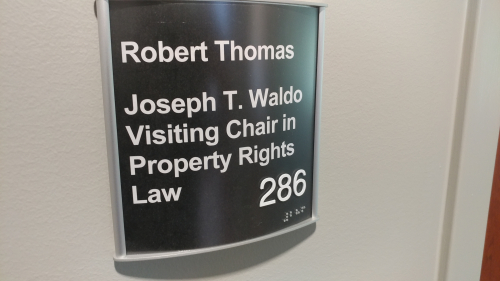
20180823_102346_HDR

We’re about to get underway with the fall semester at William and Mary Law School, where we’re again teaching an upper-division course, Eminent Domain and Property Rights

We’ve more than doubled the size of last year’s enrollment, so it looks like the word is getting out. We cover not only eminent domain and just compensation, but takings (yes, we have a lot of new materials to cover there), civil forfeiture, a small bit of crossover with land use, local government, and related, property rights as civil rights, how property law is discussed in the public sphere, due process, and how to lawyer up these cases. And in early October, the opportunity to have some of the nation’s best property law scholars “guest lecture” during the Brigham-Kanner Property Rights Conference. Here’s the official description:

Property rights and the sovereign’s power of eminent domain have been essential components of

Continue Reading Law 608: Eminent Domain And Property Rights – Season 2

Quot

Don’t worry, you didn’t miss the U.S. Supreme Court issuing a major eminent domain case. Today’s post is about a decidedly older decision, Danforth v. United States, 308 U.S. 271 (1939). 

The reason we’re posting this decision now, eighty years after it was issued, is that a colleague recently passed on a note with a cite to the case. So we dusted off the opinion and read it (again). And when we did, this quote stuck out:

“Condemnation is a means by which the sovereign may find out what any piece of property will cost.”

Id. at 284.

The case involved a straight taking (not quick take). The question was when the “taking” actually takes place in such a case, and whether interest is due if the condemnor pays 100% of the adjudicated compensation when it is owed. The Court held:

Unless a taking has occurred previously in actuality

Continue Reading “Condemnation is a means by which the sovereign may find out what any piece of property will cost.”

Here is the motion asking the Hawaii Supreme Court for leave to file an amicus curiae brief (and the proposed brief) we filed earlier today in a case we’ve been following

The question is the applicable statute of limitations for regulatory takings claims under the Hawaii Constitution’s “takings or damagings” clause. The case started out in a Hawaii state court, was removed to the U.S. District Court by the State Land Use Commission. The district court dismissed the state takings claim under the statute of limitations. 

Hawaii has not adopted a statute of limitations expressly for takings or inverse condemnation claims. Thus, the question is what is the closest analogue claim. If there isn’t one, Hawaii has a “catch all” statute (six years) for civil claims. When the case reached the Ninth Circuit, that court certified the state law question limitations to the Hawaii Supreme Court. 

Our brief argues the

Continue Reading Amicus Brief: State Takings Claims Are Constitutional (Not Torts); Adverse Possession Statute Of Limitations Is Nearest Analogue