Recently, we requested crowdsourcing of this year’s “come to the ALI-CLE Eminent Domain Conference video.” Instead of doing the video ourselves, we asked folks to “please send a short clip of you and/or your colleagues telling us why you think the Eminent Domain and Land Valuation Litigation Conference is the place to be in January. Humor welcome, but not required.”

Our friend and colleague, St. Louis’ Paul Henry, has answered the call, admirably. Paul, as you may remember, is famous for his presentation a couple of years ago at the Conference about “Everything About Eminent Domain I Need To Know I Learned From Star Trek.” Which he gave in a Starfleet captain’s uniform. Brave man. Readers know that we dig Star Trek. But we are not that brave, so bravo, Paul.  

See if you don’t agree that Paul has now raised the video bar. 
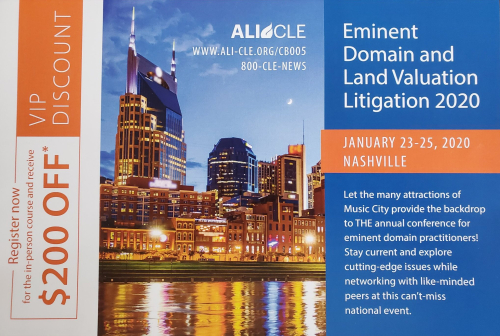
Continue Reading Capt Henry Orders You To Boldly Go To The 2020 ALI-CLE Eminent Domain And Land Valuation Litigation Conference, Nashville, Jan. 23-25, 2020

There’s a bit of Inception-level dream-within-a-dream stuff in the U.S. Court of Appeals for the Third Circuit’s opinion in Tennessee Gas Pipeline Co. LLC v. Permanent Easement for 7.053 Acres, No. 17-3700 (July 23, 2019), because the court held in takings by a private condemnor exercising the delegated power of eminent domain under the federal Natural Gas Act, the governing rules about just compensation are provided by federal common law. But “[b]ecause federal law does not supply a rule of decision on this precise issue, we must fill the void with a common law remedy. In doing so, we opt to incorporate state law as the federal standard.” Slip op. at 3.  

So the applicable federal common law of just compensation incorporates state law. Got it. 

Here, the fight was over “consequential damages” which the property owner incurred as a result of the pipeline taking, such as professional fees

Continue Reading In Federal Natural Gas Act Takings By Private Condemnors, Just Compensation Is Determined By State Law (Incorporated Into Federal Common Law)

IMG_20190719_102348

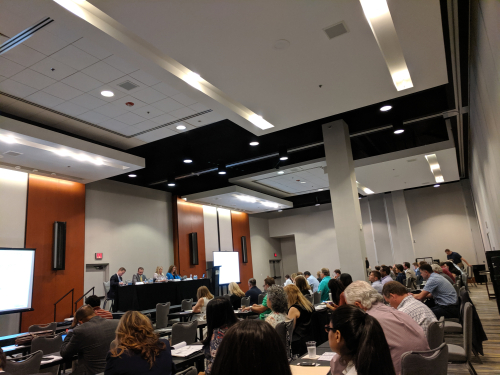
I am grateful that planning chairs Justin Hodge and Jeremy Baker invited me to their conference. A room full of experts. Here are the links to the cases and other items I spoke about:


Continue Reading Cases And Links From Today’s Eminent Domain And Pipelines Conference (Houston)

We were all set to offer our deep analysis of the California Court of Appeal’s recent (published) opinion in Three Aguila, Inc. v. Century Law Group, LLP, No. B289452 (July 2, 2019), when our colleagues at the California Eminent Domain Report blog beat us to it. 

In “Court Decision Serves as Important Reminder on Crafting Lease Condemnation Provisions,” Brad Kuhn writes about a case in which the condemnation clause in a lease provided that the landlord would be entitled to “[a]ll awards for the taking” (subject to the usual/common limitations). 

In California eminent domain cases, businesses may recover goodwill by statute. When the premises were condemned, the landlord invoked the condemnation clause and asserted that it, not the tenant, was entitled to recover the goodwill. Brad writes:

On appeal, the Court held that the property owner was not entitled to compensation for the business’ goodwill. While parties

Continue Reading Cal App: Business Goodwill “is compensable separate and apart from the parties’ interests in the property taken.”

Restatement cover page

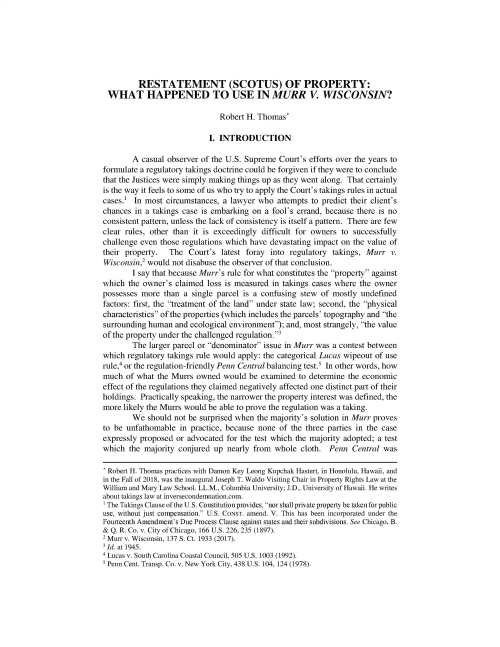
Here’s the article, recently published in the UMKC Law Review with thoughts on Murr v. Wisconsin, the case about the “denominator” issue in regulatory takings cases.

We won’t get into it in detail (if you are interested, you can read the article yourself), except to say that therein we offer views of what test the Court should have adopted to analyze whether the Murr family’s two parcels should be considered as one parcel for purposes of whether they were denied productive use of their property by Wisconsin’s environmental regulations. As you recall the Justice Kennedy authored Murr majority adopted a test with a mishmash of factors (what we waggishly labeled his “social justice warrior” test). The article argues that the Court should have instead applied the old “three unities” test from larger parcel questions in eminent domain. That test focuses on the owner’s joint use of the property. 

Continue Reading New Article: Restatement (SCOTUS) of Property – What Happened to Use in Murr v. Wisconsin?

IMG_20190608_141839_1

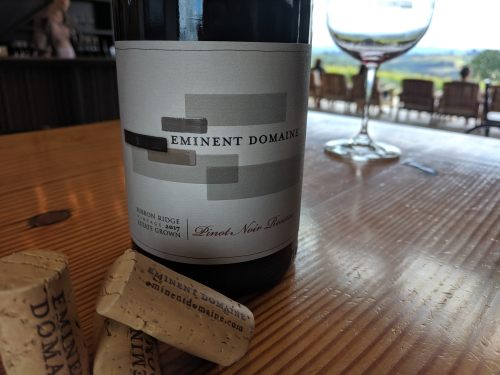
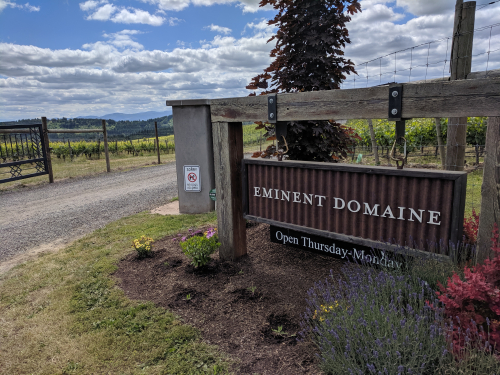
The title of this post isn’t poetic or figurative (like the windmills of your mind), it’s literal: for a field trip after the recent Oregon Eminent Domain Conference, we paid a visit to a nearby winery which — given its name, “Eminent Domaine” — we naturally could not resist. Besides, we already like their wines

The winery and estate vineyards are only a short drive from downtown Portland. Go past suburban Tigard (of Dolan v. City of Tigard infamy). Beyond the metro urban growth boundary. Avoid the guy living in an old jetliner parked in the woods.

Turn off the main road. 

IMG_20190608_160230

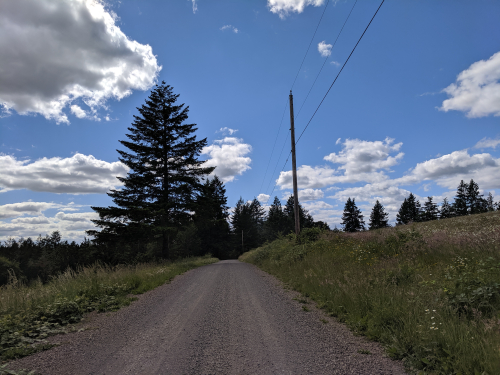
After leaving the pavement, you’ll end up on a gravel road which continues on just long enough for you to question whether you’ve perhaps strayed off the correct path. 

IMG_20190608_152129

You haven’t. You’ve just entered the Ribbon Ridge AVA, and in

Continue Reading A Detour To The Vineyards Of Eminent Domaine

The details are yet to be posted on the web, but mark your calendars now for an upcoming (two weeks from today, on Friday, June 21, 2019) Federalist Society teleforum, produced by the Environmental and Property Rights Practice Group, about an issue that we’ve been following that is the subject of at least three recent cert petitions (two denied, one on the way): whether federal courts can issue preliminary injunctions in takings under the Natural Gas Act which allow private pipeline condemnors to obtain immediate possession of property, even though Congress has withheld the federal quick take power in the NGA.

Stay tuned for the details which will be posted soon. Our speakers will be Chris Johns (Texas) who is preparing the forthcoming petition, and Jeffrey Simmons (Wisconsin), who will present the condemnors’ viewpoint.  We’ll be moderating the program. 

Details on the way. Continue Reading Mark Your Calendars: Federalist Society Teleforum On Preliminary Injunctions In Natural Gas Act Takings: Is “Take Now, Pay Later” Unconstitutional? (Friday, June 21, 2019)

0606191053_HDR

Here are the links to the cases which were not in your materials. Theme of the day: amateurs! 

Our thanks to colleagues Jill Gelineau and Paul Sundermier for asking us to present. It was good to see our Oregon friends again. 


Continue Reading Links From Today’s Portland Eminent Domain Conference

In Keeton v. State of Alaska, No. 7366 (May 24, 2019), the Alaska Supreme Court held that a property owner is entitled to interest only on the “amount awarded” — the difference between the quick-take deposit and the eventual final judgment of compensation — and not on that amount plus the statutory attorneys’ fees which the court awarded.

You might have guessed how this one was going to play out, given the usual approach of not including attorneys’ fees and costs within the meaning of just compensation, and the purpose of “interest” being to compensate for the delay in payment of comp (not fees) after the condemnor has actually taken the property. But let’s go through the steps.

Quick take, deposit $15k. Final award of compensation, $24k. Fees of $47k, and costs of $32k awarded to the owner by statute. Also by statute, the court awarded prejudgment interest “on

Continue Reading Alaska: You Only Get Interest On Compensation, Not On Attorneys’ Fees