Yesterday, on behalf of our Owners’ Counsel of America colleagues, we filed this request asking the U.S. Court of Appeals to consider our amicus brief in support of the property owners in a natural gas act pipeline case.

The issue is what evidence the trier of fact in a compensation trial may consider about “stigma” damages resulting from a natural gas pipeline being located next to the remainder parcel. 

Rather than paraphrase the brief, here’s the summary of the argument: 

UGI Sunbury, LLC (“UGI”) condemned portions of privately-owned land to build its natural gas pipeline. Natural gas pipelines have made headlines nationwide recently due to safety concerns. In takings such as these, where only a portion of a parcel is condemned, severance damages are a fundamental component of just compensation, awarded for the injury posed to the remainder of the landowner’s property as a result of the taking of a

Continue Reading CA3 Amicus Brief: “Paired Sales” Isn’t Only Way To Prove Market Stigma Damages
The Arizona Court of Appeals’ opinion in Arizona Electrical Power Cooperative v. DJL 2007 LLC, No. 1 CA-CV 16-0097 (May 9, 2019), is about the date of valuation in eminent domain, but beyond that is interesting to us because it sheds light on a case we’ve been following about natural gas pipelines and the use of the federal courts’ injunction power to effect immediate possession

In the Arizona case, the owner purchased land from the BLM subject to the private electric company’s 30-year easement on which it had installed high-voltage transmission lines. The grant of easement expired in 2011, but the electric company did not remove the lines. In 2014, it instituted an eminent domain action to condemn the easement. 

The trial court rejected the utility’s request for immediate possession. Instead, it granted a preliminary injunction allowing the utility to continue to operate and maintain the transmission lines.

Continue Reading AZ App: Private Utility Does Not Effect A Taking “until after trial and payment”

Here’s the Reply Brief in a case which we’ve been following (and in which we filed this amici brief). This is the one in which landowners are challenging the district court’s issuance of an injunction in a Natural Gas Act taking which allow a private condemnor to obtain immediate possession of the land being condemned even though the Natural Gas Act does not delegate to pipeline condemnors the quick-take power.

The Reply responds to the Brief in Opposition, and argues:

These decisions conflict with the basic structure of eminent domain, which grants condemnors the power to buy land by force—not occupy it by federal injunction. The decisions let pipeline companies exercise a formidable power that Congress has not given them. And for landowners in the path of pipeline projects, the decisions create grave burdens to which no other federal condemnee is subjected. Because only this Court can correct

Continue Reading SCOTUS Reply Brief Clears Up Misconception About Eminent Domain Actions

As part of a federally-funded highway project, the WV DOT took a portion of parcels belonging to several property owners. The partial takings ended up landlocking one tract. So the DOT proposed building an access road to that parcel. The owners didn’t think this was the best idea, because “maintaining a road in that area would be unreasonably costly” because the area is steep and in a slide area. 

The owners counterclaimed, seeking an order to compel the DOT to take this landlocked track as an “uneconomic remnant” under the Uniform Relocation Act, which defines that term as “a parcel of real property in which the owner is left with an interest after the partial acquisition of the owner’s property and which the head of the Federal agency concerned has determined has little or no value or utility to the owner.” 42 U.S.C. § 4651(9).

The trial court concluded the

Continue Reading W Va: Decision To Take “Uneconomic Remnant” Lies Solely With Agency (Not The Owner, Not The Court)

Here’s the Brief in Opposition, in Like v. Transcontinental Gas Pipe Line Co., LLC, No. 18-1206 (Apr. 17, 2019), the case which we’ve been following (and in which we filed this amici brief). 

This is the case in which landowners are challenging the district court’s issuance of an injunction in a Natural Gas Act taking which allow a private condemnor to obtain immediate possession of the land being condemned even though the Natural Gas Act does not delegate to pipeline condemnors the quick-take power.

Here’s the Question Presented as framed by the pipeline: 

Whether the decision of the court below affirming the issuance of an injunction granting possession of specific rights of way on each of the Petitioners’ properties by the district court under the Natural Gas Act, after a two day hearing, and after the district court granted partial summary judgment and determined that Transco had

Continue Reading BIO In “Take-First-Pay-Later” Natural Gas Act Condemnation

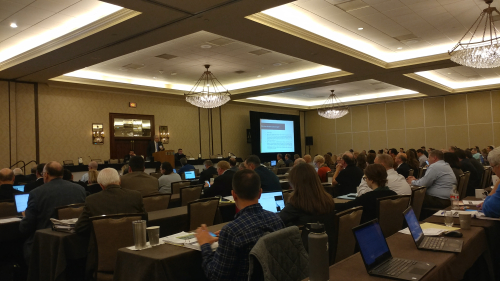
0401191044b_HDR

Great crowd today in Austin for CLE International’s Eminent Domain seminar, co-chaired by our colleagues Chris Clough, Sejin Brooks, and Christopher Oddo. We spoke about “National Trends and Developing Issues in Eminent Domain.” 

Here are the cases I referred to which are not included in your written materials:


Continue Reading Materials And Links From Today’s Austin Eminent Domain CLE

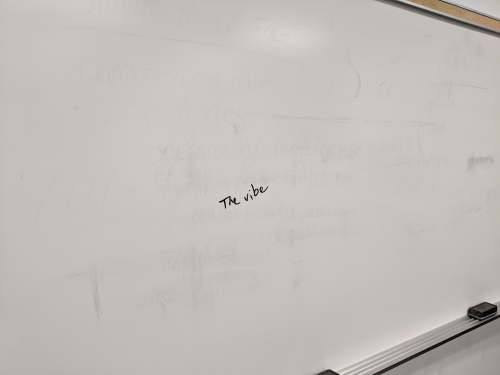
IMG_20190313_211723
After-class graffiti. My students know me too well.

As anyone who follows this blog consistently must understand by now, perhaps our favorite courtroom scene in a law-related movie is The Castle‘s closing argument by Dennis Denuto, Esq.

In summing up, it’s … the [Australian] constitution, it’s Mabo, it’s justice, it’s law, it’s the vibe, and … ah …  no, that’s it, it’s the vibe.

I rest my case.

The “Mabo” case he refers to is the famous decision by the High Court of Australia, Mabo v. Queensland (No. 2), (1992) 175 CLR 1 (1992), in which the court held that Australia was not terra nullius (land owned by no one) when westerners arrived, but that the aboriginal people recognized the concept of property ownership and therefore possessed certain property rights.  

As part of learning about Eminent Domain and Property Rights in William and Mary Law School’s Law

Continue Reading It’s The Vibe Of It: High Court Of Australia Confirms Compensation Due For Loss Of Native Land Title

Header image LUI 2019

Come join us at the 33rd Annual Land Use Institute, in Baltimore, Maryland, April 11-12, 2019.

As the brochure notes:

This Annual Land Use Institute program is designed for attorneys, professional planners, and government officials involved in land use planning, zoning, permitting, property development, conservation and environmental protection, and related litigation. It not only addresses and analyzes the state-of-the-art efforts by government to manage land use and development, but also presents the key issues faced by property owners and developers in obtaining necessary governmental approvals. In addition, the entire approach of the program is to provide practice pointers that give immediate “take home value” by focusing on topics relevant to the average practice of the attendee.

The keynote will be delivered by Dennis Archer, former mayor of Detroit (and former Justice of the Michigan Supreme Court, and former President of the ABA), speaking about “Detroit’s New GM Plant from

Continue Reading 33rd Annual Land Use Institute: Baltimore April 11-12, 2019

Here’s the cert petition we’ve been waiting to drop.

If you follow this blog, you know we are all over the issue of the quick-take-by-injunction scheme that private condemnors have cooked up, and which a majority of federal courts go along with. 

Here’s the issue: can a private condemnor exercising the delegated eminent domain power under the Natural Gas Act may obtain prejudgment possession of the property to be condemned by way of a preliminary injunction, when Congress has not delegated the ability to obtain prejudgment possession? 

Knowing nothing else, you might think the obvious answer was “no.” When Congress doesn’t delegate the power to obtain prejudgment possession, the courts can’t grant prejudgment possession. But a host of federal appeals courts have held otherwise. Recently, the Fourth, Sixth, and Eleventh Circuits have joined the Third Circuit in allowing a NGA condemnor to obtain prejudgment possession of property, even

Continue Reading New Cert Petition: No “Take-First-Pay-Later” In Natural Gas Act Condemnations

Our colleague Dwight Merriam was recently interviewed on the radio about issues surrounding the existing and proposed wall and fence along portions of the southern border.

If you want to get educated on this issue, here’s the quick way to do it.

Dwight discusses funding, emergency powers, the Declaration of Taking Act, and other topics. You may not be practicing where border wall issues are among your cases. But trust us: even so, if you tell people you are an eminent domain lawyer at a cocktail party, the first thing someone is going to ask is what your thoughts are on the border wall. Doesn’t matter if you are in a state far from the border. And if you aren’t familiar with the border wall issues and able to chat about them, they will conclude you are a bad eminent domain lawyer. So get educated! Here’s your chance. 

Dwight has

Continue Reading Dwight Merriam Interviewed On Border Wall Legal Issues