Here’s the Brief in Opposition in Nies v. Town of Emerald Isle, No. 16-1305 (Aug. 11, 2017), the case in which North Carolina property owners are asking the U.S. Supreme Court (cert petition here) to review a N.C. Court of Appeals decision which involves wet and dry sand beaches, the location of the public trust boundary, and other favorite topics.

The case arose because the N.C. Legislature by statute moved the public trust” shoreline landward, and allowed the public to use what had formerly been private beach.  We filed an amicus brief in the case, supporting the property owners. 

We’ll also post the reply brief when it is filed. Stay tuned. 

Brief in Opposition, Nies v. Town of Emerald Isle, No. 16-1305 (Aug. 11, 2017) 

Continue Reading Brief In Opposition In Public Trust Takings Case

Check this out, the latest cert petition from the Institute for Justice (Kelo), in a case we’ve been following.

This one asks a question that has been kicking around in the lower courts for a long time, and has long bothered we who represent property owners who have to eat the often-massive losses to a business which come about as a direct result of eminent domain (and which condemning agencies and the courts almost invariably determine are “consequential” losses, not compensable.

The U.S. Supreme Court, in Kimball Laundry Co. v. United States, 338 U.S. 1 (1949), held that “an exercise of the power of eminent domain which has the inevitable effect of depriving the owner of the going-concern value of his business is a compensable ‘taking’ of property,” and you would think that would take care of the question of whether such losses are part of just

Continue Reading New Cert Petition: Does The Fifth Amendment Require Compensation For Destroying Business In A Taking?

IMG_20170726_170437

Here are links to the cases and other materials which I mentioned today in our session at the Transportation Research Board‘s 56th Annual Workshop on Transportation Law in Salt Lake City:


Continue Reading Links And Materials From Today’s TRB Eminent Domain Session

In Brott v. United States, 959 F.3d 425 (6th Cir. May 31, 2017), a Sixth Circuit panel — after acknowledging the Fifth Amendment right to just compensation is “self-executing” — held that it really wasn’t: the federal government can take private property but the owner can only recover compensation if Congress agrees to allow them to do so. Thus, takings plaintiffs must try their cases in the Article I Court of Federal Claims, and do not merit a jury trial in an Article III court.

The property owners/plaintiffs have now sought en banc review:

After the panel issued its opinion, the Supreme Court granted certiorari in Oil States Energy Services, LLC v. Greene’s Energy Group, LLC, 639 Fed. Appx. 639 (2016), cert. granted, 2017 WL 2507340 (June 12, 2017). In Oil States the Supreme Court will decide “[w]hether inter partes review violates Article III or the Seventh Amendment

Continue Reading Property Owners (And Amici) To Sixth Circuit: En Banc Review: “Self-Executing” Compensation Clause Means Congress Doesn’t Need To Consent

ALI Murr Title Card

One last reminder: next Tuesday, July 25, 2017 at 2:00 pm Eastern, is “The U.S. Supreme Court and Property Rights: The ‘Larger Parcel” Issue and the Future of Regulatory Takings,” ALI-CLE’s first look at the U.S. Supreme Court’s recent decision on the “larger parcel” or denominator issue in regulatory takings cases where the plaintiff owns more than a single parcel, Murr v. Wisconsin.

Please come and join Sara BeachyMichael BergerSteven Eagle, and John Groen for lively and informative analysis and discussion. I will be introducing and moderating the panel. 

Details, including registration and CLE credit information here. Registration is $199, or, if you have attended one of our in-person Eminent Domain and Land Valuation Conferences in the past (the 2018 Conference in set for Charleston, SC, January 25-27, 2018, at the Francis Marion Hotel, stay tuned here for details shortly)

Continue Reading ALI-CLE: The Larger Parcel Issue and the Future of Regulatory Takings (July 25, 2017)

An unpublished opinion from the U.S. Court of Appeals for the Fourth Circuit in a pipeline case from Virginia. But even though it is not precedent, we’re covering it anyway because it raises important issues.  

In Columbia Gas Transmission, LLC v. 76 Acres, No. 15-2547 (July 13, 2017), Columbia possessed the delegated power of eminent domain. After obtaining the green light from the Federal Energy Regulatory Commission, Columbia instituted an action in federal court under the Natural Gas Act to take easements from several Virginia landowners for a pipeline. Columbia obtained immediate possession of the property (even though there is no provision in the Natural Gas Act for immediate possession, prior to the payment of compensation). 

At trial, the property owners over Columbia’s objection, presented evidence to the jury that what Columbia did on the ground wasn’t the same as what it had formally condemned: 

Columbia sought to

Continue Reading More Gas From The Fourth Circuit: Federal Jury Can’t Determine Pipeline Company Actually Took More Property Than It Condemned

Escaping gas isn’t enough, it has to be captured.

Yes, a clickbaity title, but this one is about just compensation, so please. You can create your own puns for this case, Northern Natural Gas Co. v. L.D. Drilling Defendants, No. 15-3272 (July 11, 2017), in which the U.S. Court of Appeals for the Tenth Circuit considered things like natural gas injections and escapes, companies that can’t control their gas, and the difference between “migrating,” “injected,” and “native” gas. Yeah, baby.  

Northern owned a mostly-depleted underground natural gas field, and when the gas in place ran out, it used the area as a gas storage area. Over time, it noticed that it was pulling out less gas than it was putting in, leading to the conclusion that some of its stored gas was leaking out into nearby fields, owned by others. So it exercised its delegated power of

Continue Reading Condemnor Didn’t Have To Pay For Escaped Gas

There’s a lot of buzz about “what’s next” after Murr v. Wisconsin, and what this case may augur for regulatory takings. There are already quite a few discussions and analysis panels scheduled, including these three in which we’re participating:


Continue Reading Your Post-Murr Reading List

Here’s the opinion of the Connecticut Supreme Court in a case we’ve been following, Barton v. City of Norwalk, No. SC 19671 (July 4, 2017). 

As we noted in our earlier post where we detailed the facts, the case involved two non-contiguous parcels, one of which was used for a parking lot which the City later condemned to build a police station. The parking lot had provided parking for the commercial building on the other parcel (the City had required the owner to build the lot, after the City curtailed street parking). In the eminent domain case taking the parking lot, the owner claimed damage to the commercial operation and lot, but the court prohibited evidence of that damage.

So the owner instituted a separate inverse condemnation claim, seeking recovery for damage to the commercial operation and lot caused by the loss of parking across the

Continue Reading The Connecticut Supreme Court “Gets” The Larger Parcel Issue: It’s About Joint Use Of The Two Parcels

IMG_0006

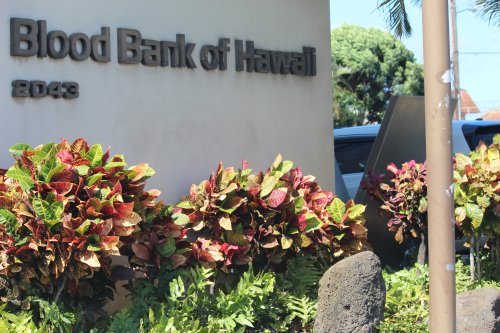
Here’s the Honolulu Star-Advertiser latest story on the Honolulu rail authority’s condemnation of the property of Blood Bank of Hawaii, “Blood bank sues over city push to take land for rail.” 

The state’s lone blood supplier is pushing back in court against the city’s efforts to acquire the land fronting its Dillingham Boulevard offices for rail.

In a countersuit filed Thursday, the Blood Bank of Hawaii accuses the Honolulu Authority for Rapid Transportation of acting “in bad faith” and “recklessly subjecting Hawaii’s blood supply to grave but unnecessary risks.”

It further questions the benefit of taking the parcel when the city still lacks the funds to build the full 20-mile line to Ala Moana Center.

Full details here, in our Answer and Counterclaim. 

Blood Bank Counterclaim by Honolulu Star-Advertiser on Scribd

Continue Reading Not Satisfied With Merely Taking Land For Rail, Now The City Wants Blood