Eminent Domain Las Vegas print brochure--final - Copy

Do you really need an excuse to visit Las Vegas in the interregnum between its brutally hot summers and the winter high season? Probably not.

But if so, here’s your opportunity. Plus, you can earn CLE credit.

CLE International is putting on “Eminent Domain 2016: Current and Emerging Issues for Litigators” at Caesar’s Palace, September 29-30, 2016.

The Planning Chairs for the program, our colleagues Darius Dynkowski, Autumn Waters, and Kermitt Waters, have assembled a great lineup of topics and speakers, including panels on highway projects, power lines, pipeline takings, and municipal takeovers of local utilities. As if to prove the “international” part of its name, the program will also include a session on “Injurious Affection and the Canadian Approach to Damages for Partial Takings” presented by our Toronto colleague Shane RaymanWe’ll kick off the conference, speaking about “Eminent Domain

Continue Reading Eminent Domain Conference, Las Vegas (September 29-30, 2016)
Kauaipark

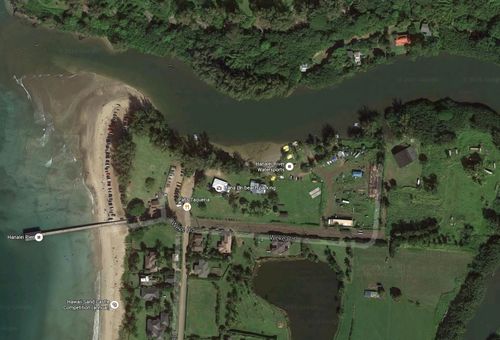
In a case we’ve been following in which the County of Kauai is condemning several Hanalei-area parcels to expand an adjacent public beach park, the Hawaii Supreme Court has accepted certiorari and agreed to review these three questions:

QUESTION NO. 1.: Must two parcels physically abut in order for the jury to consider whether they are part of a larger parcel?

QUESTION NO. 2: Where there are multiple properties being condemned from different owners, does statutory interest on a conditional deposit only accrue after each condemnee establishes an entitlement to its portion of the deposit?

QUESTION NO. 3: Does Haw.Rev.Stat. § 101-19 enable a condemnor to withdraw a portion of its estimate of just compensation after deposit with the Court and after taking possession of the property?

We filed an amici brief on Question 1, arguing that “[t]wo parcels need not abut in order for an eminent domain jury

Continue Reading HAWSCT Agrees To Review Eminent Domain Case: Larger Parcel, Interest, And Reducing The Deposit

This just in, in a case we’ve been following closely.

In City of Perris v. Stemper, No. S2133468 (Aug. 15, 2016), the California Supreme Court held that the judge, and not the jury, determines the validity of a dedication which a condemnor asserts it would impose to get the condemned property “for free” if the owner ever asked it to develop the property to its highest and best use. The case involves whether the city can avoid paying just compensation by showing that it would, in the future, exact from the owners the very same property which the city is condemning. The only way the city wouldn’t require dedication of this property is if the owner continued to use it for agricultural purposes. The second issue which the court considered was the “project influence” rule, and whether the city’s dedication requirement must be ignored in determining just compensation.  

Continue Reading California Supreme Court: In Just Comp Trial, Judge, Not Jury, Determines Reasonable Probability Of Nollan-Dolan Exaction

A short one from the Georgia Court of Appeals.

In Summerour v. City of Marietta, No. A16A0640 (July 8, 2016), the city condemned a grocery store for a recreation center. After multiple attempts to contact the property owner and multiple offers of compensation, the city and the owner finally began the negotiation process, during which Summerour asked the city to produce a summary of its appraiser’s report as required by Georgia statute. The city eventually provided the summary, and its full report. They still could not agree, and the city instituted condemnation.   

The court of appeals’ opinion starts on a good note, reiterating that “private property rights are among ‘the most basic of human rights.'” Slip op. at 7 (quoting William K. Lane III, “Your Raisins or Your Life”: The Harrowing of the Takings Clause in Horne v. U.S. Department of Agriculture, 750 F.3d 1128 (9th Cir.

Continue Reading Ga App: Requirement To Provide Appraisal Summary “Before” Negotiations Means Just That

Last year, we posted about the Brigham-Kanner Conference, the annual meeting at William and Mary Law School where we talk all things property rights and award the Brigham-Kanner Property Rights Prize. (By the way, this year’s conference will be held in The Hague, The Netherlands in October. But more on that soon, in a separate post.)

What we are posting today is a follow-up about Mike Berger’s presentation at the 2015 conference. His article — then only in draft form — is a critique of the theories of the 2015 Brigham-Kanner prizewinner, Harvard lawprof Joseph Singer. Recall that Berger was presented with the prize in 2014 — the first and thus far only practitioner to receive the award — which makes this article even more important.  

Berger’s article is now finalized, and has been published by the Brigham-Kanner Property Rights Conference Journal: “Property, Democracy, &

Continue Reading Must Read: Michael Berger On “Property, Democracy, & The Constitution”

Here’s one we’ve been meaning to post up for a while. Not because it isn’t an important decision, but because other things intervened. 

In State of West Virginia ex rel. West Virginia Dep’t of Transportation v. Burnside, No. 15-1112 (June 13, 2016), the Supreme Court of Appeals of West Virginia held that under the statutory quick-take scheme, the condemnor has the total discretion to determine the amount of the deposit, an estimate of just compensation. In that case, the DOT took land formerly occupied by a service station, which needed some environmental clean up due to old gas and oil storage tanks buried on the land.

The DOT calculated the deposit supporting the quick-take by adding up the overall value of the land, the severance damages to the remainder, and the value of the fixtures and the temporary construction easement, and then subtracting the cost of the clean up which

Continue Reading W Virginia: Govt, Not Judge, Gets To Determine Quick-Take Deposit

Kauaipark

Here’s the latest in that case we told you about a couple of months ago, a published ruling in an eminent domain case from the Hawaii Intermediate Court of Appeals. We wrote that in our view, the court got it really wrong on one of the three issues in the case, whether two parcels which the condemnee alleged he used together could be considered the “larger tract” for purposes of severance damages.

The case involves three parcels on Kauai — one of which is owned by a fellow who has been a thorn in the County’s side — which were condemned by the County for the expansion of a public beach park. The County was taking Parcels 49, 33, and 34. Sheehan owned 49, and HRH, a corporation, owned 33 and 34. Sheehan asserted his use of Parcel 49 stretched across 33, 34, and Area 51 — a portion of

Continue Reading Hawaii Supreme Court Amicus Brief: In Eminent Domain, Parcels Need Not Abut In Order To Be Considered Part Of A Larger Tract

Wilson-road

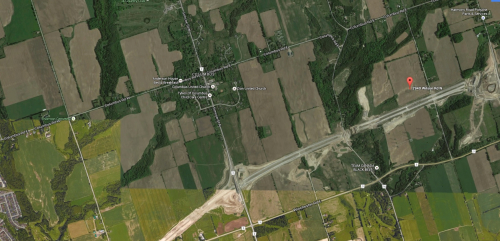
With apologies to Professor Kanner (who regularly features a “Lowball Watch” on his blog), we offer this report of Down v. Ministry of Transportation, No. LC140038 (May 12, 2016), a trial-level property owner victory by our Toronto colleague Shane Rayman (last seen in the pages of this blog winning a great case in the Supreme Court of Canada). We’ve been meaning to post the decision for a while, but got caught up in other things. We probably should have waited at least another couple of days for Canada Day, but oh well.

But before we get into today’s case, we want to digress a bit with this bit of Canadiana. Or at least our one story about that True North strong and free, that played into every one of our preconceptions.

Many years ago, while living in New York City, we got the bright idea one dark

Continue Reading Lowball Watch: That’s A Lot Of Bucks, Even If They’re Canadian Dollars

The power company needed an easement across Hylton’s land for a transmission line. It made him an offer, backed by an appraisal. But that appraisal didn’t account for Hylton’s mineral rights, although it acknowledged that the property did contain two coal deposits, at least according to Hylton.

The parties “signed an agreement granting [the utility] the right to enter Hylton’s property and construct the transmission line.” But the following month, the utility filed an eminent domain action to condemn the easement, which alleged that it had fulfilled its “statutory obligation” and made a “bona fide offer to purchase,” one of the prerequisites to its filing of the condemnation action.  

Not quite, countered Hylton. The offer wasn’t sufficient — those coal deposits were rendered worthless as a result of the taking — so the offer which was based on an appraisal which didn’t account for the mineral rights wasn’t “bona

Continue Reading Virginia: An Unacceptably Low Offer Of Compensation Is Still A “Bona Fide” Offer

20160609_095451

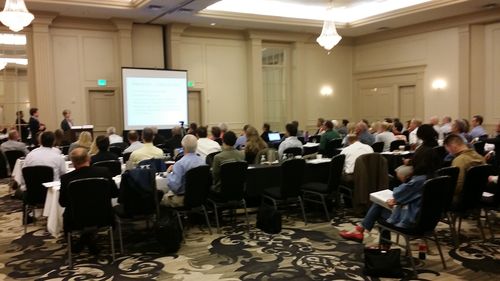
A very good crowd for today’s Oregon Eminent Domain Conference in Portland. 

Here are the links to the cases and other materials that we spoke about today in our session “Inverse Condemnation and Regulatory Takings – Issues and Trends.”  

Our thanks to Planning Chairs Jill Geleneau and Paul Sundermier for putting together a great program, and for inviting us to speak. 


Continue Reading Links From Today’s Oregon Eminent Domain Conference