What we’re looking at and listening to today. Some video, some podcasts.

  • A clip about the owner of what might be “the most condemned property in America.” It features a Virginia rancher whose property has been subject to condemnation 10 times, and who now is alleging an inverse condemnation claim because the VA DOT this time didn’t bother to exercise eminent domain before it interfered with his property rights. Joe Waldo, my Owners’ Counsel colleague, is also featured.
  • From the Federalist Society, a podcast or a video of a recent discussion about “Civil Pleadings Standards After Iqbal” for all of us federal civil procedure nerds.
  • A podcast of a debate on post-Kelo eminent domain reforms between George Mason lawprof Ilya Somin and U.Chicago lawprof Saul Levmore.

Continue Reading Multimedia Round-Up

Contradicting Chris Rock’s dictum (caution, may be very offensive), Fulton County, Georgia concluded there might be something untoward going on in the Champagne Room, at least in those serving alcohol. In Flanigan’s Enterprises, Inc. of Ga. v. Fulton County, No. 08-17035 (Feb. 16, 2010), the U.S. Court of Appeals for the Eleventh Circuit held the County’s conclusion was not irrational.

The county commissioners believed that strip clubs featuring nude dancing might have a relationship to crime and lowered property values, so they commissioned local studies of the issue and gathered studies from other areas. The local studies revealed no relationship between strip clubs and crime or property values. But relying on the “foreign studies” which showed otherwise, the commissioners barred alcohol in strip clubs and other “adult entertainment establishments.”

For its troubles, the County was sued by the owner of a strip club for First Amendment violations, and the

Continue Reading 11th Circuit: County Reasonably Concluded Something Might Be Going On In The Champagne Room

Barista’s note: we posted a version of this story before, on the 30th anniversary of the date the Court issued the opinion (December 4, 2009), but thought we would reprint a more detailed view, recently published in our firm’s newsletter, complete with photos.

Damon Key Celebrates Thirtieth Anniversary of Landmark U.S. Supreme Court Victory

What do you call a court opinion that has been cited by 627 othercourts, expressly followed in 42 cases, distinguished in 24 others, andhas been cited 1,041 times in law reviews and 147 times in legaltreatises?

We call it a landmark.

In 1979, the U.S. Supreme Courtissued its decision in Kaiser Aetna v. United States, a truly landmarkcase, argued and won by Damon Key attorneys Charlie Bocken and DianeHastert.

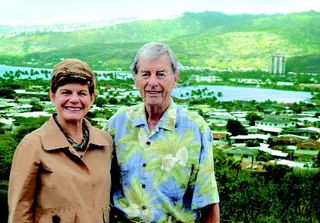
DDH_RCB_hawaii_kai Onbehalf of the developer of Hawaii Kai, Charlie and Diane took on thefederal government and overturned over a century of seemingly adverseprecedent. Kaiser Aetna was the

Continue Reading More On The Thirtieth Anniversary Of Kaiser Aetna

Aliaba We just wrapped up the annual three-day Festival of Eminent Domain Law, otherwise known as the American Law Institute | American Bar Association’s two CLE conferences, “Eminent Domain and Land Valuation Litigation,”and “Condemnation 101: How To Prepare and Present an Eminent DomainCase.” 

Dana Berliner, Matt Fellerhoff and I spoke about about “Winning Arguments in Challenging the Right toTake and Public Use” in the Land Valuation course, and in the 101course, I presented a session on “Voir Dire: Selecting a Jury in a Post-Kelo Era in a Down Economy” with William Blake and Susan MacPherson.

The depth of talent teaching and attending these courses is unbelievable, so I always learn more at these conferences than I impart. Among the other presenters were our fellow law bloggers Gideon Kanner, Anthony Della Pelle and Edward McKirdy. Internet marketing strategist Jayne Navarre also presented an interesting session on using

Continue Reading ALI-ABA Annual Eminent Domain Conference Wrap-Up

On Wednesday, Honolulu lost its iconic former Mayor, Frank Fasi. Mayor Fasi will be remembered for a lot of things, but we here at inversecondemnation.com will fondly recall his cheek when it came to exactions and in lieu payments. Two of the more well known examples:

  • During the second wave of investment in Hawaii from Japan, he announced that any golf course developer who wished to obtain permits from the City and County of Honolulu would have to pay a $100 million impact fee. We’re not sure whether anyone ever paid the fee, and we’re pretty sure that even in the days before Nollan and Dolan that a court would cast a skeptical eye towards it, but sometimes you just have to admire the pure audacity of something.
  • In a case involving Queen’s Beach on Oahu’s east shore, the director of Mayor Fasi’s Department of Land Utilization testified that


Continue Reading Getting The “Goodies” And Honolulu’s $100 Million Golf Course Exaction

There is still time to register for the two ALI-ABA eminent domain conferences, “Eminent Domain and Land Valuation Litigation,” and “Condemnation101: How To Prepare and Present an Eminent Domain Case,” being heldconcurrently at the Westin Kierland Resort in Scottsdale, Arizona.

Thefirst course is designed for attorneys with some condemnationexperience, while the second is an introduction or refresher to thebasic concepts and techniques in a condemnation case. These are greatprograms, and registration discounts are available.

Moreinformation about “Eminent Domain and Land Valuation Litigation” isavailable here, and about “Condemnation 101” here.

Along with Dana Berliner and Matt Fellerhoff, I’ll be speaking about “Winning Arguments in Challenging the Right to Take and Public Use” in the Land Valuation course, and in the 101 course, I will be speaking with William Blake and Susan MacPherson about “Selecting a Jury in a Post-Kelo Era.”

If you attend, please stop by and Continue Reading Off To The ALI-ABA Eminent Domain Conferences

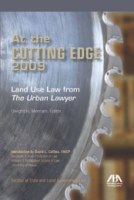
Cutting_edge_2009 One of the benefits of doing your own blog is that every now and then you are allowed to engage in a little shameless self-promotion (what’s this “every now and then?”).

Well, here goes.

The ABA has announced the forthcoming publication of a new book by the State and Local Government Law Section: At the Cutting Edge 2009: Land Use Law from The Urban Lawyer, edited by my colleague Dwight H. Merriam, and which features “[a] compilation of the most recent Section of State and Local Government Law committee reports from The Urban Lawyer.”

What this means is that it contains topical and timely articles about the hottest topics in land use law, including exactions and impact fees, green building laws, ethics in land use, regulatory takings, citizen participation in public hearings, and public use and pretext in eminent domain (the piece I authored).

Here’s the Table

Continue Reading New Book: At the Cutting Edge 2009: Land Use Law from The Urban Lawyer

The Federalist Societyhas posted a podcast of my Pacific Legal Foundation colleague Jim Burling discussing Stop the Beach Renourishment, Inc. v. Florida Dep’t of Environmental Protection, No. 08-11 (cert. granted. June 15, 2009):

If that doesn’t work for you, go here to download the mp3.

The Stop the Beach Renourishment case, which has been argued and is currently awaiting dispositionby the Supreme Court, asks whether a state court is constrained by theTakings and Due Process clauses from rewriting the common law rules ofproperty. [Disclosure: we filed an amicus brief in the case supporting the property owners.]

Our summary of the oral arguments as well as links to the briefs are available on our resource page. A recent article summarizing the key amici arguments is posted here.

Also, a distant heads-up: the State and Local Government Law and the Real Property Sections will be presenting a major CLE

Continue Reading Post-Argument Podcast On Florida Judicial Takings Case

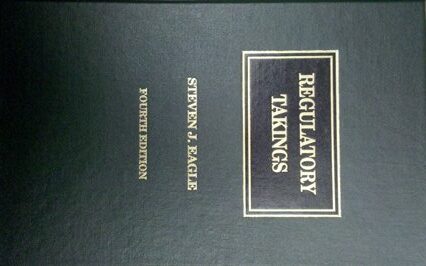
Eagle_reg_takings_cover I just received my copy of the latest edition of Professor Steven J. Eagle‘s definitive treatise Regulatory Takings (Lexis/Nexis, 4th ed. Dec. 2009).

Like the earlier editions, this is a must-have for every land use and property law attorney’s back bookshelf.

Chapters include “Property Rights and Their Sources,” “The Ascendancyof Land Use Regulation,” “Analytical Issues in Regulatory TakingsLitigation,” and “Regulatory Takings Remedies.”

The book is available here (oddly, the Lexis-Nexis web site only has the 3d edition for purchase, but I expect that to be remedied shortly).

From the preface to the fourth edition:

Thisbook is about “regulatory takings,” which is a relatively new term, but not an entirely new idea. The underlying concept is stated simply — government may “regulate” private property, but not to the extent that it constitutes a “taking,” under the United States Constitution, or a state constitution. Owners need not be compensated for losses

Continue Reading Eagle On Regulatory Takings (4th ed. 2009)

The developer in the two condemnation cases arising out of the County of Hawaii’s attemptsto take a Kona family’s property has filed its Answering Brief in the latest phase of County of Hawaii v. C&J Coupe Family Ltd. P’ship.

We posted the County’s Answering Brief here.

We represent the property owner in these appeals, and the brief we filed in November 2009 is posted here. More about thecases here.Continue Reading Developer’s Brief In Hawaii Eminent Domain Abuse Case: Pretext, Actual Purposes, And Private Benefit