


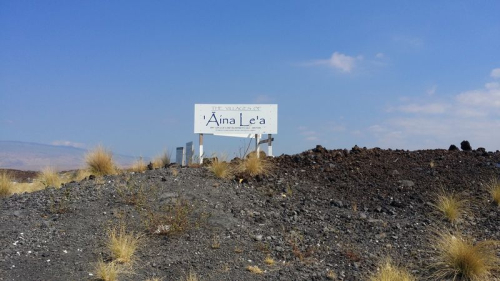
Ainalea

A short while ago, we featured the cert petition in a case from the Big Island that we’ve been following as various pieces of it went up and down through both the state and federal court systems. See “New (Mike Berger) Cert Petition: ‘This case is the proverbial ‘Exhibit A’ of much that is wrong [with takings law].

Now, after the State of Hawaii waived its right to file a BIO, five briefs of amici curiae (including one in which we played a small part) have been filed in support of the petition, urging the Court to review the Ninth Circuit’s opinion. We wrote about the case in a recent issue of the American Planning Association’s magazine. The short story is that a federal jury concluded that the State of Hawaii Land Use Commission took the owner’s property under both a Lucas and a

Continue Reading No Shortage Of Amicus Support For Takings Cert Petition (Lucas and Penn Central!)
IMG_20200817_104808

We’re done with our first day of class for the upper-level students at William and Mary. We’re teaching two courses this semester, the usual Eminent Domain and Property Rights, but also Land Use Law. We were set to begin a semester of “hybrid” instruction (some students in the classroom, with distancing in place, while others attend remotely). But late last week, due to some administrative difficulties unrelated to the law school, we had to postpone the in-person part until next week.

So we did our first two classes today via Zoom. It went as well as you might expect. We’ve had to make some adjustments to the usual law classroom, but so far, everyone is taking it in stride and adapting well. We expect to do the same and adjust and readjust as the semester progresses.

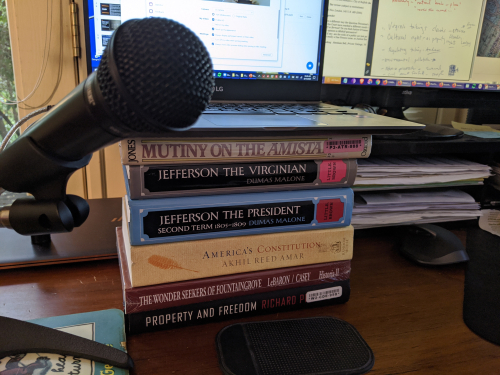
What you’re looking at above is our set-up, a remote “podium” on which we

Continue Reading What Books Do You Use For Your Remote Podium?

20181003_180531_HDR

Registration is up and online. Join us (online) for the 2020 Brigham-Kanner Property Rights Conference. Tuition: free, unless you want CLE credit (in which case it is a very modest $100). Because this conference has gone virtual, the usual Wren Building awards banquet to honor this year’s B-K Prize winner, lawprof Henry Smith, obviously won’t happen, but the speaking panels are a “go.” 

Sign up now and hold the date on your calendar. This is, in our opinion, the best one-day Academy-Bar-Bench conference about property rights that there is. And at such a great deal this year makes this one a “can’t miss.”

Here are the panel topics:

  • Where Theory Meets Practice: A Tribute to Professor Henry E. Smith Recipient, 2020 Brigham-Kanner Property Rights Prize
  • The Housing Crisis
  • Roundtable: Emerging Issues in Takings and Eminent Domain Law
  • The Reach of Government’s Confiscatory Powers Over Exigencies and Emergencies
  • The


Continue Reading Register Now: William and Mary Law’s Brigham-Kanner Property Rights Conference – Oct 1, 2020 (Virtual)

California law has decriminalized weed. Local governments, however, may regulate the use, sale, possession, and other things (like it can regulate other perfectly legal things). You know, police power kind of regulation.

Under that latter authority, the County of Santa Cruz adopted an ordinance that prohibits a medical weed facility from growing more than 99 plants. A dispensary was growing way more than 99 plants: more like 2,200 to be precise. This is Santa Cruz, man. 

Well, the Sheriff’s Department didn’t quite see it the same way. Under the authority of the ordinance, they seized the weed, and issued a notice of violation of the law. The dispensary sued for a taking (and other causes of action), and among the remedies sought was a return of the plants. The trial court demurred (without leave to amend, for all you California practitioners), on the basis that it isn’t a taking for

Continue Reading Is It A Taking When Five-O Bogarts Your (Legal) Weed?

Check out the U.S. Court of  Appeals’ opinion in Oneida Nation v. Village of Hobart, No. 19-1981 (July 30, 2020). The question was whether a local municipality has the power to regulate activity within the Village’s jurisdiction when that municipality is also wholly within the Oneida Nation.

The Nation runs the Big Apple Fest. The Village asserted that the Nation needed a Special Event Permit. Nope, the Nation responded, the Village is entirely within the reservation boundary, and this is taking place in Indian Country where local laws don’t apply. The Village asserted that the Nation had been diminished because allotted land had passed into fee simple ownership, and those portions were not in Indian Country.

After the Nation sought a declaratory judgment on these issues, the district court agreed with the Village. In the first post-McGirt decision, the Seventh Circuit reversed, concluding that the Nation —

Continue Reading CA7: Municipality Can’t Regulate Activity On Oneida Land Because 1838 Treaty Remains Intact

Nothing much to see in the Massachusetts Court of Appeals’ opinion in Comstock v. Zoning Board of Appeals of Gloucester, No. 19-P-1163 (Aug. 3, 2020), a somewhat typical zoning dispute.

Neighbor vs neighbor, over whether permits issued by a municipality (and approved by the ZBA) to renovate and replace an existing — but dilapidated — residential garage, were valid. The replacement garage was to be built on the same footprint as the old garage, even though some elements of the design were different.

Issue: is the separate garage covered as a pre-existing nonconforming use under Massachusetts statutes? 

Short answer: yes, the nonconforming use statute covers separate buildings. The term “single-family residence” includes accessory structures. Nothing too surprising there.

But what caught our eye and makes us post this case here is footnote 11 on page 8 of the slip opinion, about the “certain level of protection to all structures

Continue Reading Mass App: “Grandfathering” Is Term We’re Not Going To Use Because “it has racist origins”

There’s a lot going on in the Michigan Supreme Court’s opinion in Mays v. Governor, No. 157335 (July 29, 2020). After all, the case involves claims for personal and property damages resulting from the Flint (Michigan) water crisis. That’s an issue we’ve been following that has also grabbed national headlines.

But if you takings mavens don’t want to take a deep dive into the non-takings parts of the opinions (that resulted in an “affirmed by an equally divided court” situation on the plaintiffs’ bodily injury claims and Bivens-type damage remedy), here are the takings highlights. We thought the most interesting part of the opinion is at pages 11 through 15, where the three-Justice plurality/majority concluded that the plaintiffs alleged property damage and injuries different from the public, and alleged enough to avoid the government’s motion for summary judgment.

The class action complaint in Mays alleged:

Plaintiffs brought

Continue Reading Michigan SCT: Flint Takings Plaintiffs Alleged Unique Property Injuries, And That’s Enough To Survive Summary Judgment

Here’s the cert petition that we’ve been waiting to drop in a case we’ve been following. Last we checked in, the Ninth Circuit (with concurral) had denied en banc review, over a dissental.

In Cedar Point Nursery v. Shiroma, 923 F.3d 524 (May 8, 2019), a 2-1 panel of the Ninth Circuit affirmed the dismissal of a complaint for failure to plausibly state a takings claim under Twombly/Iqbal.  At issue was a regulation adopted by California’s Agricultural Labor Relations Board which requires agricultural employees to open their land to labor union organizers. The regulation is framed as protecting the rights of ag employees to “access by union organizers to the premises of an agricultural employer for the purpose of meeting and talking with employees and soliciting their support.”

The panel majority viewed the complaint as alleging a Loretto physical invasion taking, and held the

Continue Reading New Cert Petition: Does A Physical Invasion Taking Require 24/7 Occupation?

Here’s a cert petition that we’ve been waiting to drop in a case we’ve been following. This one asks whether a state legislature’s virtual elimination of a cause of action is a taking.

The harsh reality is that farms and ranches can stink. But in Right to Farm Acts, many state legislatures, Indiana’s included, have concluded that farming and ranching are so important that the consequences (“negative externalities“) that naturally occur have to be accepted. One Indiana court summed up Right to Farm Acts as well as anyone when it noted, “so long as the human race consumes pork, someone must tolerate the smell.” Shatto v. McNulty, 509 N.E.2d 897, 900 (Ind. App. 1987). Let’s call it a “stink easement.”

Indiana’s version stands somewhat apart from others, however. Like many other states, it bars lawsuits which assert that a long-standing agricultural operation is a

Continue Reading New Stinky Cert Petition: By Wiping Out Nuisance Claims, Right-To-Farm Act Is A Taking

We don’t often post trial court orders, but this one, Chiquita Canyon, LLC v. Cnty of Los Angeles, No. BS 171262 (Cal. Super. July 2, 2020), from the California Superior Court, is worth reading for you land use and exactions mavens.

It’s a long order, so we won’t go into great detail, but the short story is that the petitioner (a landfill) administratively challenged 22 of the 130 conditions and fees the County imposed on a Conditional Use Permit. Some of the conditions violated the trash law (California’s Integrated Waste Management Act) because they discriminated against out-of-area trash.And the condition requiring the landfill to support the state’s waste management goals? Compelled speech (no trash talk required!).

But you Nollan/Dolan mavens will really like the part about California’s Mitigation Fee Act, which essentially is a codification of the same exaction standards which the U.S. Supreme Court adopted in

Continue Reading Trash Talking: Permit Condition Not Backed By Proof Of Nexus And Proportionality Is Illegal Exaction