Screenshot_2020-05-12 William Mary Law Review

Looking for some property and takings scholarly reading while you cool your heels at home? Well, the William and Mary Law Review has recently published no less than three worthy pieces, all available for download.


Continue Reading Three New Property And Takings Articles From William & Mary Law Review
LUI 2020 slider

Join us starting tomorrow, Tuesday, May 12, 2020 for the 34th Land Use Institute. Originally scheduled for April in Tampa, we obviously couldn’t do tha, so we did the next best thing — moved this venerable course online. The Planning Chairs (Frank Schnidman and Dean Patricia Salkin) have assembled the usual hot topics session and a lineup of expert faculty (we’re speaking at the 2:45 ET session on Federal Laws (in our case, NEPA, Water, and Wetlands (including the Maui case from SCOTUS)). 

The program takes place over three days Tuesday, Wednesday, and Thursday, and you can either register for the sessions or all three days, with various discounts if you are a member of the American Bar Association, and even more if you are a member of the Section of State and Local Government Law. 

Here’s the three-day agenda. There is a lot here to like, and we

Continue Reading Join Us This Week: May 12-14, 2020 For (Virtual) Land Use Institute Webinar Series

Here’s the latest in a case we’ve been following. In Pakdel v. City and County of San Francisco, No. 17-17504 (9th Cir. Mar. 17, 2020), a 2-1 panel of the U.S. Court of Appeals held that a federal takings case was not ripe because the plaintiffs had not sought an exemption (“variance”) from the regulation.

Now, the property owners have asked the en banc Ninth Circuit in this petition to consider the issue. The panel decision created a “target rich environment” as they say: 

The panel decision conflicts with the Supreme Court’s decisions in Patsy v. Board of Regents of State of Florida, 457 U.S. 496 (1982), and Williamson County Reg’l Planning Comm’n v. Hamilton Bank of Johnson City, 473 U.S. 172 (1985), and previous decisions of this Court. Dodd v. Hood River County, 59 F.3d 852 (9th Cir. 1995); Mechammil v. City of San Jacinto

Continue Reading CA9 En Banc Petition: Must A Property Owner Exhaust Admin Remedies Before Filing A Federal Takings Claim?

Fire up your web browsers, turn up your speakers, and tune in tomorrow, Tuesday, May 5, 2020, at 10am Hawaii Time (1pm Pacific, 2pm Mountain, 3pm Central, and 4pm Eastern) for a first: the Hawaii Supreme Court will be livestreaming oral arguments in an important case about administrative law, water rights, environmental law, and native Hawaiian rights.

(For all you “mainland” folks, you may want to tune in even if those topics don’t interest you, just to hear the way our court crier opens the proceedings. Yes, the traditional “Oyez” call is made, but if these arguments are like in-person OA at the court, there’s a very Hawaiian touch also.)

Here’s the summary of the issues, from the Judiciary web site:

HEALOHA CARMICHAEL, LEZLEY JACINTHO, and N MOKU AUPUNI O KO OLAU HUI, Petitioners/Plaintiffs-Appellees/Cross-Appellees/Cross-Appellants, vs. BOARD OF LAND AND NATURAL RESOURCES, SUZANNE CASE, in her official capacity as

Continue Reading Hawaii Supreme Court Livestream Oral Argument In Water Rights, Admin Law Case (Tuesday, May 5, 2020, 10am HT, 1pm PT, 4pm ET)

As we understand it, at some of our leading law schools the basic Property course is no longer a required 1L course. It’s an elective. Quelle horreur

We think that’s a bad idea. Our Property I course (a 4-credit one-semester monster) is where we learned about things like treasure trove (finders, keepers – losers, weepers), fee tail, and the dreaded Rule Against Perpetuities from the venerable Allan F. Smith. It’s also where we first learned of vested rights and zoning estoppel. Thank you Professor Smith. What a shame it would have been had we not been required to take that course where we learned so much about the vibe of the law (not just property law). 

Hawaii’s vested rights and estoppel rules as developed over the years by the courts are based on constitutional and equitable principles: if someone receives “official assurances” from a government official

Continue Reading How Property Law Helped To Save Hawaii’s Mother’s Day

ALICLE-tagline-250x90

There’s still time to join us tomorrow, Friday, April 24, 2020 at 2-3pm Eastern Time, they will be presenting “Strategies for Litigating Regulatory Taking Cases” in a webinar produced by ALI-CLE. Register here (multiple attendee discounts available). 

At the recent ALI-CLE Eminent Domain and Land Valuation Litigation Conference in Nashville, our colleagues, New York’s Jon Houghton and Hawaii’s Dave Day presented a very informative program on litigating regulatory takings cases. Jon is a property owner-side lawyer, while Dave is a Deputy Attorney General who represents the State of Hawaii in such cases. So it was a practical and balanced presentation. Jon and Dave are taking it to the next level. This isn’t simply a repeat of their Nashville program, but they will be exploring in more detail the practicalities of building and defending these difficult cases. 

Here’s the description of the program:

The U.S. Constitution provides that

Continue Reading Still Time To Join Us (Tomorrow): ALI-CLE Webinar – Strategies for Litigating Regulatory Taking Cases

20160114_125445

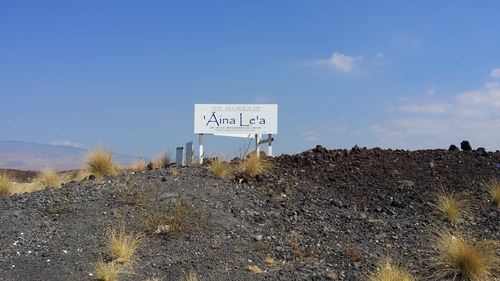
Here’s an article, just published in the American Planning Association’s monthly magazine, Planning (read the entire April issue here), summarizing the Ninth Circuit’s latest foray into regulatory takings, Bridge Aina Lea, LLC v. State of Hawaii Land Use Comm’n, No. 18-15738 (9th Cir. Feb. 19, 2020).

In Legal Lessons – What Constitutes Loss? we write about the decision and the court’s conclusion that losses short of 100% do not qualify for a per se Lucas taking, and are not enough to tip the scales for a Penn Central taking either. The opinion also adds to the growing confusion about whether the regulatory takings doctrine deals with use or value.  

Our thanks to the APA for asking us to contribute, for making the editing process so easy, and for allowing reprinting of the piece here. Check it out. 

Legal Lessons – What Constitutes a Loss? Planning Magazine (Apr. Continue Reading New Article: Ninth Circuit’s Latest Foray Into Lucas And Penn Central Takings

As long-time readers know, we often kvetch about the way many courts ignore the Palazzolo rule that simply because someone obtains property subject to preexisting restrictions on use does not preclude them automatically from raising takings claims. See here, here, here, and here, for example. More about the Palazzolo case here, including video.

But not all courts get it wrong, however. Now you can add to the plus-column the Florida District Court of Appeal (Second District)’s decision in Jamieson v. Town of Fort Myers Beach, No. 2D19-238 (Mar. 25, 2020).

The court held that a property owner who purchased land that earlier had been designated as 100% “wetlands” on the Town’s land use map was not prohibited from pursuing takings (and since this is Florida, Bert Harris Act) claims. The case is a two-fer, because the court also concluded that the claims were ripe

Continue Reading Talkin’ ‘Bout My Palazzolo: Takings Claim Not Precluded Because Owner Purchased Land Already Subject To Wetlands Regs

Torromeo Industries owned a 12-acre parcel zoned “Industrial.” Two buildings — one a home, the other a 4,000 square foot industrial building — were on the land. Sole access to the property way by a private driveway along the 149 foot frontage of the parcel. Industrial zoning has a minimum lot size of 80,000 square feet, and frontage of 150 feet. Yes, Torromeo’s parcel was one precious foot short of conformity with the frontage requirement.

But land use mavens know what this means: a nonconforming use. So back in 1989, the town’s planning board affirmed that status and that it considered the uses a permitted preexisting use. 

Flash forward to 2015, when the State condemned 2 acres of the land for a service road, along with 30k square feet for easements. This had the effect of subdividing Torreomeo’s formerly single parcel into three lots: (1) a 1/3 acre lot on

Continue Reading NH: Subdivision Of Nonconforming Lot Was Not Reasonably Likely – Availability Of A Variance Is A Factual, Not Legal, Question

Here’s the cert petition we’ve been eagerly awaiting in a case we’ve been following about Seattle’s rewriting of the traditional lessor-lessee relationship.

The petition arose out of facial takings and due process challenges to Seattle’s “first in time” rule for residential leasing. The city adopted an ordinance requiring owners to rent to the first tenant who applies that meets the owner’s screening criteria.

The Washington Supreme Court tossed aside a long line of its own cases which held that the Washington Constitution’s takings clause is not interpreted by the same analysis the U.S. Supreme Court employs for the Fifth Amendment. Not so the Washington court held, we might in the future decide that the Washington Takings Clause provides greater protection, but for the time being we conclude that federal takings doctrine is so clear that we simply adopt it wholesale. (The court based this conclusion on Tahoe-Sierra. Really! Of

Continue Reading New Cert Petition: Seattle’s “First In Time” Tenant Rule Is A Taking And Due Processey