Frisco

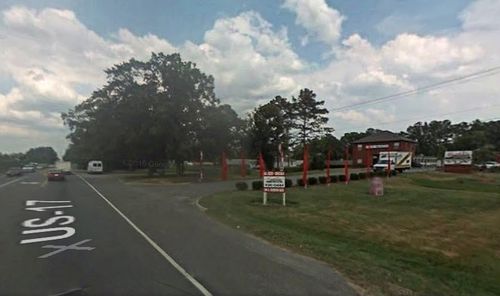
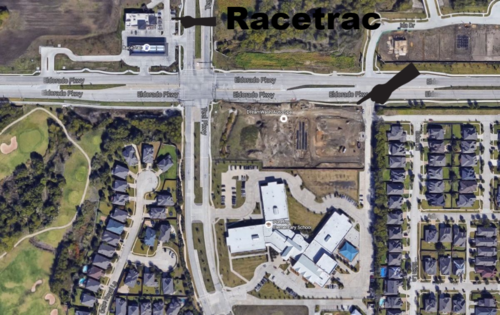
The plaintiffs in FLCT, Ltd. v. City of Frisco, No. 02-14-00335-CV (May 26, 2016), owned two adjoining parcels in the Dallas-Ft Worth area at the southeast corner what could be a very busy (and therefore profitable) intersection of two parkways. After checking with the city that the restriction in the Commercial zoning which prohibited the sale of beer and wine within 300 feet of a school wasn’t going to prohibit such sales if they sold the southern portion of the parcels for a school, the owners did so. The owners and their new southern neighbor the school district executed a development agreement that acknowledged that the sale of alcohol on the remaining parcels was okay. Building permit issued. 

A Racetrac gas/convenience store was what they had in mind. But the City amended the zoning code. And that was enough, apparently, to make the planning department change its mind about

Continue Reading Tex App: How To State A Penn Central Regulatory Takings Claim
1

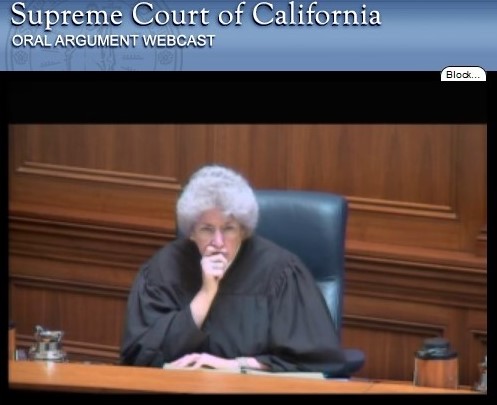
The dramatic moment of the day during last Thursday’s California Supreme Court oral arguments in City of Perris v. Stamper, No. S213468 (which we previewed here: “Cal Supreme Court Oral Argument Preview: In Just Comp Trial, Does Jury Determine Reasonable Probability Of Exaction?“), occurred during the rebuttal arguments by the city’s lawyer. The case involves whether the city can avoid paying just compensation by showing that it would, in the future, exact from the owners the very same property which the city is condemning. The only way the city wouldn’t require dedication of this property is if the owner continued to use it for agricultural purposes. 

Counsel for the city had opened her initial argument time with this:

May it please the court…The project effect doctrine, Your Honors, categorically does not apply to dedication. The city can validly get a piece of land for free because it is roughly proportional

Continue Reading Perris When It Sizzles: Why Pay When “we can get it for free” — California Supreme Court Oral Argument Recording

Tomorrow morning, Thursday, May 26, 2016, starting at 9:00 a.m., the California Supreme Court will be hearing oral arguments in an eminent domain case that sits at the intersection of jury determinations of just compensation, and the Nollan/Dolan unconstitutional conditions issue. 

Here is the link to the argument live stream

The court is now live-streaming video of oral arguments, so you can follow along in real time. We’ll post the link when it goes live at the court’s web site.

Programming note: the argument is second on the 9:00 calendar, which means that the case will most likely be called some time after 10:00 a.m., after the first case is done. 

In City of Perris v. Stamper, No. E054495 (Cal. App. Aug. 9, 2013), the Court of Appeal held that in a condemnation action, “issues surrounding the dedication requirement are essential to the determination of ‘just

Continue Reading Cal Supreme Court Oral Argument Preview: In Just Comp Trial, Does Jury Determine Reasonable Probability Of Exaction?

Check out this post (“Did the Sixth Circuit Unintentionally Adopt an RLUIPA Equal Terms Test?“) from RLUIPA gurus Evan Seeman, Karla Chaffee, and Dwight Merriam on their RLUIPA Defense blog, analyzing the Sixth Circuit’s recent opinion in Tree of Life Christian Schools v. City of Upper Arlington, No. 14-3469 (May 18, 2016).

We won’t go into the details because our colleagues cover them pretty well, but wanted to point this one thing out. The issue in the case was whether the city could be held liable under RLUIPA’s “equal terms” provision (which requires local governments to impose land use regulations on religious and nonreligious users on an equal basis), after it refused to allow a religious school to rezone property in an economic development zone to allow the school.

The school didn’t conform to the area master plan, which allowed only uses which would increase the government’s

Continue Reading 6th Cir: Avoid Your RLUIPA Problems By Condemning Church-Owned Property, Then Selling It “to a buyer that the government thinks offers superior economic benefits”

The Honolulu Star-Advertiser today ran a story by Timothy Hurley about a new bill adopted by the Hawaii legislature which puts certain cases on the appellate fast-track, “New law could speed process for Thirty Meter Telescope.”

The bill mandates that in certain cases, any administrative appeals skip the usual first two steps (circuit court, Intermediate Court of Appeals), and go straight from the agency to the Hawaii Supreme Court. 

We were interviewed for the story, and although the impact on the rebooted contested case about the Thirty Meter Telescope is pretty obvious, we’re of the opinion that this measure wasn’t designed to address only that case: 

Robert H. Thomas, a veteran Honolulu land use and appellate lawyer, said he sees the new law shaving off a year or more of legal sparring on the way to the state’s highest court.

“Our state gets rapped frequently for our levels of

Continue Reading New Appellate Law May Shortcut “Death By A Thousand Days”

A good story for your weekend reading from the Los Angeles Times, “U2’s The Edge and his decade-long fight to build on a pristine Malibu hillside,” about the rock guitarist’s decade-long effort to build his dream home compound in the exclusive coastal town. Running smack dab in to the California Coastal Commission, this was a clash between a guy who is touted as being “an activist, an artist, that made his money from spreading peace and love in the world,” and people whom you might expect would support a guy like The Edge. 

Yeah, but it’s still filthy lucre, and even Mr. Edge’s donation of a public-access hiking easement and $1 million to maintain it were not enough. 8-4, project denied. 

Not until the Coastal Commission’s Director-For-Life died, and The Edge replaced his project manager with “an artist and sometime model, who had interrupted his architecture career

Continue Reading California Coastal Development In A Nutshell: Hire Jesus – Moses, Actually – To Sell Your Luxe Home Plans, And Become One With The Mountain.

We thought there was a chance in a case out of San Jose, California, that the U.S. Supreme Court might take up the long-standing issue of whether legislatively-imposed exactions meet the nexus and proportionality unconstitutional conditions tests from Nollan, Dolan, and Koontz. Do those tests require an individualized determination, or is it enough that the conditions are imposed on everyone? 

But the Court declined to review that case. There was a question in whether San Jose’s affordable housing requirements were “exactions,” because the California Supreme Court disposed of the case by concluding that the regulations were mere run-of-the-mill zoning ordinances, and thus not subject at all to N-D-K. Thus, the heightened scrutiny required by N-D-K didn’t apply.  

This cert petition, recently filed, however, presents the legislatively-imposed question very clearly. In Common Sense Alliance v. Growth Management Hearings Bd., No. 72235-2-1 (Wash.

Continue Reading New Cert Petition: Are Legislative Exactions Immune From Nexus And Proportionality Requirements?

The New Hampshire Supreme Court, in our view, got it wrong in Ashton v. City of Concord, No. 2015-0400 (Apr. 29, 2016). Really, really wrong.

Indeed, the New Hampshire court seems to have resurrected the California Supreme Court’s now-defunct rule from Agins v. City of Tiburon, 598 P.2d 25 (Cal. 1979), which held that there is no compensation remedy when the application of an ordinance denies an owner all beneficial use of property, only declaratory and equitable relief. See id. at 26 (“the need for preserving a degree of freedom in the land-use planning function, and the inhibiting financial force which inheres in the inverse condemnation remedy, persuade us that on balance mandamus or declaratory relief rather than inverse condemnation is the appropriate relief under the circumstances”). The Agins rule was held unconstitutional in First English Lutheran Church of Glendale v. County of Los Angeles, 482

Continue Reading Does New Hampshire Think It’s California? Wrongful Denial Of Demolition Permit Cannot Be A Taking Because City Was Merely Applying The Statute

Dominionstorage

Is the forced acquisition of property by the government’s power of eminent domain a “purchase?” To the Virginia Supreme Court, the answer to that question is yes. Why, we’re not really sure, because the court doesn’t tell us why.

In City of Chesapeake v. Dominion SecurityPlus Self Storage, LLC, No. 150328 (Apr. 29, 2016), the court held that the use of the word in a subdivision plat in which the owner agreed that it “reserve for future purchase by the City” a part of its property with no compensation for any improvements on that land, meant that the owner also agreed to let the city condemn the land without paying for the improvements.  

This case involved a highway widening and elevation project in southern Virginia. The current owner of the property, which operates a self-storage facility on the parcel, purchased it from the prior owners who had subdivided it

Continue Reading Virginia: Taking By Eminent Domain Is “Purchasing” Property. Why? Because We Said So.

DSCF2762

When you think “LA” or Southern California, what comes to mind? Things like “the hills of Beverly Hills, the Hollywood Hills, and the Los Angeles basin, including the Hollywood sign, the Griffith Observatory, downtown Los Angeles, and … Mount Baldy,” perhaps?

Or maybe, like us, you think of prehistoric elephants stuck in tar.

But no matter, because our point is that each of us recognizes what we call “cliche litigation.” You know, the cases that involve just the thing you think about when you imagine a certain place. We have our beach cases in Hawaii; the south has alligator cases, for example. 

Well, here’s the LA version, Boxer v. City of Beverly Hills, No. B258459 (Apr. 26, 2016).

The City of Beverly Hills planted redwood trees in a public park. These trees apparently blocked the views from the plaintiffs’ backyards of some very So Cal-ish things like

Continue Reading Cal App: Beverly Hills Blocking Views Of The Hollywood Sign Isn’t Inverse Condemnation