When we talk amongst ourselves, we dirt lawyers discuss things like larger parcels, regulatory moratoria, servitudes “running with the land,” and other such fascinations. But we understand that what the average guys and gals want to know about when they chat us up at cocktail parties is their neighbor’s trees.

Like who gets the fruit from her trees that are on my side of the fence (as our colleague Mark Murakami wrote about his bananas)? Or, as in this recent opinion from the New Jersey Appellate Division, who pays when my tree’s roots bust up my neighbor’s wall.

Turns out the analysis hinges on whether the tree’s roots are a “natural condition” of the land. [Barista’s note: unless the tree is artificial, like those ubiquitous fake tree cell towers, we’re not sure how a tree really can be considered not “natural,” a question we’ve

Continue Reading NJ App Gets All Metaphysical About “Natural” Trees
Here’s the amici brief we’re filing today on behalf of the National Federation of Independent Business Small Business Legal Center and the Hillsborough County Chapter of the NAACP in support of a cert petition now pending at the Supreme Court.

The case centers around a “class of one” Equal Protection claim in which the plaintiff/petitioner alleges that his land use requests were treated by the County differently than other “similarly situated” landowners. The District Court granted summary judgment to the County because the other owners whom the plaintiff proffered in comparison were not subject to the Keystone Community Plan as were his properties. The Eleventh Circuit affirmed.

The court held that the comparators must be “identical in all relevant respects,” and since the other owners were not subject to the Keystone CP, end of story. It didn’t matter that the applicable provisions in the Keystone CP were the same as in

Continue Reading Amici Brief: In Class Of One Equal Protection Claims, Is “Substantially Similar” A Search For Evidence, Or Unicorns?

Here’s what we are reading today: 

  • Here’s the equivalent of law blogger nirvana: a link to one of your pieces by SCOTUSblog: “There is still more commentary on Monday’s ruling in Evenwel v. Abbott, holding that states and local governments may use total population to draw legislative districts. In posts at casetext, Robert Thomas asserts that the ruling “reaffirmed the principle that we the people mostly get to choose who will be included in ‘We The People,’ and when all are included, the federal courts will not interfere.”
  • In Oklevyeha Native American Church of Hawaii, Inc. v. Lynch, No. 14-15143 (9th Cir. Apr. 6, 2016), a panel of the Ninth Circuit concluded that a Hawaii church which uses marijuana as part of its doctrine did not have a claim under RFRA to prevent it from being prosecuted under the Controlled Substances Act. The court held that the


Continue Reading Friday Reading: SCOTUSblog’s Shout-Out; 9th Circuit Says Church Bogarted Evidence In Cannabis Claim; Are Agencies To Blame For Telescope Delay?; WWII Guam Land Seizures Case Moves Forward

In a ruling that no one who was paying attention could claim to be surprised by, the Hawaii Supreme Court yesterday issued a 4-1 memorandum opinion holding that the “agricultural lands” section of the Hawaii Constitution isn’t self-executing, and which approved the State Land Use Commission’s reclassification of land on Oahu from agricultural to urban uses for the “Koa Ridge” master-planned community:  

its constitutional history as well as the legislative history of Act 183 do not reveal an intent to require the LUC to delay reclassifying agricultural land pending formal designation of [Important Agricultural Lands].

Slip op. at 3. Justice Pollack, as he did in a prior case on the same issue, dissented.

No Surprises

We say no surprise, because only a few months ago, the same majority (Chief Justice Recktenwald, and Justices Nakayama and McKenna, joined by a circuit judge sitting for the recused — and now

Continue Reading HAWSCT Says It Again: Court Won’t Create A Moratorium While “Important Ag Lands” Process Completes

Earlier this week, we posted our visit to the site of the U.S. Supreme Court’s decision in Hadacheck v. Sebastian, 239 U.S. 394 (1915). It’s been over 100 years since that case was decided by the Court, but to Hinga Mbogo, the Dallas auto mechanic profiled in the above video from the Institute for Justice, 2016 sure must seem like 1915.

The more things change…

Continue Reading Hadacheck Revisited: The More Things Stay The Same Dep’t…

Here’s a new cert petition, seeking SCOTUS review of an unpublished opinion from the Eleventh Circuit. That court concluded that Dibbs’ equal protection challenge to the Hillsborough County’s Community Plan failed because he could not identify others who were similarly situated but treated differently.

Dibbs asserted. among other claims, that the County treated him differently from others when it rejected his development proposals as inconsistent with the Community Plan for three parcels he owned. Motivated by malice, he asserted, the County singled him out for ill treatment because of “vindictiveness, maliciousness, animosity, spite or other reasons unrelated to a legitimate government interest.”

Dibbs isn’t part of a protected class, so this is an Olech class-of-one claim in which he must show that he was treated differently from others similarly situated, and that the County “applied a facially neutral ordinance for the purpose of discriminating.” The district court and the

Continue Reading New Cert Petition: Circuit Split On “Class Of One” Equal Protection Claims – “Similar” Or “Identical?”

20160325_125208

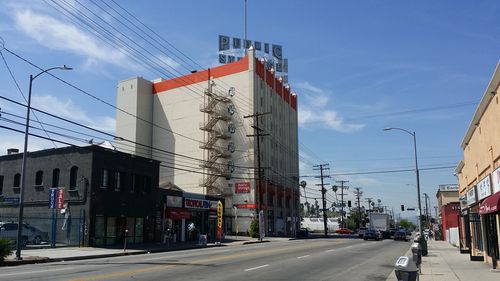
A nondescript corner of what could be just about any urban city street in America. Nothing of overwhelming interest, just the usual commercial buildings, traffic signals, and small businesses. A self-storage facility. Pretty typical in a Commercial district. Here, the “C-4 District.”

Nothing at all, in fact, to indicate that just over a century ago, this was the site of what was to become one of the most important land use cases in U.S. history — the place that gave us the first Supreme Court decision that dealt with how the expanding power to regulate the uses of property meshes with private property rights.

DSCF2746

For this area — the block southeast of the corner of Pico and Crenshaw Boulevards — was once a Los Angeles brickyard owned by Joseph C. Hadacheck.  

What is now the Arlington Heights neighborhood was once outside of the city limits. Indeed, Hadacheck’s title went back

Continue Reading Takings Pilgrimage, LA Edition: Police Power, The Zoning Game, And Nuisances

Mississippi, like many states, by statute allows private parties to condemn a neighbor’s land for use as a private access road, if doing so is “necessary” for a landlocked parcel to gain ingress and egress. This power is subject to limitations: for example, the parcel must be truly landlocked with no other access. Mississippi apparently has an additional requirement, that the power cannot be exercised within the limits of an incorporated city or town. 

The property at issue in High v. Kuhn, No. 2015-IA-00072-SCT (Miss. Mar. 17, 2016) is within the incorporated City of Gulfport, so the owner objected when his neighbor tried to exercise the power to take his land for access to an otherwise landlocked parcel. The trial court, however, held that the owner had waived the right to assert this objection by not objecting within five days as required by another statute. Besides, the court held, the incorporated

Continue Reading Mississippi: Statute That Says No Private Takings For Access Within City Limits Means Just That

We usually don’t cover decisions under California’s Environmental Quality Act. You could spend your entire legal career doing these kind of cases, and there are other forums which ably follow CEQA

But we had to make a mention of the California Court of Appeal’s recent opinion in Preserve Poway v. City of Poway, No. D066635 (Mar. 9, 2016), which concluded that a property owner’s transformation of his land from a horse boarding facility to 12 residences did not implicate CEQA, because it shows just how far these “environmental” arguments can go.  

The owner of the “Stock Farm,” a horse boarding facility, wanted to close it. In its place? Twelve homes on one-acre lots. This is Poway, (“The City in the Country“), so the homes would have “enough room for horses.” Apparently, there is no shortage of horse boarding facilities in the area. All

Continue Reading Reverse NIMBY? Allowing Horse Boarding Facility To Close Isn’t An “Environmental” Issue

IMG_0459

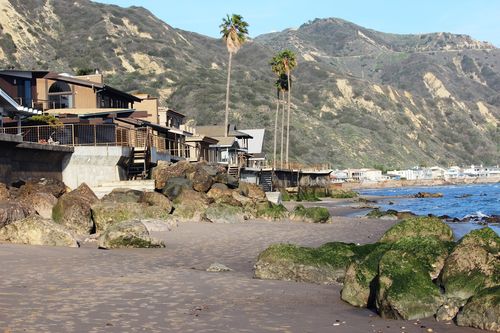
The Nollans own a beachfront lot in Ventura County, California. A quarter-mile north of their property is Faria County Park, an oceanside public park with a public beach and recreation area. Another public beach area, known locally as “the Cove,” lies 1,800 feet south of their lot. A concrete seawall approximately eight feet high separates the beach portion of the Nollans’ property from the rest of the lot. The historic mean high tide line determines the lot’s oceanside boundary.

Nollan v. California Coastal Comm’n, 483 U.S. 825 (1987)

From time-to-time, and when we’re in the neighborhood, we like to drop by the sites of familiar (and famous) takings and land use cases. Like Kaiser Aetna (in our own backyard), Dolan, and PruneYard. We’ve been there, done that. 

So there we were in Central California (Ventura County to be exact), and we’re driving up the coastal highway when

Continue Reading Another Takings Pilgrimage (Unconstitutional Conditions Technically, But Close Enough)