


Here’s what we’re reading on this Tuesday-after-a-long-weekend:

  • Economic Impact in Regulatory Takings Law,” a forthcoming article by lawprof Steven J. Eagle about one of the prongs of the Penn Central takings test. Professor Eagle “concludes that unresolved issues and complexities in adjudicating the ‘economic impact of the regulation on the claimant’ test provide an additional reason why the conceptually incoherent Penn Central doctrine must be replaced.”
  • NY Fed report sees cracks in eminent domain proposals” – “… a new blog from researchers at the Federal Reserve Bank of New York suggests such a plan would have proved to be ineffective anyway. Their reasoning for this conclusion is that many of the targeted borrowers have already benefited from either falling interest
Continue Reading Tuesday Tidbits

Mark your calendars: on Thursday, February 21, 2013, James Burling, director of the Pacific LegalFoundation and principal attorney at PLF’s Property Rights practice group and U. Hawaii lawprof Maxine Burkett willdiscuss “Do Property Rights Matter When The Environment IsGoing To Hell In A Handbasket?

The forum — presented by the EnvironmentalLaw Program and the Federalist Society — will beginat 12:15 p.m. in CR1. Light refreshments will be served. Please RSVP to elp@hawaii.edu.

More below.

Do Property Rights Matter When the Environment is Going to Hell in a Handbasket?


Continue Reading PLF’s Jim Burling To Discuss Property Rights And The Environment At U.H. Law School

Dmerriamportland

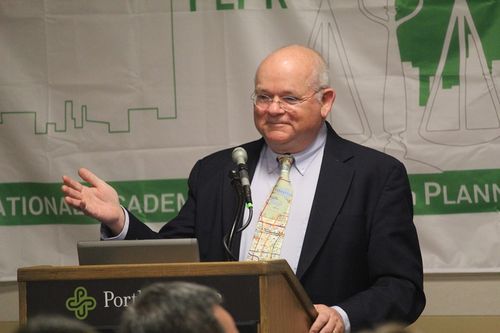
Yesterday, our ABA and Owners’ Counsel of America colleague Dwight Merriam gave the keynote address at the 7th International Conference of the Academic Association on Planning, Law, and Property Rights, in Portland, Oregon.  Dwight’s presentation, “Getting Past “Yes or No” – Linking Police Power Decision-making with Just Compensation,” centered on the idea that many of the frustrations in land use and environmental law might be avoided by the establishment of a compensation fund which would be drawn upon to offset the negative externalities of development proposals that otherwise might draw fire. So instead of objecting, landowners who suffer losses because of a project that will benefit the public — a nearby wind farm, for example — could obtain compensation.

Here’s a summary of his presentation:

Land-use and environmental decision-making under the police power is usually a zero-sum game. When neighbors complain about the negative externalities of a

Continue Reading Getting Past No In Land Use Disputes

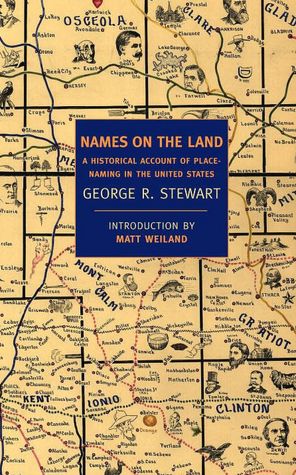
NamesonthelandIt’s easy to forget that place names are not “real” in the sense that they exist other than in our collective minds, but are impermanent markers bestowed on places by man. There’s nothing that commands New York is “New York,” the Mississippi River to be so named, or the island of Molokai to be called that.

I’m reminded of this each time I fly. From 35,000 feet you can see many natural barriers and landmarks, but there are no labels on the land as on a map. This gives a fleeting sense of perspective which reduces political distictions — which are bolstered by names and labels — to a somewhat random convention, and makes the age-old fights over land and territory seem a bit trivial.

If you didn’t already possess that sense, then Names on the Land by George R. Stewart (originally published in 1945, republished in 2008), should give

Continue Reading Book Review – Names on the Land

In a recently-published law review article, U. Hawaii lawprof David Callies found that “the Moon Court [1993-2010] decided some of thestate’s most important property and related environmental and Native Hawaiianrights cases in favor of the various non-governmental organizations bringingthem (Sierra Club, Earthjustice, Hawaii’s Thousand Friends, and the NativeHawaiian Legal Corporation) approximately eighty-two percent of the time,sixty-five percent of which reversed the Intermediate Court of Appeals,” a result he concluded was “appalling.”

Well here’s the counterpoint, a paean to the Moon Court from another U.H. lawprof, who asserts that the court’s environmental jurisprudence wasn’t so much focused on outcome, but rather on process. Yes, plaintiffs won a whole lot, but don’t be fooled the results, she writes, because the court was only insuring that the doors to the courthouse remain open to all comers under the environmental standing doctrine:

At first blush, the Hawai‘i Supreme Court’s environmental review jurisprudence under

Continue Reading A Partial Rebuttal To Professor Callies: 1993-2010 HAWSCT Environmental Record Most Concerned With Public Participation

Worth listening: a 17-minute podcast by Professor Richard Epstein, with his thoughts — apparently without a script and seemingly in a single breath — on the oral arguments in Koontz v. St Johns River Water Mgmt Dist., No. 11-1447 (cert. granted Oct. 5, 2012). 

Download the mp3 here. If that doesn’t work, go here.

Continue Reading Epstein’s Podcast On Koontz: “The Vexed Doctrine Of Unconstitutional Conditions”

I did want to make a mention of a sad milestone I wish we didn’t have to come to, the passing of Maui’s irreplaceable land use lawyer B. Martin Luna. Here’s the report from the Maui News.

Having dealt with Martin over the years, he was a true gentleman, and everything that you conjure up when you think about “old school” lawyer: smart, cordial, well-armed with facts, generous, courtly. And something that is a rarity today — a lawyer whom I never heard utter a bad word about anyone, even his opponents.

Maui and the rest of our state are not going to be the same without Martin. I’m going to miss him. Continue Reading Aloha, Martin Luna

What we’re reading today:

  • Grand Central Station and The Takings Clause – from the Constitutional Law Prof Blog, a link to a WNYC/NPR podcast about Grand Central Terminal and the Penn Central takings case. Worth listening, if only to hear the money quote near the end: “you see New Yorkers all the time staking claim in this building, pointing up at cerulean blue sky saying ‘hey, this belongs to us.'” Yes, we guess it does. And you know what? You didn’t pay for it.
  • Another one about the 100th anniversary of Grand Central: Gideon Kanner writes Calling All Grand Central Junkies!, linking to the NY Times‘s republication of its 1913 special celebrating the opening of the terminal.
  • In that vein, a snarky commentary about the wonders of Pennsylvania Station. Who needs a cerulean blue sky?
  • In what reads more like a redeveloper’s press release, the Washington Post


Continue Reading Wednesday Round-Up: Grand Central, Oysters No More, And Originalist Takings

The oral argument calendar of the Hawaii Supreme Court  looks pretty interesting:

  • Thursday, February 7, 2013, 11:00 a.m. – Sierra Club v. Land Use Comm’n, No SCWC-11-0000625, a case about the qualifications of holdover Land Use Commissioners, which we previewed here
  • Thursday, February 21, 2013, 10:00 a.m. – Kanahele v. Maui County Council, No. SCWC-29649, a case involving the “Sunshine Law” and the council’s consideration of a development project on Maui. More here from Record on Appeal.
  • Thursday, February 21, 2013, 11:00 a.m. – County of Hawaii v. UNIDEV, LLC, No. SCWC-10-0000188, a case about contracts between a private developer and the County to build affordable housing. It’s more about arbitration and appellate jurisdiction, but an interesting case nonetheless. More here from Record on Appeal.
  • Thursday, March 14, 2013, 9:30 a.m. – State of Hawaii v. Woodhall, No. SCWC-11-0000097, in which the court


Continue Reading Upcoming Hawaii Appellate Arguments Of Interest

The speed of the internet: we were all set to summarize our thoughts on the South Carolina Supreme Court’s opinion in Dunes West Golf Club, LLC v. Town of Mount Pleasant, No. 2011-194211 (Jan. 9, 2013), a case involving equal protection, substantive due process, and takings claims, when Dean Patty Salkin at the Law of the Land blog beat us to it. See “SC Supreme Court Finds No Takings After Council Denies Rezoning for Golf Club Property” for the details.

This one thing caught our eye in the opinion. The court held that the “substantially advance a legitimate state interest” test, which the U.S. Supreme Court in Lingle v. Chevron USA Inc., 544 U.S. 528 (2005) held was a test of substantive due process and not one of takings law, was the same thing as the “rational/conceivable basis” test. In other words, the term “substantially advance” is

Continue Reading S. Carolina: “Substantially Advance” Means “Not Arbitrary And Capricious”