PXL_20240819_120202700.MP
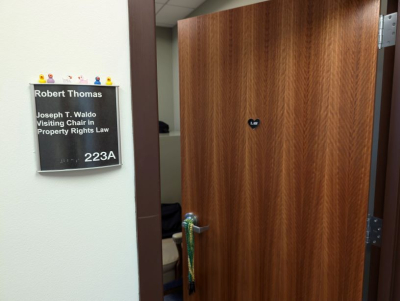
Yes, the mysterious ducks remain — and seem to have multiplied.

It’s that time of the year again. Fall’s-a-coming, and that means that starting today, we’re back at the William and Mary Law School in Williamsburg, Virginia to lead two courses:

  • Eminent Domain and Property Rights (W&M is one of the few law schools in the country that offer a course in eminent domain, just compensation, and takings)
  • Land Use Controls (an especially hot topic at the moment)

The registration numbers for both courses are good (really good), and two full classrooms of Dirt Law goodness tells us something about this area of law — it’s really interesting, and a good place to make your way in the practice, and law students recognize that.
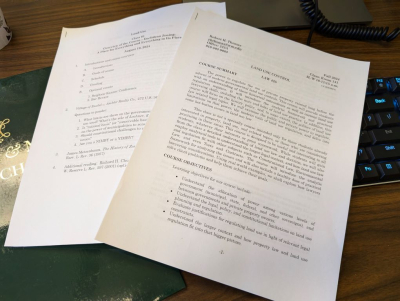
PXL_20240819_121031630.MP
We don’t use $400 casebooks in either class.

Time to jack back into the (takings and land use) Matrix.
6a00d83451707369e20240a476d216200c-800wiContinue Reading Back To School For Dirt Law @ William & Mary, Season VII
81XRFQ5ONQL._SL1500_

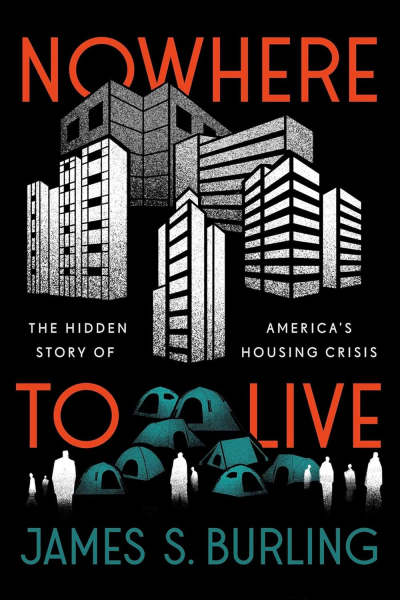
If you are in the California Southland (or plan to be in the next week), please be sure to reserve on your calendar Tuesday, August 13, 2024, to join us in-person for the launch of our colleague Jim Burling‘s forthcoming book, “Nowhere to Live: The Hidden Story of America’s Housing Crisis.”

Here’s a blurb about the book, which is available for preorder on Amazon:

A century of policy mistakes ruined America’s cities and created an unprecedented housing crisis.   
 
For many families, homelessness is no longer someone else’s problem. It is right around the corner, a real threat in their own immediate future. Our housing crisis is the result of a long history of government policies, court cases, and political manipulation. While these disparate causes make up a tangled web, they have one surprising root: the attack on private property rights. For more than

Continue Reading Book Launch Event, Aug 13, 2024: Jim Burling, “Nowhere to Live: The Hidden Story of America’s Housing Crisis”

Just compensation

Just a few posts ago, we put up the Louisiana Supreme Court’s opinion in a case where property owners obtained a final inverse condemnation judgment ordering the New Orleans Sewer Board to pay just compensation.

Then…crickets. The sewer board did not satisfy the judgment. It relied on a provision in the Louisiana Constitution that says that the state and local governments don’t need to pay civil judgments except when they want to.

The Louisiana Supreme Court didn’t see it that way, and held that just compensation is “self executing” and that paying it is a ministerial duty, meaning that no statutory authorization is needed, and mandamus to compel payment is an available remedy for non-payment.

Now, the sewer board has asked the court for a do-over. In its motion for rehearing, it asserts that that earlier federal litigation is res judicata and already resolved the issue (although that

Continue Reading Govt: We Were Really Really Really About To Pay…Until You Forced Us To Pay! Sewer Board Seeks Rehearing In Self-Executing Just Comp Case

You all have likely seen ’em, those “We Buy Houses Any Condition” billboards letting the world know that no matter what condition it might be in, there’s an outfit that says it is willing to buy your house.

Well, that outfit ran into the one other outfit that is willing to buy your house, except here, that outfit can force you to sell it. That’s right, the government. In this case, the City of Ontario, California, exercising its power of eminent domain. (As someone once famously described the power of eminent domain: “whether you know it or not, your house is for sale.”)

The city went through the usual motions to forcibly take “multiple vacant lots” next to the Ontario International(!) Airport which it claimed were blighted:

In 2021, the City held a public hearing, after which the city council adopted a resolution of necessity authorizing the City to

Continue Reading Blight Slight: No Taking Of Property For “The Proposed Project” When No Project Has Been Proposed

Erie
The site of the Erie incident, just a mile away from Mahon’s home.

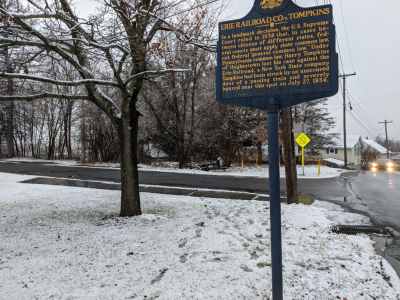
Here’s an unusual, and kind of interesting one, from a U.S. District Court (Hawaii) in an eminent domain case brought by the County of Maui against the owner of Maui property which is needed for a solid waste disposal site for debris from the recent Maui wildfire.

First unusual point: the owner, a citizen of a state other than Hawaii, removed the case to federal court, asserting diversity jurisdiction. A state eminent domain action in federal court? Don’t see that every day, do you? (The County has not challenged federal court jurisdiction.)

Second unusual point: when the County deposited its estimate of just compensation and sought immediate possession under Hawaii’s eminent domain procedures (Hawaii does not have a true “quick take” procedure, but merely immediate possession where title does not transfer to the condemnor

Continue Reading Federal Court In Removed Eminent Domain Case: Quick-Take/Immediate Possession Is Erie Procedural, So Does Not Apply

We were all set to write up a scintillating and detailed analysis of the New Jersey Appellate Division’s opinion in Englewood Hospital & Med. Center v. New Jersey, No. A-2767-21 (June 27, 2024), when we thought, ah, why not just ask you to read our New Jersey colleague Joe Grather’s scintillating and detailed analysis.

Short story is right there in the title of this post. As Joe puts it:

In short, the hospitals argued that requiring them to provide charity care and Medicaid care at a loss was an unconstitutional taking of private property without just compensation.  The trial court analyzed the claims as an “as-applied” challenge.  Therefore, it dismissed some of the claims because of a failure to exhaust administrative remedies.  The “slightly different reason” was that the Appellate Court found the claims were a facial challenge to the constitutionality of the statute, and therefore it analyzed the takings claims under the familiar rubric of whether there was a “direct government appropriation or physical invasion of private property,” or an “uncompensated regulatory interference with a property owner’s interest in their property.” Slip op. at 14.

No physical taking, no Penn Central taking. We recommend you read his entire post “As We Approach Our Nation’s Birthday, a New Jersey Appellate Court Rejects Hospitals’ Takings Claims.”

Joe ends it this way: “I bet the hospitals are preparing their petition for certification to the New Jersey Supreme Court now.  Happy 4th of July!”

That means to stay tuned for more.

Englewood Hospital & Med. Center v. New Jersey, No. A-2767-21 (N.J. App. Div. June 27, 2024)

Continue Reading New Jersey: Forcing Hospital To Provide Care At A Loss Isn’t A Taking

Worth reading: a student-authored piece in the latest issue of the Harvard Journal of Law & Public Policy, “Original Understanding of ‘Background Principles’ in Cedar Point Nursery v. Hassid.

From the Introduction:

But in Cedar Point, when considering a regulation that authorized union organizers to enter certain businesses, the Court held that even a temporary physical occupation was a per se taking requiring compensation.

The Court’s shift to a per se rule is significant because it means a landowner can receive “just compensation” without satisfying Penn Central’s high bar required for regulatory takings. For governments, the Cedar Point holding could pose a heavy financial burden if they must compensate landowners for temporary intrusions authorized under existing regulations. Due to this imposing financial burden, some have suggested that Cedar Point threatens existing civil rights regimes, which at first blush resemble the labor rights regulation at

Continue Reading New Article: “Original Understanding of ‘Background Principles’ in Cedar Point Nursery v. Hassid“

Check this out, a local government has filed a cert petition seeking reversal of one of those relatively rare circumstances where the property owner won below on a temporary regulatory takings claim for the County’s denial of a development permit.

We won’t go into details on this, but urge you to read the petition, especially the Questions Presented:

In First English Evangelical Lutheran Church of Glendale v. Los Angeles County, Cal., the Court held that the Fifth Amendment requires “just compensation” for temporary regulatory takings, i.e., “those regulatory takings which are ultimately invalidated by the courts.” 482 U.S. 304, 310 (1987). The appropriate compensation for a temporary regulatory taking is described as “fair value for the use of the property during this period of time.” Id. at 322. All claims for temporary regulatory takings must be analyzed using the ad-hoc, fact-based analysis set out in Penn Central Transp.

Continue Reading New Cert Petition: Gov’t Asks Whether A Penn Central Taking Is Really A Lucas Taking

We were all set to write up the Wisconsin Supreme Court’s recent opinion in Sojenhomer LLC v. Village of Egg Harbor, No. 2021AP1589 (June 19, 2024) — after all, we were already following the case — when Lawprof Ilya Somin beat us to the punch: “Wisconsin Supreme Court Rules Sidewalks are not “Pedestrian Ways” – thus Allowing Local Governments to Use Eminent Domain to Take Property to Build Them.”

Short story is that a Wisconsin statute prohibits using eminent domain to take property for a “pedestrian way,” and the Village instituted a condemnation action to take Sojenhomer’s property for a sidewalk. No way, you say?

Yes way held the Wisconsin court. The key was that pedestrian way was a defined statutory term, and thus not subject to common meanings (which would seem to include a sidewalk as a pedestrian way). The court concluded that the sidewalk did

Continue Reading When Is A Sidewalk Not — You Know — A “Pedestrian Way”? Wisconsin Supreme Court Clues Us In

2012-02-06_11-19-51_574 (Small)

Here’s the latest in a case (and issue) we’ve been following closely.

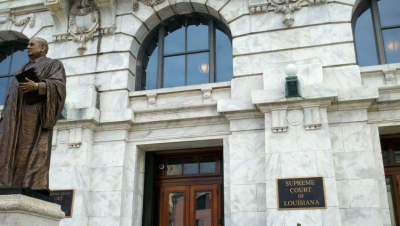
In Watson Memorial Spiritual Temple of Christ v. Korban, No. 24-0055 (June 28, 2024), the Louisiana Supreme Court unanimously affirmed the Court of Appeal, concluding the duty to actually pay just compensation for a taking is ministerial. 

That may not seem like an earth-shattering conclusion. After all, since at least 1987, the U.S. Supreme Court has labeled the Just Compensation Clause as “self-executing” which means that if there’s been a taking, there must be compensation. Must means must. At least that’s what it means to us.

But as readers of this blog know, you can get a final judgment for inverse condemnation from a Louisiana court, but the defendant/taker retains the discretion whether to actually pay it, and the usual judgment-enforcement procedures are not available. That comes from this provision

Continue Reading “A judgment for inverse condemnation, left unsatisfied, does not constitute the payment of just compensation.” Government Has A Ministerial Duty To Pay (And You Know What That Means)