EjqLrfkWAAAB5QF

In between talking about eminent domain-y songs, the goofy cult film “Snakes on a Plane” (yes, we really do have a cast-signed poster of that film in our office), and other fun stuff, we returned to the Pendulum Land Podcast for part II of our guest spot, where we also discussed Virginia Uranium, Inc. v. Commonwealth, No. CL15-623 (July 30, 2020), a recent decision from a Virginia trial court about regulatory takings and “damagings.” 

[Stream the podcast above, or better yet, subscribe and become a regular listener. The podcast is both entertaining and informative.]

The Virginia Uranium case involves a long-standing — but “temporary” — moratorium on uranium mining, and the court’s order analyzes Palazollo, the Salt-peter case (Lord Coke alert!), Penn Central, and Lucas.

The court concluded that the inability to mine uranium was a damaging under the Virginia Constitution because it “directly
Continue Reading In Which We Return To The Pendulum Land Podcast To Talk “Snakes on a Plane,” Eminent Domain Songs, And What Might Be Virginia’s First True Regulatory Takings Case

You know those times you go to the store and try to get a refund on something you’ve purchased, and instead of cash back, you get a gift card, only useable at the same store? Or when, instead of refunding your plane ticket, the airline gives you some limited-time credit for a future flight? Anyone like those?

Well, a fascinating case from the New Mexico Court of Appeals, Premier Trust of Nevada, Inc. v. City of Albuquerque, No. A-1-CA-34784 (Oct. 1, 2020) reminds us of the risks associated with these things.

Albuquerque has an impact fee ordinance which developers must pay to offset the costs of needed infrastructure such as roads, drainage, parks, and public safety facilities. To satisfy the exaction requirement, the property owner could either pay money, build the improvements, or give the city property. If the value of these exactions was more than the impact

Continue Reading NM App: No Property In Impact Fee Gift Card

IMG_20190925_175845

Although it is set to launch this Friday, October 2, 2020, there’s still more than enough time to register (and room at the inn) for you to join us for the 17th Annual Brigham-Kanner Property Rights Conference at the William and Mary Law School.

Like everything else this season, the Conference is online (register here), and although we would have preferred to gather in-person of course, the online format has some advantages: the number of attendees isn’t limited by the classroom size (this year’s registrations are at record levels), you don’t need to travel to Williamsburg, and the Conference is free if you don’t want Virginia CLE credit for attending. What a deal.

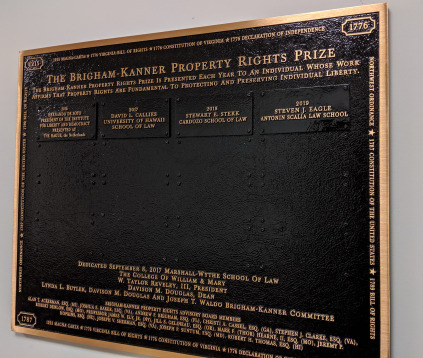
In our opinion, this is the best legal academy/practicing bar conference on property law. This year, the Conference honors the Brigham-Kanner Prizewinner, Harvard Law School Professor Henry Smith.

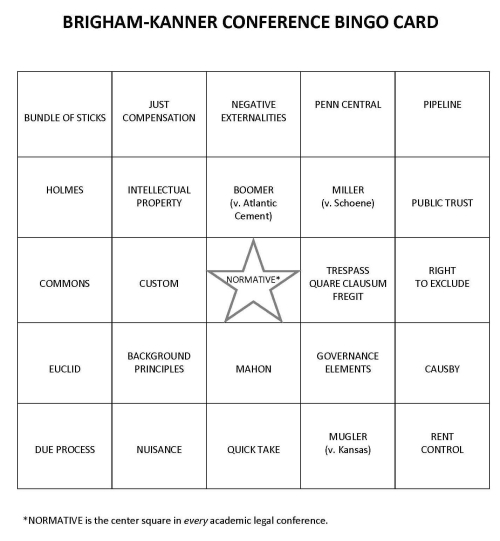
Here are the panel topics

Continue Reading There’s Still Room: Join Us For The 17th Annual Brigham-Kanner Property Rights Conference (Online, Free!)

What place do you think of when you hear the word “earthquake? Most likely California, we’re betting.

And it’s also very likely that you didn’t think “Ohio.”

Well, that’s probably what everyone involved in the Ohio Supreme Court case State ex rel. AWMS Water Solutions, LLC v. Mertz, No. 2019-0493 (Sep. 23, 2020) thought too. Until AWMS sought salt-water injection well permits from the State of Ohio, and “[t]he next day, a 2.7-magnitude earthquake was recorded in Youngstown, Ohio, about seven miles from AWMS’s Weathersfield Township site and about one mile from an injection well known as “Northstar #1” that was not related to AWMS’s wells.” Slip op. at 3. Earthquakes? In Ohio?

A week later, the State determined that Northstar #1 should be taken out of operation, and the very next day, a 4.0 earthquake “was recorded within one mile of Northstar #1. Slip op. at 3. [That

Continue Reading Earthquake In Ohio: The Jury Should Decide Lucas And Penn Central Takings After State Shut Down Injection Wells For Causing Earthquakes

The District Court’s bottom line in Lukes Catering Service, LLC v. Cuomo, No. 20-CV-1086 (Sep. 10, 2020)? The New York governor’s emergency orders aimed at coronavirus “imposing quarantines, mandating workforce reductions, closing schools, requiring face-coverings, and restricting activities of all types,” are not takings of the businesses of event, banquet, and catering services that have been shut down as a result. The specific emergency measure challenged was the order limiting gatherings to no more than 50 people.

The controlling authority? You guessed it, Jacobson v. Massachusetts, 197 U.S. 11 (1905). That’s the case in which the Court defined “real liberty,” and which has been most prominently applied in emergency order cases to reject due process challenges. But if you want the court’s takings analysis, jump to page 24. The court rejected the categorical (Lucas) claim:

Plaintiffs allege a categorical regulatory taking in their complaint. (Complaint, ¶¶

Continue Reading NY Fed Ct: “When faced with a society-threatening epidemic, state officials are empowered to … infringe federal constitutional rights. They may generally do so at their sole discretion and for so long as is necessary.”

Please join us and a panel of expert speakers including our friend and colleague Tony Della Pelle (see the flyer for the complete list), this Thursday, September 10, 2020 at 1pm Eastern Time for the ABA-produced webinar “Governmental Emergency Powers and the Constitutional Implications Arising from Pandemic Orders.”

Free to ABA members, a modest cost for those who are not. Register here.

Here’s the plan:

In the wake of the unprecedented global pandemic, every level of government has taken steps to address the public health crisis. These steps have manifested in orders which impact businesses and individuals alike including quarantine orders, travel restrictions, occupancy limitations, and restrictions on movement. This is the not the first pandemic, nor the first national crisis, faced by the United States. There have been several lawsuits filed challenging the constitutionality of the COVID-19 orders, including challenges based on the right to

Continue Reading This Thursday, Sept 10: “Governmental Emergency Powers and the Constitutional Implications Arising from Pandemic Orders” (Free to ABA Members)

Here, the ruling of the Massachusetts Superior Court (Suffolk County) in Matorin v. Commonwealth of Massachusetts, No. 2084CV01334 (Aug. 26, 2020).

The short story is that the court denied the plaintiffs’ motion for a preliminary injunction on the grounds that they were not likely to succeed on the merits of their as-applied regulatory takings challenge to the Commonwealth’s series of moratoria on residential evictions. The moratoria allow the property owners to recover possession after expiration, and the tenants are not freed from the eventual obligation to pay rent.

Skip forward to page 17 for the court’s takings analysis (although it would be a shame to not read the intervening pages, because the opinion also deals with the related separation of powers and access-to-the-courts questions). The court first rejected the argument that the moratoria allowed physical occupations (based on Yee), because it isn’t “permanent,” merely temporary. And (also based

Continue Reading Mass Super: State’s Temporary Eviction Moratorium Is Not Likely A Taking

News just in: we’ve just received confirmation that the Conference will not be in-person in Scottsdale in January 2021, and we’re going online.

Not a big surprise, but still a bit disappointing, and it’s a shame that the circumstances won’t allow us to meet in-person to talk shop and to renew our friendships like we do every year. 

But rest assured we’re making lemonade out of these lemons, and we’d appreciate everyone holding the dates on your calendars to join your colleagues from across the nation for the online Conference. And no, we’re not going to do two-and-a-half-days remotely, we’re paring down the agenda and will be focusing on hot topics, and great presenters. The remote format has some advantages, and we’re taking advantage of the circumstances to plan a conference more interactive and a bit different than usual.

This will also be a great program for first-time Conference participants.

Continue Reading Breaking: News About The 2021 ALI-CLE Eminent Domain & Land Valuation Litigation Conference (Jan. 28-29, 2021)

Ainalea

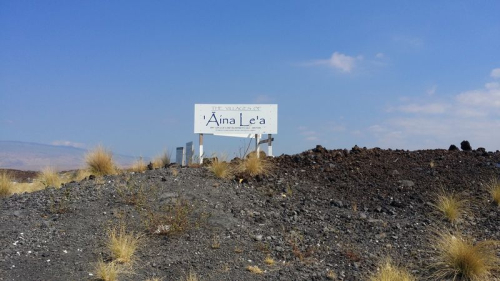
A short while ago, we featured the cert petition in a case from the Big Island that we’ve been following as various pieces of it went up and down through both the state and federal court systems. See “New (Mike Berger) Cert Petition: ‘This case is the proverbial ‘Exhibit A’ of much that is wrong [with takings law].

Now, after the State of Hawaii waived its right to file a BIO, five briefs of amici curiae (including one in which we played a small part) have been filed in support of the petition, urging the Court to review the Ninth Circuit’s opinion. We wrote about the case in a recent issue of the American Planning Association’s magazine. The short story is that a federal jury concluded that the State of Hawaii Land Use Commission took the owner’s property under both a Lucas and a

Continue Reading No Shortage Of Amicus Support For Takings Cert Petition (Lucas and Penn Central!)