The title of this post may have you wondering, especially the part about how a regulation that invites others to physically enter private property, is determined by a court to not be a physical taking. (The court also hints at looking at a physical taking under Penn Central, and not by applying per se rules.) 

At issue in the Ninth Circuit’s 2-1 opinion in Cedar Point Nursery v. Shiroma, No. 16-16321 (May 8, 2019) was a regulation adopted by California’s Agricultural Labor Relations Board which requires agricultural employees to open their land to labor union organizers. The regulation is framed as protecting the rights of ag employees to “access by union organizers to the premises of an agricultural employer for the purpose of meeting and talking with employees and soliciting their support.”

The regulation, as the Ninth Circuit majority pointed out, “is not unlimited,” and regulates the “time
Continue Reading PruneYard Undone: California’s Union Easement – Which Invites Labor Organizers To Enter Private Property – Isn’t A Physical Taking

Here’s what’s on the reading list for today:


Continue Reading Tuesday Takings And Property Round-Up

Nothing really can be done: the harsh reality is that CAFO’s (concentrated animal feeding operations) stink. But many state legislatures have concluded that farming and ranching are so important that the consequences (“externalities”) that naturally occur have to be accepted.

Right to Farm Acts, Indiana’s included, generally deprive neighboring property owners of their common law tort nuisance claims for the smell and noise, and other effects of having a nearby agricultural operation, often subject to certain conditions. One Indiana court summed up Right to Farm Acts as well as anyone when it noted, “so long as the human race consumes pork, someone must tolerate the smell.” Shatto v. McNulty, 509 N.E.2d 897, 900 (Ind. App. 1987). 

In Himsel v. Himsel, No. 18A-PL-645 (Apr. 22, 2019), that same court has now concluded that depriving neighboring landowners of their nuisance tort claims is not a taking. The opinion

Continue Reading Indiana’s Right To Farm Act Isn’t A Taking

0401191044b_HDR

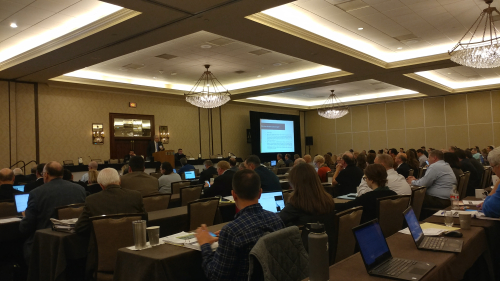
Great crowd today in Austin for CLE International’s Eminent Domain seminar, co-chaired by our colleagues Chris Clough, Sejin Brooks, and Christopher Oddo. We spoke about “National Trends and Developing Issues in Eminent Domain.” 

Here are the cases I referred to which are not included in your written materials:


Continue Reading Materials And Links From Today’s Austin Eminent Domain CLE

Here’s the amici brief we signed onto for Owners’ Counsel of America, filed last week in a regulatory takings case we’ve been following.

This brief, one of several filed which urge the Court to review the Federal Circuit’s conclusion there was no taking (despite a Court of Federal Claims verdict that there was), argues that categorical rules are not useful in regulatory takings cases for the most part, and economic realities often mean that a property owner can suffer a taking even if it has not yet realized a positive cash flow from its investment in the property:

But the Federal Circuit has now pronounced a categorical rule—one that arbitrarily insulates government from takings liability no matter how strongly the Penn Central factors might otherwise militate in favor of a takings claimant. Love Terminal Partners, L.P. v. United States, 889 F.3d 1331, 1344 (Fed. Cir. 2018). What

Continue Reading New Amici Brief: Investment, Not Profit, Is What The Takings Clause Recognizes

Here’s one we’ve been meaning to post for a while, the latest in a case we’ve been following. Yes, its the Love Terminal Partners cert petition.

Rather than go into the details about the case, we instead refer you to our post about the Federal Circuit’s opinion, the Court of Federal Claims verdict finding a taking and awarding compensation, and the petition itself. Counsel of Record for the property owners is none other than überlawyer Paul Clement. So we really can’t improve on the Questions Presented:

In 1999, petitioners paid millions of dollars to acquire the lease to property designated for aviation use at Dallas Love Field Airport. The next year, they spent another $17 million constructing a state-of-the-art terminal, and a few years later they expanded their investment by another $6.5 million. At the time, federal law limited flights for aircraft with over 56 seats from Love

Continue Reading New Cert Petition: You Don’t Need Positive Cash Flow To Have Investment-Backed Expectations

Thank you to our colleague, economist William Wade, for sending along this piece, reacting to a recent decision by the Massachusetts Appeals Court.

————————

Financial inconsistency bedevils takings decisions

by William W. Wade, Ph.D.

This blog recently reported on a Massachusetts Appellate Court takings case ruling (Smyth v. Conservation Comm’n of Falmouth, No. 17-P-1189 (Feb. 19, 2019)), that reversed a judgment for the plaintiff, in part, based on an erroneous economic impact evaluation under the famous Penn Central test.

Plaintiff inherited a parcel from her parents seemingly purchased in 1975 for $49,000. Plaintiff’s appraiser valued the land parcel at $700,000 with the intended development and $60,000 in its current status as an unbuildable lot. The trial court awarded damages of $640,000.

While other issues were at issue on appeal, the court ruled on the economic impact prong of Penn Central that the diminution in value, $700,000 to $60,000

Continue Reading Guest Post: Financial Inconsistency Bedevils Takings Decisions

IMG_20180720_151841

Rather than sum up the issue and the Massachusetts Appeals Court’s** conclusion in Smyth v. Conservation Comm’n of Falmouth, No. 17-P-1189 (Feb. 19, 2019), here’s the first part of the opinion:

GREEN, C.J. A land owner brought this action in the Superior Court, claiming that local land use regulation effected a taking of her property, requiring just compensation under the Fifth Amendment to the United States Constitution and art. 10 of the Massachusetts Declaration of Rights. This appeal presents a question of first impression in Massachusetts: whether the land owner is entitled to have her regulatory taking claim decided by a jury. We conclude that the jury right does not attach to such a claim, and that the judge erred in denying the defendants’ motion to submit only the question of damages to a jury. We further conclude that the evidence presented at the trial did not, as matter

Continue Reading Mass App: Regulatory Takings Claims Don’t Get A Jury Trial

The “Flint water crisis,” which, as the opinion of the Michigan Court of Appeals in Gulla v. State of Michigan, No. 340017 (Jan. 24, 2019), noted, is “the contamination of
plaintiffs’ water supply and their exposure to toxic and hazardous substances,” is all over the front pages. Which means it also spawned lawsuits.

The plaintiffs raised several claims across several cases, alleging (among other claims) inverse condemnation. In one series of cases, the defendants sought dismissal, arguing that the facts as alleged would not support takings liability. In the other, the court denied the defendants summary judgment. The court of appeals consolidated the appeals.

This is an unpublished opinion, so there’s not a whole lot of controversy or deep analysis by the court. But it is still worth reading because the court considered (and rejected) the defendants’ immunity argument. And the opinion gives a good rundown of Michigan takings

Continue Reading Mich App: Flint Water Plaintiffs Stated An Inverse Condemnation Claim

Psweather

If you didn’t register to attend the 36th Annual ALI-CLE Eminent Domain and Land Valuation Litigation Conference later this week in Palm Springs, California, well then, shame on you!

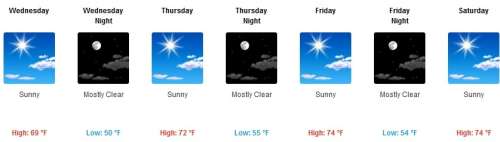
According to the National Weather Service, while you and the rest of the country is freezing, we’ll be enjoying the balmy desert climes, and discussing the topics we love: eminent domain, redevelopment, relocation, regulatory takings, trial and appeal strategies, doctrinal changes on the horizon, hot topics (border wall, pipelines, wildfires, and flooding), and others. 

Featuring a national faculty (many new to the ALI-CLE dais), and attendees from the entire spectrum of practice, academia, and the bench. 

If you are not joining us, be sure to follow along on the blog (we will post updates daily), and on Twitter (@invcondemnation, @ALI_CLE #EminentDomain2019). And plan on joining us in 2020, when we’ll be in a new city (by

Continue Reading ALI-CLE Palm Springs (72º, Sunny) Here We Come