As 2023 comes to a close, here are a few of the decisions that we wanted to blog about, but didn’t have the time.

  • Bruce v. Ogden City Corp., No. 22-4114 (10th Cir. Dec. 1, 2023): city demolishing a building that was damaged by fire was not a Lucas taking because the owner still has use of the land (even though the building is gone). And no Penn Central taking because… Penn Central.
  • Moriarity v. Indiana, No. 22A-PL-2899 (Ind. Ct. App. Nov. 15, 2023): State ordering removal of illegal dam was not a taking under U.S. or Indiana Constitution. The owners don’t have a property right to build an illegal dam. Thus, the “background principles” exception to Lucas rules the day. And no Penn Central taking because the owners never had any investment-backed expectations they could build this dam.
  • Lafayette Bollinger Dev., LLC v. Town of


Continue Reading 2023 Year-End Clean Up

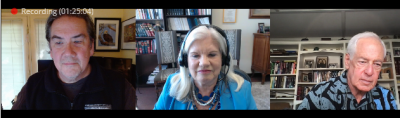
Here are the cases that Michael Berger and I discussed in today’s presentation to the ABA State and Local Government Law Section’s Land Use group. It was good seeing everyone, even virtually:


Continue Reading Cases And Links From Today’s ABA State & Local Govt Law Land Use Presentation

Here’s the latest in a case we’ve been following.

In this Order, the U.S. District Court for the District of Hawaii made permanent its earlier ruling that Honolulu’s ordinance which expanded the minimum rental term to 90 days because it did not account for those owners who were already legally renting their properties for 30 days. The state Zoning Enabling Act requires zoning ordinances account for preexisting uses.

We covered the issues and the court’s preliminary injunction ruling here, and won’t go over those again. About the only difference between that one and this one is that the court rejects the City’s “several new legal arguments[,]” including Pullman abstention, and the claim that this isn’t a zoning ordinance covered by the ZEA, but rather a “rental regulation.” See slip op. at 10.

The City’s attempt to reframe the issue first presented during preliminary injunction proceedings more than a

Continue Reading Hawaii Federal Court: Honolulu Can’t Increase Minimum Rental Term To 90 Days Without Accommodating Existing Uses

Check this out, our law firm colleague Joshua Thompson talks about regulatory takings, and his big Supreme Court victory in Cedar Point Nursery.

If you are reading this blog, you already know what that means. Regulatory takings. Bundle of sticks. Penn Central (bleh), and right to exclude. Here’s the description of the program:

In this thought-provoking episode, Bob Stetson and Joshua Thompson, Director of Equality and Opportunity Litigation at the Pacific Legal Foundation, discuss the landmark case of Cedar Point Nursery vs. Hassid and explore the intricate balance between private property rights and public interests. What constitutes a ‘taking’ and how far government regulations can go in the name of the public good?

Stream it above, or listen on Spotify here.

(Our own thoughts on the Cedar Point case here.)Continue Reading New Podcast: The Cedar Point Takings Case (From The Guy Who Argued Cedar Point)

We don’t often post trial court orders — especially state trial court orders — but read on and you will understand why we made an exception here. Our thanks to an Oregon colleague for sending it our way.

Today’s case involves a pretty typical situation — a condemnor (or, “condemner” — for it is in Oregon that our scene lies) is contemplating taking property from someone, and wants and needs to figure out whether the property it is contemplating is suitable. It needs to get on site and check it out. Do things like surveys, examinations, tests, and sample-taking. Often, the owner of the property doesn’t mind: pay me a bit for my trouble, indemnify me in the event someone gets injured, and you can have limited access to do your business and then go on your way, condemner. 

But sometimes, an owner — as is her right — says

Continue Reading Some Precondemnation Entries Are Takings Requiring An Up-Front Condemnation And Compensation

Another must-listen episode of Clint’s Eminent Domain Podcast. He’s joined by Pepperdine Law School Professor Shelley Ross Saxer:

Professor Shelley Ross Saxer joins the show to discuss the role that the damaging clauses found in more than half of state constitutions across the United States play in inverse condemnation claims related to natural disasters such as the recent Hawaii wildfires.

Definitely worth a listen (as always with EDP). Stream above, or download here. Continue Reading Inverse Condemnation And Hawaii’s Wildfires: Lawprof Shelley Saxer Joins Clint Schumacher’s Eminent Domain Podcast

ALI-CLE brochure cover page

Here’s the brochure and the full agenda and registration information for the upcoming ALI-CLE Eminent Domain and Land Valuation Litigation Conference at the JW Marriott in New Orleans, February 1-3, 2024.

This is the long-running nationally-focused conference on all things eminent domain, takings, valuation, and related. We have three tracks, from which you can choose a la carte – Practice, Substantive, and Condemnation 101:

For over 40 years, we’ve been bringing eminent domain practitioners together to examine the latest issues, engage in healthy debate, and get the information they need to stay current in their practice. This year – our 41st – is THE perfect time to reunite with your eminent domain colleagues. There will be plentiful opportunities to meet and mingle with the faculty and other registrants – throughout the conference and at evening social events. Attendees come back year after year to make new friendships and renew

Continue Reading Here’s The Program For The 41st ALI-CLE Eminent Domain And Land Valuation Litigation Conference, Feb 1-3, 2024, New Orleans

HSBA 10-2023

Yesterday, during the Annual Meeting of the Hawaii State Bar Association, we participated in a program sponsored by the Real Property and Financial Services Section, “Inverse Condemnation & Paying for Disasters.”

As you can see above, we joined lawprofs Shelley Saxer and David Callies to share thoughts about inverse claims, and the difference between these property arguments and tort negligence claims.

Here are some of the key cases and materials which we mentioned (or should have):


Continue Reading Links And Materials From “Inverse Condemnation & Paying for Disasters”

Here’s the latest in a case and an issue we’ve been following.

Recall that the U.S. District Court for the Eastern District of Texas concluded that the City of McKinney, Texas was liable for the taking of Vicki Baker’s home, after city police officers destroyed a large part of it while apprehending a suspect who had taken refuge therein. The court awarded just compensation and the city appealed.

Now, the other shoe drops: in Baker v. City of McKinney, No. 22-40644 (Oct. 11, 2023), the U.S. Court of Appeals for the Fifth Circuit reversed, concluding that because the invasion was necessary and a justified use of the city’s police powers, it does not owe compensation.

We’ve been down this path before, so we won’t go over it in detail (recall that the Tenth Circuit reached the same conclusion and the subsequent cert petition was denied by the Supreme

Continue Reading Fifth Circuit Kicks Down The SWAT Takings Door (And Boots The Issue Upstairs)

Here’s what we’re reading about the Supreme Court’s property rights docket — some good, some disappointing — this day.

  • Niina Farah, “Supreme Court flooding case could ripple across the energy sector (E & E News / Energywire) – About the Devillier case (which we summarized here), in which we were quoted: “The Supreme Court decision to hear the Devillier case comes after a concerted effort in recent years to convince the court to address procedural maneuvers that have made it challenging for property owners to bring their claims to court, said Robert Thomas, director of property rights litigation at the Pacific Legal Foundation. The nonprofit is among the groups that has asked the court to address takings cases and has lent its support for the property owners in Devillier in a ‘friend of the court‘ brief. ‘There’s a lot of gamesmanship going on


Continue Reading Supreme Court Property Rights Round-Up